
Sign In to View Organizational & Contract Pricing
Select a Size
About This Item
Empirical Formula (Hill Notation):
C20H26N4O4 · xHCl
Molecular Weight:
386.44 (free base basis)
MDL number:
UNSPSC Code:
12352101
NACRES:
NA.22
ligand
C5 Lenalidomide
Quality Level
Assay
≥95%
form
powder or crystals
reaction suitability
reactivity: carboxyl reactive
reagent type: ligand-linker conjugate
functional group
amine
storage temp.
2-8°C
SMILES string
O=C1N(C2CCC(NC2=O)=O)CC3=CC(NC(CCCCCCN)=O)=CC=C31.Cl
InChI key
BQPYHWPMMOFXIA-UHFFFAOYSA-N
Related Categories
Application
Protein degrader builiding block C5 Lenalidomide-C6-NH2 hydrochloride enables the synthesis of molecules for targeted protein degradation and PROTAC (proteolysis-targeting chimeras) technology. This conjugate contains a Cereblon (CRBN)-recruiting ligand with alternative exit vector and an alkyl-chain crosslinker with pendant amine for reactivity with an acid on the target warhead. Because even slight alterations in ligands, warheads, and crosslinkers can affect ternary complex formation between the target, E3 ligase, and PROTAC, many analogs are prepared to screen for optimal target degradation. When used with other protein degrader building blocks with a terminal amine, parallel synthesis can be used to more quickly generate PROTAC libraries that feature variation in crosslinker length, composition, and E3 ligase ligand.
Other Notes
Technology Spotlight: Degrader Building Blocks for Targeted Protein Degradation
Portal: Building PROTAC® Degraders for Targeted Protein Degradation
Targeted Protein Degradation by Small Molecules
Small-Molecule PROTACS: New Approaches to Protein Degradation
Targeted Protein Degradation: from Chemical Biology to Drug Discovery
Portal: Building PROTAC® Degraders for Targeted Protein Degradation
Targeted Protein Degradation by Small Molecules
Small-Molecule PROTACS: New Approaches to Protein Degradation
Targeted Protein Degradation: from Chemical Biology to Drug Discovery
Legal Information
PROTAC is a registered trademark of Arvinas Operations, Inc., and is used under license
Signal Word
Warning
Hazard Statements
Precautionary Statements
Hazard Classifications
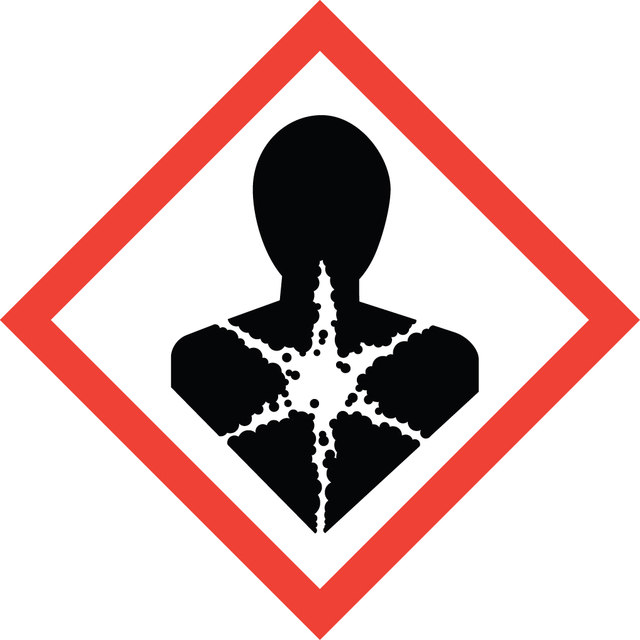
Repr. 2 - STOT RE 2
Target Organs
Blood
Storage Class Code
11 - Combustible Solids
WGK
WGK 1
Flash Point(F)
Not applicable
Flash Point(C)
Not applicable
Regulatory Information
新产品
This item has
Choose from one of the most recent versions:
Already Own This Product?
Find documentation for the products that you have recently purchased in the Document Library.
Momar Toure et al.
Angewandte Chemie (International ed. in English), 55(6), 1966-1973 (2016-01-13)
The current inhibitor-based approach to therapeutics has inherent limitations owing to its occupancy-based model: 1) there is a need to maintain high systemic exposure to ensure sufficient in vivo inhibition, 2) high in vivo concentrations bring potential for off-target side effects, and 3) there is
Momar Toure et al.
Angewandte Chemie (International ed. in English), 55(6), 1966-1973 (2016-01-13)
The current inhibitor-based approach to therapeutics has inherent limitations owing to its occupancy-based model: 1) there is a need to maintain high systemic exposure to ensure sufficient in vivo inhibition, 2) high in vivo concentrations bring potential for off-target side effects, and 3) there is
Philipp M Cromm et al.
Cell chemical biology, 24(9), 1181-1190 (2017-06-27)
Traditional pharmaceutical drug discovery is almost exclusively focused on directly controlling protein activity to cure diseases. Modulators of protein activity, especially inhibitors, are developed and applied at high concentration to achieve maximal effects. Thereby, reduced bioavailability and off-target effects can
Articles
Protein Degrader Building Blocks are a collection of crosslinker-E3 ligand conjugates with a pendant functional group for covalent linkage to a target ligand.
Our team of scientists has experience in all areas of research including Life Science, Material Science, Chemical Synthesis, Chromatography, Analytical and many others.
Contact Technical Service