
82119

Propylbenzene
≥99.0% (GC)
Synonym(s):
1-Phenylpropane
Sign In to View Organizational & Contract Pricing.
Select a Size
Change View
About This Item
Linear Formula:
C6H5CH2CH2CH3
CAS Number:
Molecular Weight:
120.19
UNSPSC Code:
12352100
NACRES:
NA.22
PubChem Substance ID:
EC Number:
203-132-9
Beilstein/REAXYS Number:
1903006
MDL number:
Assay:
≥99.0% (GC)
Form:
liquid
vapor density
4.14 (vs air)
Quality Level
vapor pressure
2 mmHg ( 20 °C)
assay
≥99.0% (GC)
form
liquid
autoignition temp.
842 °F
expl. lim.
6 %
refractive index
n20/D 1.491
bp
159 °C (lit.)
mp
−99 °C (lit.)
density
0.862 g/mL at 25 °C (lit.)
functional group
phenyl
SMILES string
CCCc1ccccc1
InChI
1S/C9H12/c1-2-6-9-7-4-3-5-8-9/h3-5,7-8H,2,6H2,1H3
InChI key
ODLMAHJVESYWTB-UHFFFAOYSA-N
Still not finding the right product?
Explore all of our products under Propylbenzene
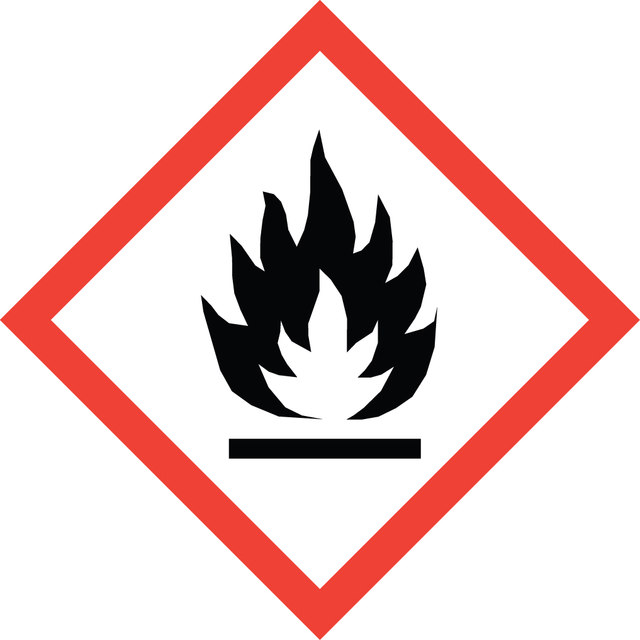



signalword
Danger
hcodes
Hazard Classifications
Aquatic Chronic 2 - Asp. Tox. 1 - Flam. Liq. 3 - STOT SE 3
target_organs
Respiratory system
Storage Class
3 - Flammable liquids
wgk
WGK 2
flash_point_f
107.6 °F - closed cup
flash_point_c
42.0 °C - closed cup
ppe
Eyeshields, Faceshields, Gloves, type ABEK (EN14387) respirator filter
Regulatory Information
危险化学品
This item has
Choose from one of the most recent versions:
Already Own This Product?
Find documentation for the products that you have recently purchased in the Document Library.
S L Cruz et al.
British journal of pharmacology, 131(7), 1303-1308 (2000-11-23)
1. We have previously shown that toluene dose-dependently inhibits recombinant N-methyl-D-aspartate (NMDA) receptors at micromolar concentrations. This inhibition was rapid, almost complete and reversible. The NR1/2B combination was the most sensitive receptor subtype tested with an IC(50) value for toluene
R Andrew Shalliker et al.
Journal of chromatography. A, 1216(5), 787-793 (2008-12-20)
The effect of solvent viscosity mismatch on elution performance in reversed-phase HPLC was studied using moment analysis. Two conditions were tested: (1) the mobile phase viscosity was less than the injection plug viscosity, and (2) the mobile phase viscosity was
Sara Eriksson et al.
Biodegradation, 16(3), 253-263 (2005-05-04)
The metabolism of monoaromatic hydrocarbons by an iron-reducing bacterial enrichment culture originating from diesel-contaminated groundwater was examined using d7-propylbenzene as a model hydrocarbon. Sequence analysis of the 16S rDNA gene showed that the dominant part (10 of 10 clones) of
Global Trade Item Number
| SKU | GTIN |
|---|---|
| 82119-100ML | 04061833004982 |
| 82119-25ML | 04061837707384 |