
809950

Ethylene carbonate
battery grade, ≥99%, acid <10 ppm, H2O <10 ppm
Synonym(s):
EC, 1,3-Dioxolan-2-one
Sign In to View Organizational & Contract Pricing.
Select a Size
Change View
About This Item
Empirical Formula (Hill Notation):
C3H4O3
CAS Number:
Molecular Weight:
88.06
UNSPSC Code:
12352108
NACRES:
NA.23
PubChem Substance ID:
EC Number:
202-510-0
Beilstein/REAXYS Number:
106249
MDL number:
grade
battery grade
Quality Segment
vapor density
3.04 (vs air)
vapor pressure
0.02 mmHg ( 36.4 °C)
assay
≥99%
form
solid
impurities
≤10 ppm H2O, ≤10 ppm acid
bp
243-244 °C/740 mmHg (lit.)
mp
35-38 °C (lit.), 36 °C (exp.)
density
1.321 g/mL at 25 °C (lit.)
application(s)
battery manufacturing
battery precursors
SMILES string
O=C1OCCO1
InChI
1S/C3H4O3/c4-3-5-1-2-6-3/h1-2H2
InChI key
KMTRUDSVKNLOMY-UHFFFAOYSA-N
General description
Anhydrous ethylene carbonate is a cyclic ester and chemically related to ethylene glycol and dimethyl carbonate. It is a highly polar solvent and is a good solvent for many organic and inorganic compounds; however, at room temperature (25 °C) ethylene carbonate is a transparent crystalline solid, practically odorless and colorless, and somewhat soluble in water. In the liquid state (m.p. 35-37 °C) ethylene carbonate is a colorless, odorless liquid with a high boiling point (243 °C). Anhydrous ethylene carbonate is a solvent that is commonly used in the production of batteries, particularly lithium-ion batteries, and as a solvent in the pharmaceutical and chemical industries, in part because of its very high dielectric constant. Because of its high melting point and moderate viscosity, ethylene carbonate is often blended with other carbonates to yield a solution at room temperature with lower viscosity.
Application
Alkyl carbonates find applications as solvents for lithium ion battery electrolytes and the use of high quality battery grade electrolytes having extremely low water (<10 ppm) and acid (<10 ppm) contents are critical for achieving high electrochemical performance.
Legal Information
Product of MU Ionic Solutions Corp
Disclaimer
These additives have low water content (less than 100 ppm). Please handle under inert and moisture free environment (glove box). Keep containers tightly closed. Keep away from heat and ignition sources. Store in a cool and dry place. Avoid storing together with oxidizers.
Still not finding the right product?
Explore all of our products under Ethylene carbonate
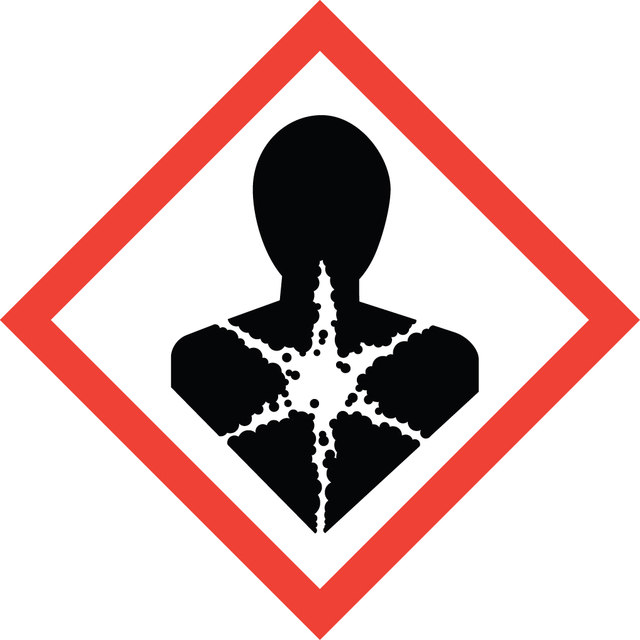

signalword
Warning
hcodes
Hazard Classifications
Acute Tox. 4 Oral - Eye Irrit. 2 - STOT RE 2 Oral
target_organs
Kidney
Storage Class
11 - Combustible Solids
flash_point_f
289.4 °F - closed cup
flash_point_c
143 °C - closed cup
Choose from one of the most recent versions:
Already Own This Product?
Find documentation for the products that you have recently purchased in the Document Library.