
740683

1,8-Dihydroxynaphthalene
95%
Synonym(s):
1,8-Naphthalenediol
Sign In to View Organizational & Contract Pricing.
Select a Size
About This Item
Empirical Formula (Hill Notation):
C10H8O2
CAS Number:
Molecular Weight:
160.17
UNSPSC Code:
12352100
NACRES:
NA.22
PubChem Substance ID:
MDL number:
Beilstein/REAXYS Number:
2044947
Assay:
95%
Form:
solid
InChI
1S/C10H8O2/c11-8-5-1-3-7-4-2-6-9(12)10(7)8/h1-6,11-12H
SMILES string
Oc1cccc2cccc(O)c12
InChI key
OENHRRVNRZBNNS-UHFFFAOYSA-N
assay
95%
form
solid
mp
137-143 °C
storage temp.
2-8°C
Quality Level
Related Categories
Application
1,8-Dihydroxynaphthalene (DHN) can be used as:
- An intermediate in the preparation of benzo analogs of spiromamakone A.
- A starting material to synthesize naphthopyran derivatives.
- An intermediate in the total synthesis of palmarumycin CP17 analogs.
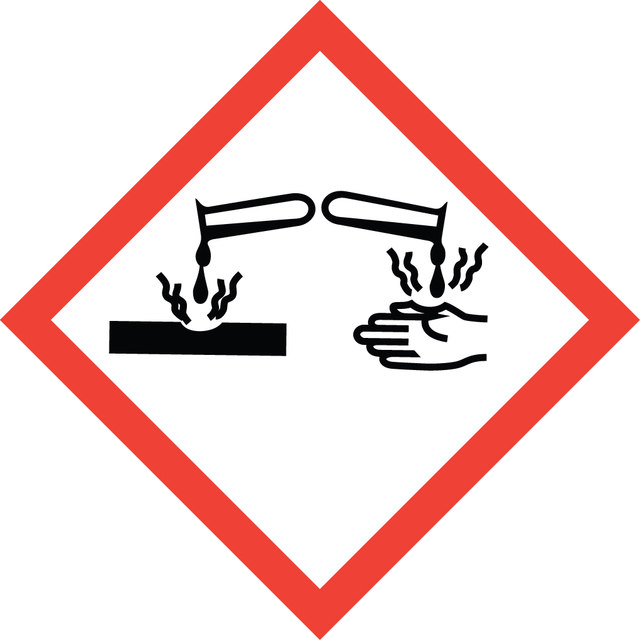
signalword
Danger
hcodes
Hazard Classifications
Eye Dam. 1
Storage Class
11 - Combustible Solids
wgk
WGK 3
flash_point_f
Not applicable
flash_point_c
Not applicable
Choose from one of the most recent versions:
Already Own This Product?
Find documentation for the products that you have recently purchased in the Document Library.
Bo Wang et al.
BMC genomics, 18(1), 729-729 (2017-09-17)
Ectophytic fungi occupy the waxy plant surface, an extreme environment characterized by prolonged desiccation, nutrient limitation, and exposure to solar radiation. The nature of mechanisms that facilitate adaptation to this environment remains unclear. In this study, we sequenced the complete
Synthesis of spiromamakone a benzo analogues via double oxa-michael addition of 1, 8-dihydroxynaphthalene
Tsukamoto H, et al.
Organic Letters, 18, 4848-4851 (2016)
N A Yurlova et al.
Studies in mycology, 61, 39-49 (2008-01-01)
Dothideaceous black yeast-like fungi (BYF) are known to synthesise DHN-melanin that is inhibited by the systemic fungicide tricyclazole. The final step of the DHN melanin pathway is the conjoining of 1,8-DHN molecules to form the melanin polymer. There are several
R Romero-Martinez et al.
Infection and immunity, 68(6), 3696-3703 (2000-05-19)
Sporothrix schenckii is a human pathogen that causes sporotrichosis, an important cutaneous mycosis with a worldwide distribution. It produces dark-brown conidia, which infect the host. We found that S. schenckii synthesizes melanin via the 1,8-dihydroxynaphthalene pentaketide pathway. Melanin biosynthesis in
H F Tsai et al.
Journal of bacteriology, 180(12), 3031-3038 (1998-06-11)
Aspergillus fumigatus, an important opportunistic pathogen which commonly affects neutropenic patients, produces conidia with a bluish-green color. We identified a gene, alb1, which is required for conidial pigmentation. The alb1 gene encodes a putative polyketide synthase, and disruption of alb1
Our team of scientists has experience in all areas of research including Life Science, Material Science, Chemical Synthesis, Chromatography, Analytical and many others.
Contact Technical Service