Skip to Content
Merck
CN

690295

Ethyl 4-chloroacetoacetate

Arxada quality, ≥97.0% (GC)

Synonym(s):

4-Chloro acetoethylacetate, Ethyl 4-chloro-3-oxobutanoate, Ethyl chloroacetoacetate

Sign In to View Organizational & Contract Pricing.

Select a Size


About This Item

Linear Formula:
ClCH2COCH2CO2C2H5
CAS Number:
Molecular Weight:
164.59
UNSPSC Code:
12352100
NACRES:
NA.22
PubChem Substance ID:
EC Number:
211-317-0
Beilstein/REAXYS Number:
1761275
MDL number:
Assay:
≥97.0% (GC)
Form:
liquid
Technical Service
Need help? Our team of experienced scientists is here for you.
Let Us Assist
Technical Service
Need help? Our team of experienced scientists is here for you.
Let Us Assist

InChI

1S/C6H9ClO3/c1-2-10-6(9)3-5(8)4-7/h2-4H2,1H3

InChI key

OHLRLMWUFVDREV-UHFFFAOYSA-N

SMILES string

CCOC(=O)CC(=O)CCl

assay

≥97.0% (GC)

form

liquid

quality

Arxada quality

manufacturer/tradename

Arxada AG

impurities

≤0.04% metyl-4-chloroacetoacetate

Quality Level

refractive index

n20/D 1.452 (lit.)

bp

115 °C/14 mmHg (lit.)

density

1.218 g/mL at 25 °C (lit.)

storage temp.

2-8°C

Looking for similar products? Visit Product Comparison Guide

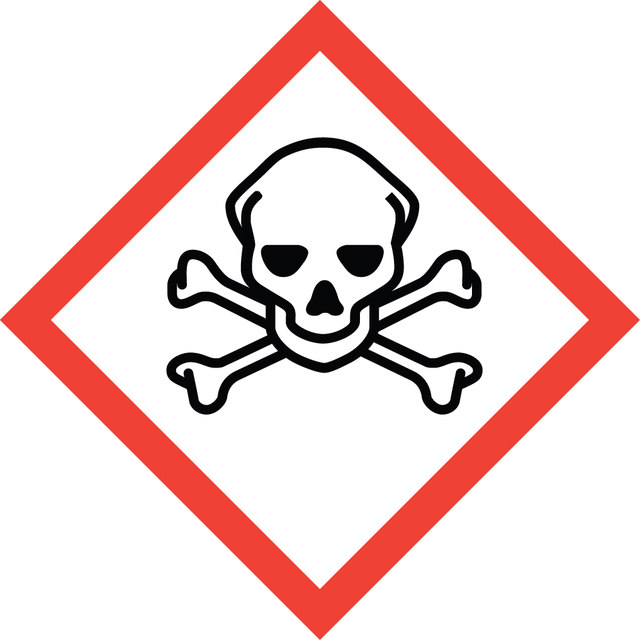
signalword

Danger

Hazard Classifications

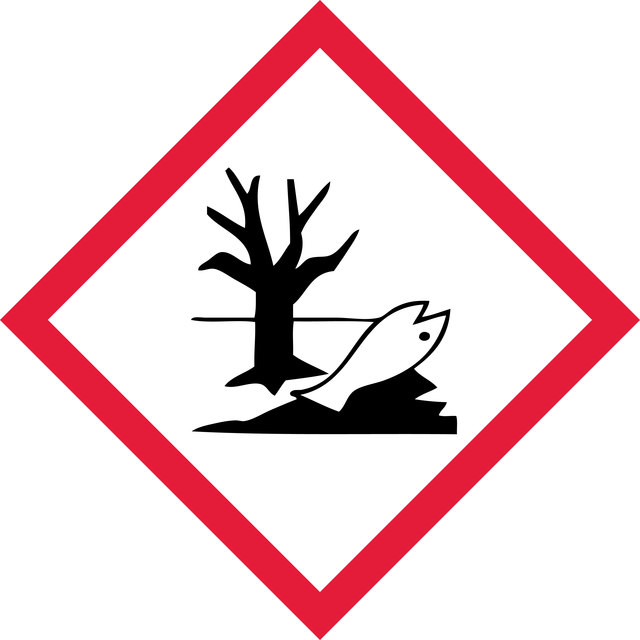
Acute Tox. 3 Dermal - Acute Tox. 3 Oral - Aquatic Chronic 2 - Eye Dam. 1 - Skin Corr. 1B

Storage Class

6.1A - Combustible acute toxic Cat. 1 and 2 / very toxic hazardous materials

wgk

WGK 3

flash_point_f

206.6 °F - closed cup

flash_point_c

97 °C - closed cup

ppe

Faceshields, Gloves, Goggles, type ABEK (EN14387) respirator filter

Regulatory Information

新产品
This item has

Choose from one of the most recent versions:

Certificates of Analysis (COA)

Lot/Batch Number

Don't see the Right Version?

If you require a particular version, you can look up a specific certificate by the Lot or Batch number.

Already Own This Product?

Find documentation for the products that you have recently purchased in the Document Library.

Visit the Document Library

M Kataoka et al.
Applied microbiology and biotechnology, 51(4), 486-490 (1999-05-26)
The asymmetric reduction of ethyl 4-chloro-3-oxobutanoate (COBE) to ethyl (R)-4-chloro-3-hydroxybutanoate [(R)-CHBE] using Escherichia coli cells, which coexpress both the aldehyde reductase gene from Sporobolomyces salmonicolor and the glucose dehydrogenase (GDH) gene from Bacillus megaterium as a catalyst was investigated. In
Li-Juan Wang et al.
Bioresource technology, 102(14), 7023-7028 (2011-05-17)
An NADH-dependent reductase (ScCR) from Streptomyces coelicolor was discovered by genome mining for carbonyl reductases. ScCR was overexpressed in Escherichia coli BL21, purified to homogeneity and its catalytic properties were studied. This enzyme catalyzed the asymmetric reduction of a broad
K Kita et al.
Applied and environmental microbiology, 65(12), 5207-5211 (1999-12-03)
We cloned and sequenced the gene encoding an NADPH-dependent aldehyde reductase (ARII) in Sporobolomyces salmonicolor AKU4429, which reduces ethyl 4-chloro-3-oxobutanoate (4-COBE) to ethyl (S)-4-chloro-3-hydroxybutanoate. The ARII gene is 1,032 bp long, is interrupted by four introns, and encodes a 37,315-Da
Qi Ye et al.
Applied microbiology and biotechnology, 87(2), 517-525 (2010-03-24)
To develop an economical industrial medium, untreated cane molasses (UCM) was tested as a carbon source for fermentation culturing of Escherichia coli. To test the industrial application of this medium, we chose a strain co-expressing a carbonyl reductase (PsCR) and
Jer-Yiing Houng et al.
Biotechnology letters, 25(1), 17-21 (2003-07-29)
Amberlite XAD 2 resin enhanced the asymmetric reduction of ethyl 4-chloroacetoacetate (ECA) to S-4-chloro-3-hydroxybutyric acid ethyl ester as catalyzed by Saccharomyces cerevisiae. The absorbed ECA was released slowly to the solution during the reaction so that the substrate inhibition and

Articles

Knoevenagel Condensation is an organic reaction named after Emil Knoevenagel. It is a classic C-C bond formation reaction and a modification of the Aldol Condensation.

Our team of scientists has experience in all areas of research including Life Science, Material Science, Chemical Synthesis, Chromatography, Analytical and many others.

Contact Technical Service