
671576

N-Phenylhydroxylamine
≥95.0%
Synonym(s):
N-Hydroxyaniline, N-Hydroxybenzenamine
Sign In to View Organizational & Contract Pricing.
Select a Size
About This Item
Empirical Formula (Hill Notation):
C6H7NO
CAS Number:
Molecular Weight:
109.13
NACRES:
NA.22
PubChem Substance ID:
UNSPSC Code:
12352100
EC Number:
202-875-6
MDL number:
Assay:
≥95.0%
Form:
solid
InChI key
CKRZKMFTZCFYGB-UHFFFAOYSA-N
InChI
1S/C6H7NO/c8-7-6-4-2-1-3-5-6/h1-5,7-8H
SMILES string
ONc1ccccc1
assay
≥95.0%
form
solid
mp
80-84 °C
storage temp.
−20°C
Quality Level
Related Categories
Application
N-Phenylhydroxylamine can be used as a starting material for the synthesis of:
- 2-alkylindoles by treating with aliphatic terminal alkynes using gold catalyst via sequential 3,3-rearrangements and cyclodehydrations.
- Isoxazolidines by reacting with aldehydes and α, β-unsaturated aldehydes via a three-component one-pot catalytic reaction.
- Tetrahydro-1,2-oxazines by treating with an aldehyde and cyclopropane via homo 3+2 dipolar cycloaddition reaction.
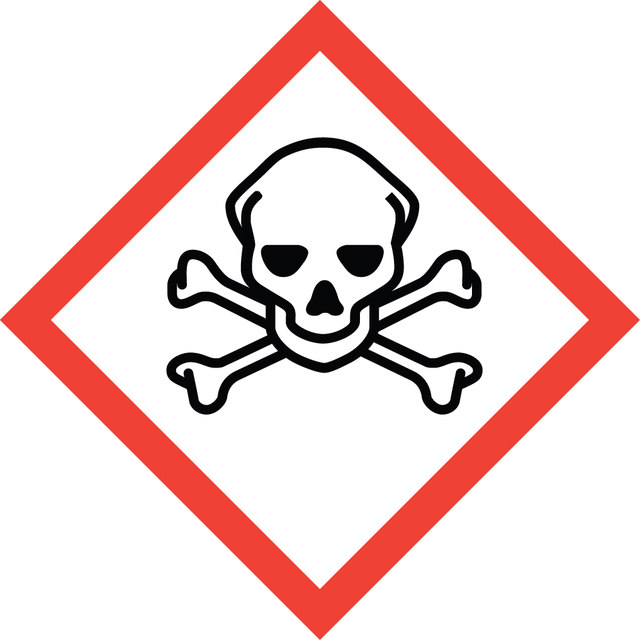
signalword
Danger
hcodes
pcodes
Hazard Classifications
Acute Tox. 3 Oral
Storage Class
6.1C - Combustible acute toxic Cat.3 / toxic compounds or compounds which causing chronic effects
wgk
WGK 3
flash_point_f
Not applicable
flash_point_c
Not applicable
ppe
Eyeshields, Faceshields, Gloves, type P2 (EN 143) respirator cartridges
Choose from one of the most recent versions:
Already Own This Product?
Find documentation for the products that you have recently purchased in the Document Library.
Copper-catalyzed amination of alkenes and ketones by phenylhydroxylamine.
Ho C-M and Lau T-C
New. J. Chem., 24(11), 859-863 (2000)
Au-catalyzed synthesis of 2-alkylindoles from N-arylhydroxylamines and terminal alkynes
Wang Y, et al.
Chemical Communications (Cambridge, England), 47(27), 7815-7817 (2011)
L Ciccoli et al.
Toxicology letters, 110(1-2), 57-66 (1999-12-11)
Incubation of rat erythrocytes with the hydroxylated metabolites of aniline and dapsone (4-4'-diaminodiphenylsulfone), phenylhydroxylamine and dapsone hydroxylamine, respectively, induced marked release of iron and methemoglobin formation. On the contrary, no release of iron nor methemoglobin formation was seen when the
A simple one-pot, three-component, catalytic, highly enantioselective isoxazolidine synthesis
Rios R, et al.
Tetrahedron Letters, 48(32), 5701-5705 (2007)
Nilanjana Chowdhury et al.
Bioorganic & medicinal chemistry letters, 20(18), 5414-5417 (2010-08-21)
Photoinduced homolytic fission of nitrogen-oxygen bond in N,O-diacyl-4-benzoyl-N-phenylhydroxylamines using 310 nm UV light for 10 min produced acylaminyl and acyloxy radicals, which resulted in single strand cleavage of DNA at pH 7.0. Further the DNA cleaving ability of N,O-diacyl-4-benzoyl-N-phenylhydroxylamines found
Our team of scientists has experience in all areas of research including Life Science, Material Science, Chemical Synthesis, Chromatography, Analytical and many others.
Contact Technical Service