
655198

Cadmium chloride
Synonym(s):
Cadmium dichloride, Dichlorocadmium
Sign In to View Organizational & Contract Pricing.
Select a Size
Change View
About This Item
Empirical Formula (Hill Notation):
CdCl2
Molecular Weight:
183.32
NACRES:
NA.23
PubChem Substance ID:
UNSPSC Code:
12352302
EC Number:
233-296-7
MDL number:
Form:
solid
Solubility:
H2O: soluble >457 g/L at 20 °C (OECD Test Guideline 105)
vapor density
6.3 (vs air)
Quality Level
vapor pressure
10 mmHg ( 656 °C)
form
solid
reaction suitability
core: cadmium
concentration
≥55.2% Cd (EDTA titration)
mp
568 °C (lit.)
solubility
H2O: soluble >457 g/L at 20 °C (OECD Test Guideline 105)
SMILES string
Cl[Cd]Cl
InChI
1S/Cd.2ClH/h;2*1H/q+2;;/p-2
InChI key
YKYOUMDCQGMQQO-UHFFFAOYSA-L
Application
Cadmium chloride (CdCl2) may be used as a catalyst for an efficient production of 5-substituted 1H-tetrazoles from [2 + 3]-cycloaddition of NaN3 with nitrile.
Still not finding the right product?
Explore all of our products under Cadmium chloride

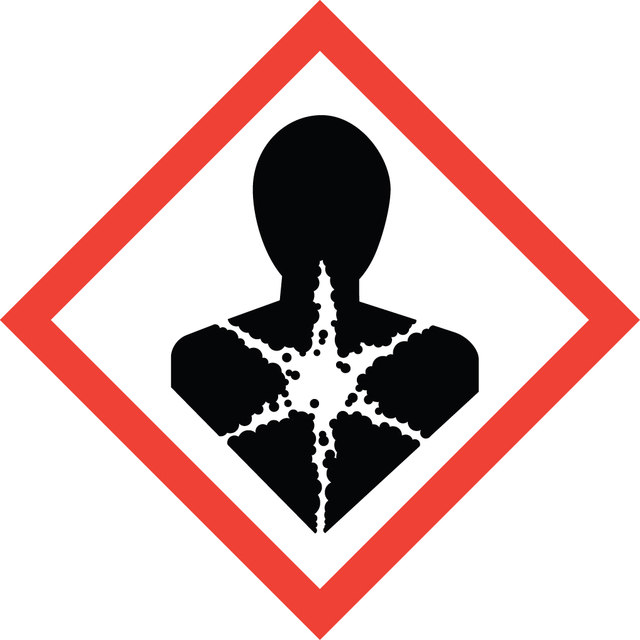
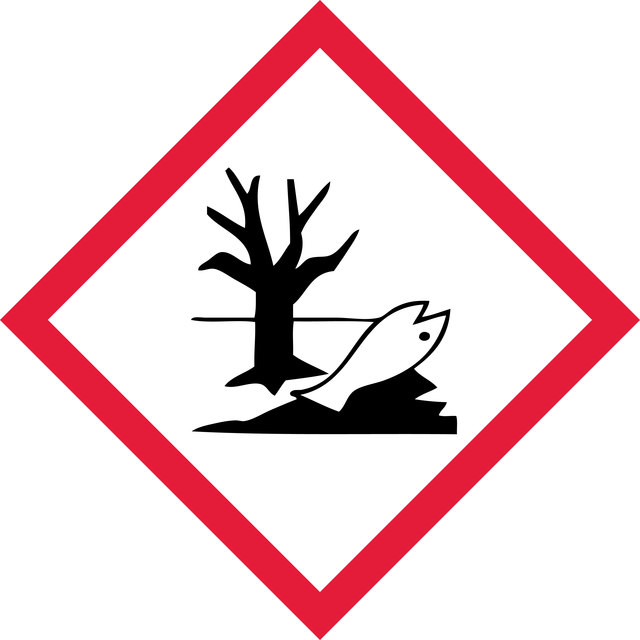
signalword
Danger
Hazard Classifications
Acute Tox. 2 Inhalation - Acute Tox. 3 Oral - Aquatic Acute 1 - Aquatic Chronic 1 - Carc. 1B - Muta. 1B - Repr. 1B - STOT RE 1
ppe
Eyeshields, Faceshields, Gloves, type P3 (EN 143) respirator cartridges
Storage Class
6.1B - Non-combustible acute toxic Cat. 1 and 2 / very toxic hazardous materials
Regulatory Information
危险化学品
This item has
Choose from one of the most recent versions:
Already Own This Product?
Find documentation for the products that you have recently purchased in the Document Library.
Cadmium chloride as an efficient catalyst for neat synthesis of 5-substituted 1 H-tetrazoles.
Venkateshwarlu G, et al.
Synthetic Communications, 39(24), 4479-4485 (2004)
Teresa Coccini et al.
Histology and histopathology, 28(2), 195-209 (2013-01-01)
Potential risk associated with new nanomaterial exposure needs to be assessed. This in vivo study investigated pulmonary effects of engineered cadmium-containing silica nanoparticles Cd/SiNPs (1 mg/rat), silica SiNPs (600 μg/rat) and CdCl₂ (400 μg/rat) 1, 7 and 30 days after
Veronique E Miron et al.
Nature neuroscience, 16(9), 1211-1218 (2013-07-23)
The lack of therapies for progressive multiple sclerosis highlights the need to understand the regenerative process of remyelination that can follow CNS demyelination. This involves an innate immune response consisting of microglia and macrophages, which can be polarized to distinct
Global Trade Item Number
| SKU | GTIN |
|---|---|
| 655198-100G | 04061832733104 |
| 655198-5G | 04061832733111 |