Skip to Content
Merck
CN

647640

Zirconium(IV) chloride

greener alternative

powder, 99.99% trace metals basis

Synonym(s):

Tetrachlorozirconium, Zirconium tetrachloride

Sign In to View Organizational & Contract Pricing.

Select a Size


About This Item

Linear Formula:
ZrCl4
CAS Number:
Molecular Weight:
233.04
NACRES:
NA.23
PubChem Substance ID:
UNSPSC Code:
12352302
EC Number:
233-058-2
MDL number:
Assay:
99.99% trace metals basis
Grade:
anhydrous
Form:
powder
Technical Service
Need help? Our team of experienced scientists is here for you.
Let Us Assist
Technical Service
Need help? Our team of experienced scientists is here for you.
Let Us Assist

Product Name

Zirconium(IV) chloride, powder, 99.99% trace metals basis

InChI key

DUNKXUFBGCUVQW-UHFFFAOYSA-J

InChI

1S/4ClH.Zr/h4*1H;/q;;;;+4/p-4

SMILES string

Cl[Zr](Cl)(Cl)Cl

grade

anhydrous

vapor pressure

1 mmHg ( 190 °C)

assay

99.99% trace metals basis

form

powder

reaction suitability

core: zirconium
reagent type: catalyst

Quality Level

greener alternative product characteristics

Catalysis
Learn more about the Principles of Green Chemistry.

sustainability

Greener Alternative Product

transition temp

sublimation point 331 °C

density

2.8 g/mL at 25 °C (lit.)

application(s)

electroplating
material synthesis precursor

greener alternative category

Looking for similar products? Visit Product Comparison Guide

Application

ZrCl4 can be used as a catalyst for a variety of organic syntheses, such as Friedel-Crafts reaction, condensation reaction and other reduction reactions.

General description

Zirconium(IV) chloride (ZrCl4) is a Lewis acid catalyst, which has low toxicity. It is a moisture resistant material that is used as a catalyst in organic transformations.

Features and Benefits

We are committed to bringing you Greener Alternative Products, which adhere to one or more of The 12 Principles of Green Chemistry. This product has been enhanced for catalytic efficiency. Click here for more information.

hcodes

pictograms

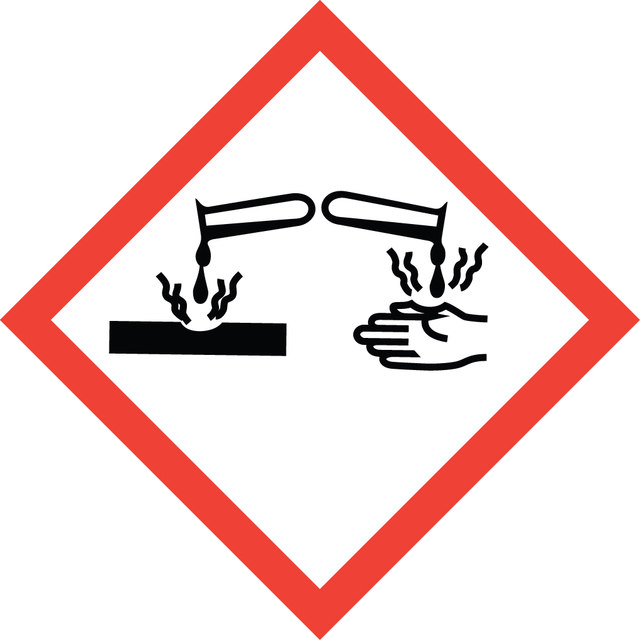
Corrosion

signalword

Danger

Hazard Classifications

Met. Corr. 1 - Skin Corr. 1B

supp_hazards

Storage Class

8B - Non-combustible corrosive hazardous materials

wgk

WGK 3

flash_point_f

Not applicable

flash_point_c

Not applicable

ppe

Eyeshields, Faceshields, Gloves, type P3 (EN 143) respirator cartridges

Regulatory Information

危险化学品
This item has

Choose from one of the most recent versions:

Certificates of Analysis (COA)

Lot/Batch Number

Don't see the Right Version?

If you require a particular version, you can look up a specific certificate by the Lot or Batch number.

Already Own This Product?

Find documentation for the products that you have recently purchased in the Document Library.

Visit the Document Library

Erik A Wu et al.
Nature communications, 12(1), 1256-1256 (2021-02-25)
Rechargeable solid-state sodium-ion batteries (SSSBs) hold great promise for safer and more energy-dense energy storage. However, the poor electrochemical stability between current sulfide-based solid electrolytes and high-voltage oxide cathodes has limited their long-term cycling performance and practicality. Here, we report
Synthesis of 2, 3-dihydroquinazolin-4 (1H)-ones catalyzed by zirconium (IV) chloride as a mild and efficient catalyst
Abdollahi-Alibeik M and Shabani E
Chinese Chemical Letters = Zhongguo Hua Xue Kuai Bao, 22(10), 1163-1166 (2011)
Applications of zirconium (IV) chloride in organic synthesis
Smitha G, et al.
Synthesis, 2008(06), 829-855 (2008)
Stefania Fioravanti et al.
Organic & biomolecular chemistry, 10(41), 8207-8210 (2012-09-26)
ZrCl(4) was found to be an ideal catalyst to promote aza-Henry reactions between trifluoromethyl aldimines and some nitro alkanes giving new fluorinated β-nitro amines. The reaction is strongly influenced by the CF(3) group, the yield by the alkyl chain of
Thomas A Dineen et al.
Journal of the American Chemical Society, 128(50), 16406-16409 (2006-12-15)
Two protocols for the transamidation of primary amides with primary and secondary amines, forming secondary and tertiary amides, respectively, are described. Both processes employ N,N-dialkylformamide dimethyl acetals for primary amide activation, producing N'-acyl-N,N-dialkylformamidines as intermediates, as widely documented in the

Our team of scientists has experience in all areas of research including Life Science, Material Science, Chemical Synthesis, Chromatography, Analytical and many others.

Contact Technical Service