
Skip to Content
Merck
CN

637173

Antimony(III) oxide

nanopowder, <250 nm particle size (TEM), ≥99.9% trace metals basis

Synonym(s):

Antimony trioxide, Diantimony trioxide

Sign In to View Organizational & Contract Pricing.

Select a Size


About This Item

Linear Formula:
Sb2O3
CAS Number:
Molecular Weight:
291.52
PubChem Substance ID:
eCl@ss:
38080202
UNSPSC Code:
12352302
NACRES:
NA.23
EC Number:
215-175-0
MDL number:
Technical Service
Need help? Our team of experienced scientists is here for you.
Let Us Assist
Technical Service
Need help? Our team of experienced scientists is here for you.
Let Us Assist

InChI

1S/3O.2Sb

InChI key

ADCOVFLJGNWWNZ-UHFFFAOYSA-N

SMILES string

O=[Sb]O[Sb]=O

assay

≥99.9% trace metals basis

form

nanopowder

reaction suitability

reagent type: catalyst
core: antimony

surface area

15.6 m2/g , typical

particle size

<250 nm (TEM)

bp

1550 °C (lit.)

mp

655 °C (lit.)

bulk density

0.5‑0.6 g/mL

Quality Level

Looking for similar products? Visit Product Comparison Guide
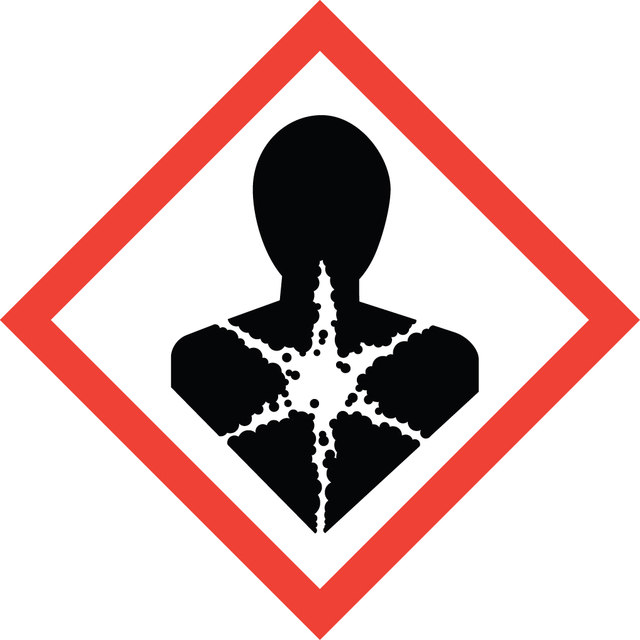
pictograms

Health hazard

signalword

Warning

hcodes

Hazard Classifications

Carc. 2

Storage Class

11 - Combustible Solids

wgk

WGK 1

flash_point_f

Not applicable

flash_point_c

Not applicable

ppe

Eyeshields, Gloves, type P3 (EN 143) respirator cartridges


Choose from one of the most recent versions:

Certificates of Analysis (COA)

Lot/Batch Number

Don't see the Right Version?

If you require a particular version, you can look up a specific certificate by the Lot or Batch number.

Already Own This Product?

Find documentation for the products that you have recently purchased in the Document Library.

Visit the Document Library

Nona Merry M Mitan et al.
Chemosphere, 72(7), 1073-1079 (2008-05-24)
The controlled pyrolysis of polyethylene/polypropylene/polystyrene mixed with brominated high-impact polystyrene containing decabromodiphenyl ether as a brominated flame-retardant with antimony trioxide as a synergist was performed. The effect of decabromodiphenyl ether and antimony trioxide on the formation of its congeners and
Lisa Bregoli et al.
Toxicology, 262(2), 121-129 (2009-06-02)
Nanoparticles (NPs) are materials with one dimension in the range of 1-100 nm. The toxicity of NPs remains widely unknown and still poses concerns, due to the peculiar characteristics of materials in the nano-size range. We analyze the toxicity of
David Kirkland et al.
Mutation research, 627(2), 119-128 (2006-12-19)
Antimony trioxide (Sb2O3, CAS 1309-64-4) is widely used as a flame retardant synergist in a number of household products, as a fining agent in glass manufacture, and as a catalyst in the manufacture of various types of polyester plastics. It
Koen Oorts et al.
Environmental science & technology, 42(12), 4378-4383 (2008-07-09)
Antimony trioxide (Sb2O3) is a widely used chemical that can be emitted to soil. The fate and toxicity of this poorly soluble compound in soil is insufficiently known. A silt-loam soil (pH 7.0, background 0.005 mmol Sb kg(-1)) was amended
N Gurnani et al.
Biological trace element research, 37(2-3), 281-292 (1993-05-01)
Comparison of the clastogenic effects of antimony and bismuth used as trioxides, when administered orally by gavaging to laboratory bred male mice, showed that the former was more strongly clastogenic than the latter. Three doses of each chemical (400, 666.67

Related Content

This thematic issue focuses on the emerging applications of nanomaterials. Nanomaterials are defined as substances with at least one dimension smaller than 100 nm.

Our team of scientists has experience in all areas of research including Life Science, Material Science, Chemical Synthesis, Chromatography, Analytical and many others.

Contact Technical Service