Skip to Content
Merck
CN

547980

Tris[N,N-bis(trimethylsilyl)amide]samarium(III)

98%, solid

Synonym(s):

1,1,1-Trimethyl-N-(trimethylsilyl)silanamine samarium(III) salt, Tris(1,1,1,3,3,3-hexamethyldisilazanato)samarium

Sign In to View Organizational & Contract Pricing.

Select a Size


About This Item

Linear Formula:
Sm(N(Si(CH3)3)2)3
CAS Number:
Molecular Weight:
631.51
UNSPSC Code:
12161600
PubChem Substance ID:
NACRES:
NA.22
MDL number:
Technical Service
Need help? Our team of experienced scientists is here for you.
Let Us Assist
Technical Service
Need help? Our team of experienced scientists is here for you.
Let Us Assist

Product Name

Tris[N,N-bis(trimethylsilyl)amide]samarium(III), 98%

SMILES string

C[Si](C)(C)N([Sm](N([Si](C)(C)C)[Si](C)(C)C)N([Si](C)(C)C)[Si](C)(C)C)[Si](C)(C)C

InChI

1S/3C6H18NSi2.Sm/c3*1-8(2,3)7-9(4,5)6;/h3*1-6H3;/q3*-1;+3

InChI key

MUFPZLRACJKLCI-UHFFFAOYSA-N

assay

98%

form

solid

reaction suitability

core: samarium, reagent type: catalyst

mp

93-106 °C (lit.)

Quality Level

Application

Reactant for synthesis of:
  • Heterobimetallic samarium(III) complexes
  • Binuclear lanthanide complexes

Catalyst for:
  • Coordination polymerization of renewable butyrolactone-based vinyl monomers
  • Intramolecular hydroamination of non-activated alkenes
  • Chiral functionalization of isoxazoles
  • Enantioselective hydroamination / cyclization
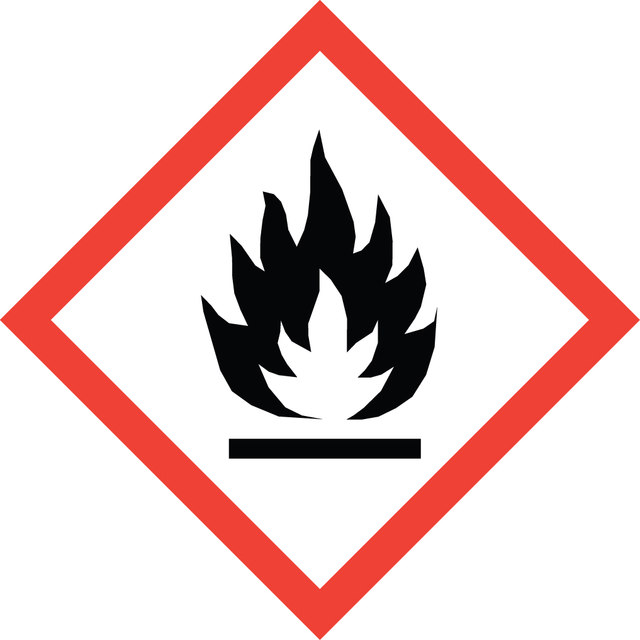
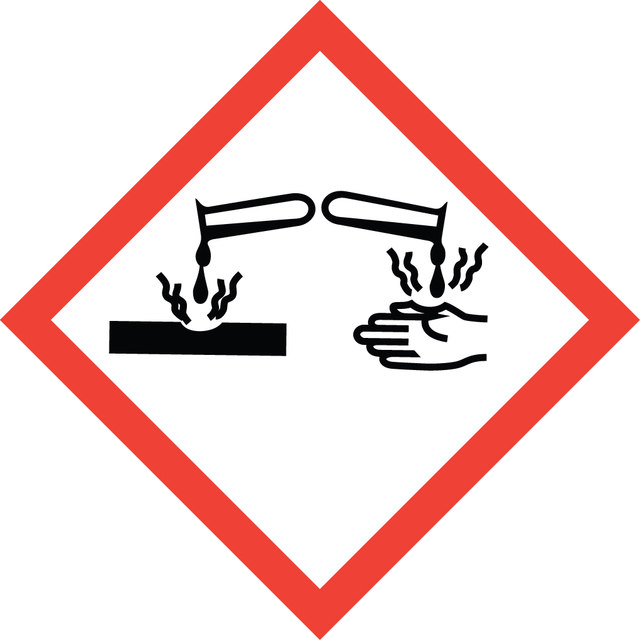
pictograms

FlameCorrosion

signalword

Danger

supp_hazards

Storage Class

4.3 - Hazardous materials which set free flammable gases upon contact with water

wgk

WGK 3

flash_point_f

36.0 °F - closed cup

flash_point_c

2.2 °C - closed cup

ppe

Eyeshields, Faceshields, Gloves, type P3 (EN 143) respirator cartridges

Hazard Classifications

Flam. Sol. 1 - Skin Corr. 1B - Water-react. 2

Regulatory Information

监管及禁止进口产品
This item has

Choose from one of the most recent versions:

Certificates of Analysis (COA)

Lot/Batch Number

Don't see the Right Version?

If you require a particular version, you can look up a specific certificate by the Lot or Batch number.

Already Own This Product?

Find documentation for the products that you have recently purchased in the Document Library.

Visit the Document Library

A Sebok et al.
Journal of chromatography. A, 1211(1-2), 104-112 (2008-10-14)
This paper presents a derivatization, mass fragmentation study relating to the most common six cholic acids, such as cholic, lithocholic, chenodeoxycholic, ursodeoxycholic, 3-hydroxy,7-ketocholanic and dehydrocholic acids, identified and quantified as pollutants in the aquatic environment at the first time. Derivatizations
Jerry Isaacson et al.
Angewandte Chemie (International ed. in English), 48(10), 1845-1848 (2009-01-29)
(-)-Dysibetaine has been synthesized in 11 steps from readily available L-malic acid (see scheme). The key step is a unique Ugi 4-center-3-component cyclization reaction, where an ester group acts as the carboxylic acid component. The use of 1,1,1,3,3,3-hexamethyldisilazane as an
Marko Marinkovic et al.
Advanced materials (Deerfield Beach, Fla.), 24(29), 4005-4009 (2012-06-26)
A model is presented that describes the gate-voltage-dependent contact resistance and channel-length-dependent charge carrier mobility of small-molecule-based organic thin-film transistors in top and bottom drain/source contact configuration.
Natalie M Clark et al.
Chemical communications (Cambridge, England), (39)(39), 5835-5837 (2009-09-30)
'Conventional' (-)-sparteine adducts of lithium and sodium 1,1,1,3,3,3-hexamethyldisilazide (HMDS) were prepared and characterised, along with an unexpected and 'unconventional' hydroxyl-incorporated sodium sodiate, [(-)-sparteine x Na(mu-HMDS)Na x (-)-sparteine](+)[Na(4)(mu-HMDS)(4)(OH)](-)--the complex anion of which is the first inverse crown ether anion.
Nur Hazlin Hazrin-Chong et al.
Journal of microbiological methods, 90(2), 96-99 (2012-05-09)
The use of hexamethyldisilazane (HMDS) as a drying agent was investigated in the specimen preparation for scanning electron microscopy (SEM) imaging of bacterial surface colonization on sub-bituminous coal. The ability of microbes to biofragment, ferment and generate methane from coal

Our team of scientists has experience in all areas of research including Life Science, Material Science, Chemical Synthesis, Chromatography, Analytical and many others.

Contact Technical Service