
Skip to Content
Merck
CN

545007

Tantalum

powder, 99.99% trace metals basis

Synonym(s):

Ta

Sign In to View Organizational & Contract Pricing.

Select a Size


About This Item

Empirical Formula (Hill Notation):
Ta
CAS Number:
Molecular Weight:
180.95
NACRES:
NA.23
PubChem Substance ID:
UNSPSC Code:
12141741
MDL number:
Technical Service
Need help? Our team of experienced scientists is here for you.
Let Us Assist
Technical Service
Need help? Our team of experienced scientists is here for you.
Let Us Assist

Product Name

Tantalum, powder, 99.99% trace metals basis

InChI

1S/Ta

SMILES string

[Ta]

InChI key

GUVRBAGPIYLISA-UHFFFAOYSA-N

vapor pressure

<0.01 mmHg ( 537.2 °C)

assay

99.99% trace metals basis

form

powder

autoignition temp.

572 °F

resistivity

13.5 μΩ-cm, 20°C

bp

5425 °C (lit.)

mp

2996 °C (lit.)

density

16.69 g/cm3 (lit.)

Quality Level

Application
Tantalum powder, a semiconducting material, is used as a photocatalyst and shows high efficiency in the solar splitting of water. Its biocompatibility makes it useful in the development of medical devices and implants.

pictograms

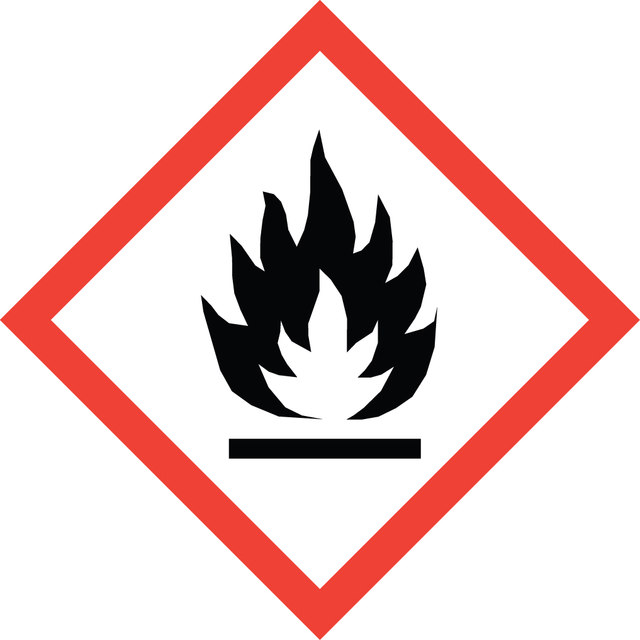
Flame

signalword

Danger

hcodes

Hazard Classifications

Flam. Sol. 1

Storage Class

4.1B - Flammable solid hazardous materials

wgk

nwg

flash_point_f

Not applicable

flash_point_c

Not applicable


Choose from one of the most recent versions:

Certificates of Analysis (COA)

Lot/Batch Number

Don't see the Right Version?

If you require a particular version, you can look up a specific certificate by the Lot or Batch number.

Already Own This Product?

Find documentation for the products that you have recently purchased in the Document Library.

Visit the Document Library

Additively manufactured porous tantalum implants
Wauthle R, et al.
Acta Biomaterialia, 14(13), 217-225 (2015)
Tantalum-based semiconductors for solar water splitting
Zhang P, et al.
Chemical Society Reviews, 43(13), 4395-4422 (2014)
Matthew D Budge et al.
Journal of shoulder and elbow surgery, 22(4), 535-541 (2012-09-11)
Aseptic loosening of all-polyethylene glenoid components remains a limiting factor in achieving long-term implant survival in total shoulder arthroplasty (TSA). This study prospectively evaluated the functional and radiographic outcomes of patients undergoing TSA with a novel, porous, tantalum-backed glenoid component
J-Y Chun et al.
European journal of vascular and endovascular surgery : the official journal of the European Society for Vascular Surgery, 45(2), 141-144 (2013-01-02)
Type 1 endoleaks following endovascular aortic aneurysm repair are associated with poor outcomes and re-intervention is recommended as soon as possible after diagnosis. When standard endovascular or surgical treatment options are unsuitable due to severe co-morbidity or adverse anatomic factors
S Nag et al.
Journal of the mechanical behavior of biomedical materials, 16, 21-28 (2012-11-10)
Microstructure and mechanical properties of laser deposited complex quaternary Ti-34Nb-7Zr-7Ta (all wt%), an orthopedic load-bearing implant alloy, has been investigated in detail in both as-deposited as well as heat-treated (β-solutionized and quenched) conditions. The difference in stress-strain behavior of this

Articles

An article concerning self-propagating reactions induced by mechanical alloying, presented by Sigma-Aldrich.com.

Biomedical implants are essentially foreign substances within the human body that must survive many years’ exposure to demanding mechanical and physiological conditions. Despite these challenges, metal implants have been widely used to substitute for or rebuild hard tissues such as bones and teeth.

Our team of scientists has experience in all areas of research including Life Science, Material Science, Chemical Synthesis, Chromatography, Analytical and many others.

Contact Technical Service