Skip to Content
Merck
CN

516805

4,4′-Oxydianiline

97%

Synonym(s):

4,4′-Diaminodiphenyl ether, 4-Aminophenyl ether

Sign In to View Organizational & Contract Pricing.

Select a Size


About This Item

Linear Formula:
O(C6H4NH2)2
CAS Number:
Molecular Weight:
200.24
UNSPSC Code:
12352100
NACRES:
NA.22
PubChem Substance ID:
EC Number:
202-977-0
Beilstein/REAXYS Number:
475735
MDL number:
Technical Service
Need help? Our team of experienced scientists is here for you.
Let Us Assist
Technical Service
Need help? Our team of experienced scientists is here for you.
Let Us Assist

Product Name

4,4′-Oxydianiline, 97%

assay

97%

InChI key

HLBLWEWZXPIGSM-UHFFFAOYSA-N

InChI

1S/C12H12N2O/c13-9-1-5-11(6-2-9)15-12-7-3-10(14)4-8-12/h1-8H,13-14H2

SMILES string

Nc1ccc(Oc2ccc(N)cc2)cc1

vapor pressure

10 mmHg ( 240 °C)

form

solid

mp

188-192 °C (lit.)

Quality Level

Looking for similar products? Visit Product Comparison Guide

Related Categories

Application

4,4′-Oxydianiline can be used as a reactant to synthesize:
  • Aramides via polycondensation with aromatic dicarboxylic acids.
  • Azomethine bisphenols by reacting with aromatic aldehydes, which can be used to synthesize polyazomethines by the oxidative polycondensation in the presence of NaOCl as an oxidant.
  • Polyguanamines by the chemoselective polycondensation with 2-amino-4,6-dichloro-1,3,5-triazine in the presence of potassium carbonate as a base.
It can also be used for the functionalization of carbon nanotubes, which can react with terminal dianhydrides to synthesize polyimide aerogels.

signalword

Danger

Hazard Classifications

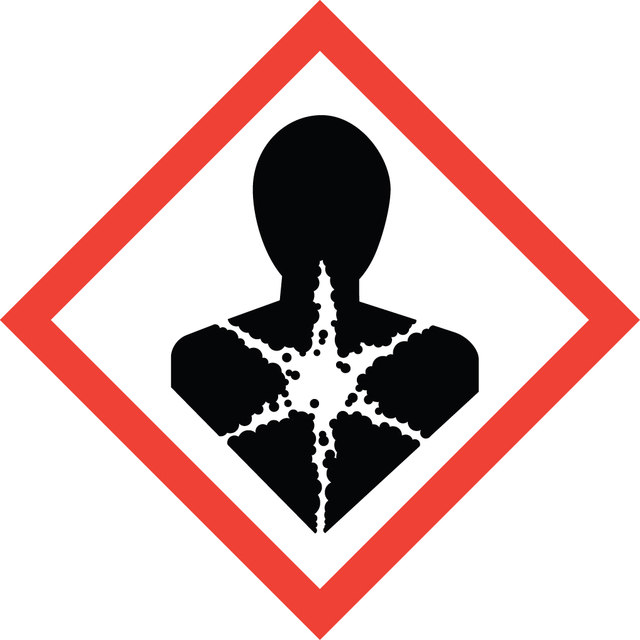
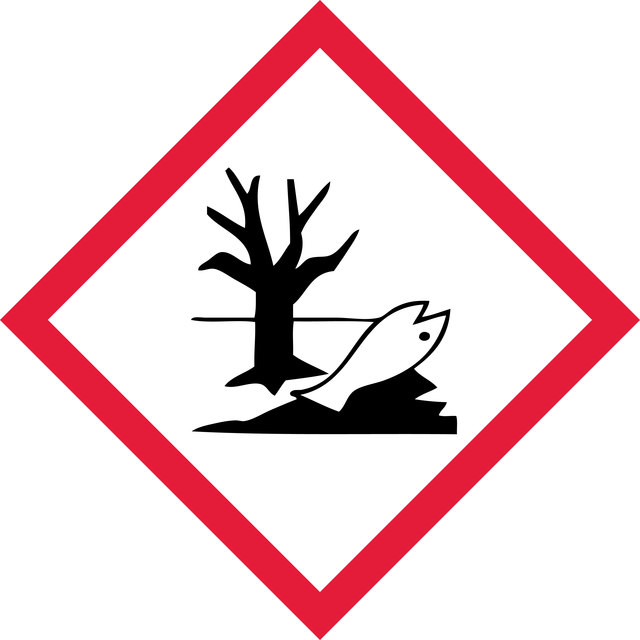
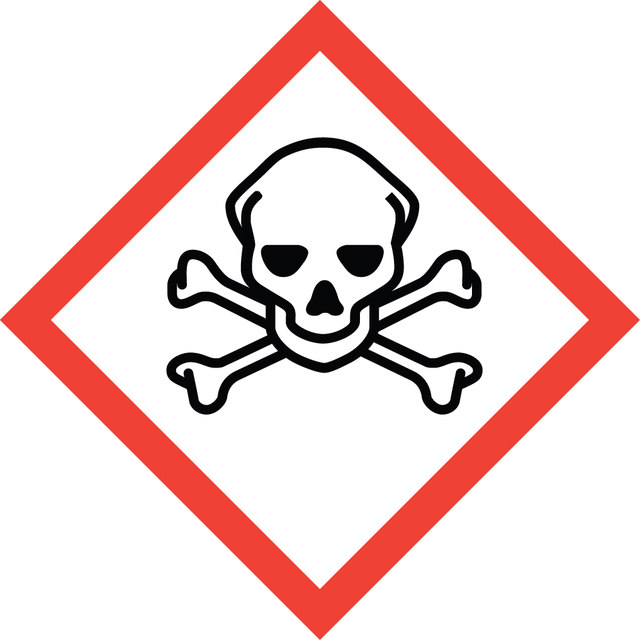
Acute Tox. 3 Dermal - Acute Tox. 3 Inhalation - Acute Tox. 3 Oral - Aquatic Chronic 1 - Carc. 1B - Muta. 1B - Repr. 2 - Skin Sens. 1 - STOT RE 2 Oral

target_organs

Thyroid

Storage Class

6.1C - Combustible acute toxic Cat.3 / toxic compounds or compounds which causing chronic effects

wgk

WGK 3

flash_point_f

426.2 °F - closed cup

flash_point_c

219 °C - closed cup

ppe

Eyeshields, Faceshields, Gloves, type P3 (EN 143) respirator cartridges


Choose from one of the most recent versions:

Certificates of Analysis (COA)

Lot/Batch Number

Don't see the Right Version?

If you require a particular version, you can look up a specific certificate by the Lot or Batch number.

Already Own This Product?

Find documentation for the products that you have recently purchased in the Document Library.

Visit the Document Library

Copolyimides from 2, 3, 3', 4'-biphenyltetracarboxylic dianhydride and pyromellitic dianhydride with 4, 4'-oxydianiline.
Hergenrother PM, et al.
Polymer, 45(16), 5441-5449 (2004)
Gas permeability and permselectivity in polyimides based on 3, 3', 4, 4'-biphenyltetracarboxylic dianhydride.
Tanaka K, et al.
Journal of Membrane Science, 47(1), 203-215 (1989)
Pervaporation of water/acetic acid through polyimide membranes from 3, 3', 4, 4'-benzophenone tetracarboxylic dianhydride and 4, 4'-oxydianiline.
Moon YD, et al.
Polym. Bull., 29(3-4), 431-438 (1992)
Synthesis, characterization, optical and electrical properties of thermally stable polyazomethines derived from 4, 4'-oxydianiline.
Dineshkumar S, et al.
Journal of Adhesion Science and Technology, 29(23), 2605-2621 (2015)
Anders Lennartson et al.
Chirality, 27(7), 425-429 (2015-06-03)
We studied the spontaneous formation of chiral crystals of four diaryl ethers, 3-phenoxybenzaldehyde, 1; 1,3-dimethyl-2-phenoxybenzene, 2; di(4-aminophenyl) ether, 3; and di(p-tolyl) ether, 4. Compounds 1, 3, and 4 form conformationally chiral molecules in the solid state, while the chirality of

Our team of scientists has experience in all areas of research including Life Science, Material Science, Chemical Synthesis, Chromatography, Analytical and many others.

Contact Technical Service