
Skip to Content
Merck
CN

481130

Gold(I) chloride

99.9% trace metals basis

Synonym(s):

Aurous chloride, Gold monochloride

Sign In to View Organizational & Contract Pricing.

Select a Size


About This Item

Linear Formula:
AuCl
CAS Number:
Molecular Weight:
232.42
NACRES:
NA.23
PubChem Substance ID:
UNSPSC Code:
12352302
EC Number:
233-655-8
MDL number:
Assay:
99.9% trace metals basis
Form:
powder
Technical Service
Need help? Our team of experienced scientists is here for you.
Let Us Assist
Technical Service
Need help? Our team of experienced scientists is here for you.
Let Us Assist

Product Name

Gold(I) chloride, 99.9% trace metals basis

InChI key

FDWREHZXQUYJFJ-UHFFFAOYSA-M

InChI

1S/Au.ClH/h;1H/q+1;/p-1

SMILES string

[Cl-].[Au+]

assay

99.9% trace metals basis

form

powder

reaction suitability

core: gold
reagent type: catalyst

impurities

≤1500 ppm Trace Metal Analysis

mp

289 °C (dec.) (lit.)

density

7.57 g/mL at 25 °C (lit.)

Quality Level

Looking for similar products? Visit Product Comparison Guide

Application

Gold(I) chloride can be used:
  • As a precursor to prepare magnetic nanocatalyst systems for various organic transformations. For example, Fe3O4@SiO2-P–AuCl can be used as a catalyst for one-pot reductive amination of aldehydes and ketones with various aromatic amines.
  • As a starting material to synthesize Au-containing complexes for application in the field of drug delivery, solar cells, sensors, and organic synthesis.
  • As a precatalyst for stereoselective cycloisomerization of α-thioallenes to 2,5-dihydrothiophenes via C-S bond formation.
  • As a catalyst for the conversion of siloxy cyclohexadienes, to the corresponding1,2- and 1,3-cyclohexenones via Gold-Catalyzed Cycloisomerization.

General description

Gold(I) chloride is a yellow crystalline solid with a monoclinic structure. It sublimes at elevated temperatures. Gold(III)chloride is thermally decomposed to produce gold(I) chloride. It is widely used as a precursor to prepare gold nanoparticles and catalyst systems.

pictograms

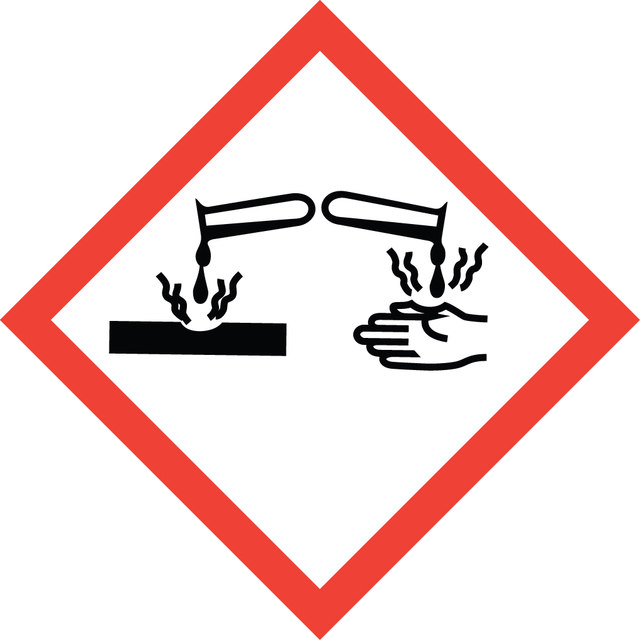
CorrosionExclamation mark

signalword

Danger

hcodes

Hazard Classifications

Skin Corr. 1B - Skin Sens. 1

Storage Class

8A - Combustible corrosive hazardous materials

wgk

WGK 3

flash_point_f

Not applicable

flash_point_c

Not applicable

ppe

Eyeshields, Faceshields, Gloves, type P3 (EN 143) respirator cartridges


Choose from one of the most recent versions:

Certificates of Analysis (COA)

Lot/Batch Number

Don't see the Right Version?

If you require a particular version, you can look up a specific certificate by the Lot or Batch number.

Already Own This Product?

Find documentation for the products that you have recently purchased in the Document Library.

Visit the Document Library

The First Gold-Catalyzed C?S Bond Formation: Cycloisomerization of ?-Thioallenes to 2,5-Dihydrothiophenes
Nobuyoshi Morita
Angewandte Chemie (International Edition in English) (2006)
Au-containing coordination polymers based on polyphosphorus ligand complexes
Helena Brake, et al.
Inorganic Chemistry, 60, 6027-6039 (2021)
Gold-Catalyzed Cycloisomerization of Siloxy Enynes to Cyclohexadienes
Liming Zhang and Sergey A. Kozmin
Journal of the American Chemical Society, 126, 11806-11807 (2004)
Based on magnetic nanoparticles: Gold reusable nanomagnetic catalysts in organic synthesis
Mosstafa Kazemi
Synthetic Communications, 50, 2079-2094 (2020)
Víctor S Carriel et al.
The journal of histochemistry and cytochemistry : official journal of the Histochemistry Society, 59(3), 270-277 (2011-03-08)
For the histopathologic diagnosis of melanocytic lesions, it could be necessary to identify the melanin pigment because its visualization is unspecific with hematoxylin-eosin (HE). The Fontana-Masson (FM) technique is used in histopathology in this type of lesion, which allows the

Articles

Access gold precatalysts, silver salts, and unsaturated building blocks to accelerate research success in catalysis applications.

Plasmonic nanoparticles have unique optical properties that can be tailored to suit a variety of applications in the biotechnology1–8 and electronics9–16 industries.

Our team of scientists has experience in all areas of research including Life Science, Material Science, Chemical Synthesis, Chromatography, Analytical and many others.

Contact Technical Service