Skip to Content
Merck
CN

479519

Platinum(0)-1,3-divinyl-1,1,3,3-tetramethyldisiloxane complex solution

in xylene, Pt ~2 %

Synonym(s):

Karstedt′s catalyst, Platinum(0) 1,3-diethenyl-1,1,3,3-tetramethyldisiloxane complexes

Sign In to View Organizational & Contract Pricing.

Select a Size


About This Item

Linear Formula:
O[Si(CH3)2CH=CH2]2Pt
CAS Number:
Molecular Weight:
381.48
NACRES:
NA.22
PubChem Substance ID:
UNSPSC Code:
12161600
MDL number:
Technical Service
Need help? Our team of experienced scientists is here for you.
Let Us Assist
Technical Service
Need help? Our team of experienced scientists is here for you.
Let Us Assist

Product Name

Platinum(0)-1,3-divinyl-1,1,3,3-tetramethyldisiloxane complex solution, in xylene, Pt ~2 %

InChI

1S/C8H18OSi2.Pt/c1-7-10(3,4)9-11(5,6)8-2;/h7-8H,1-2H2,3-6H3;

SMILES string

[Pt].C[Si](C)(O[Si](C)(C)C=C)C=C

InChI key

RCNRJBWHLARWRP-UHFFFAOYSA-N

vapor pressure

7 mmHg ( 21 °C)

composition

Pt, ~2%

reaction suitability

core: platinum
reagent type: catalyst

concentration

in xylene

bp

138 °C

mp

12-13 °C

density

0.855 g/mL at 25 °C

Quality Level

Looking for similar products? Visit Product Comparison Guide

Application

Platinum(0)-1,3-divinyl-1,1,3,3-tetramethyldisiloxane complex solution is a powerful hydrosilylation catalyst for the preparation of trans-β-silanes.

It has also been used in the reduction of carboxamides to amines.
General description

Platinum(0)-1,3-divinyl-1,1,3,3-tetramethyldisiloxane complex is a platinum complex, commonly known as a Karstedt′s catalyst. It is generally employed as a catalyst in hydrosilylation reactions.

signalword

Danger

Hazard Classifications

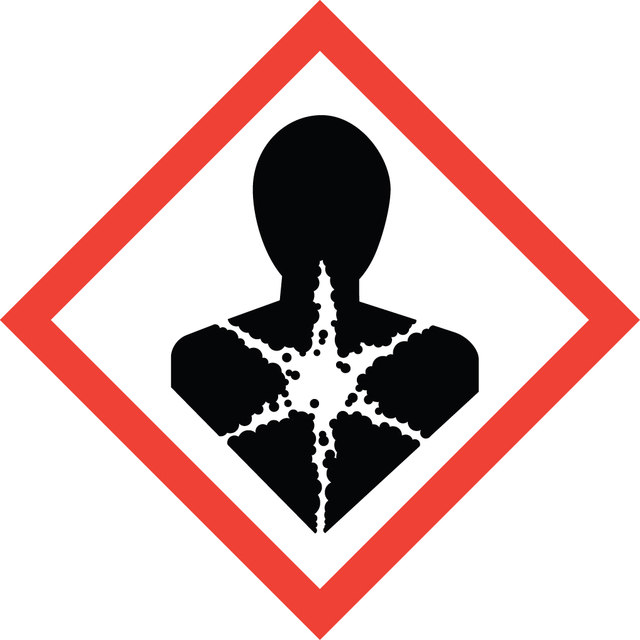
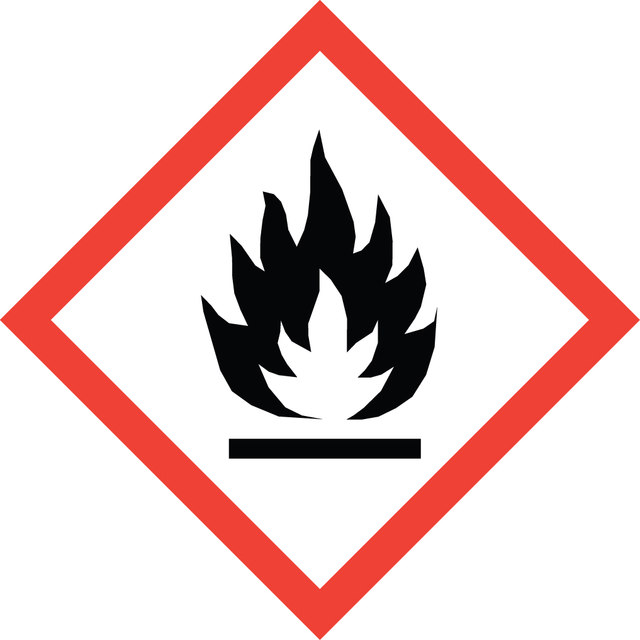
Acute Tox. 4 Dermal - Acute Tox. 4 Inhalation - Aquatic Chronic 3 - Asp. Tox. 1 - Eye Irrit. 2 - Flam. Liq. 3 - Skin Irrit. 2 - STOT RE 2 Inhalation - STOT SE 3

target_organs

Central nervous system,Liver,Kidney, Respiratory system

Storage Class

3 - Flammable liquids

wgk

WGK 3

flash_point_f

77.0 °F - closed cup

flash_point_c

25 °C - closed cup

Regulatory Information

危险化学品
This item has

Choose from one of the most recent versions:

Certificates of Analysis (COA)

Lot/Batch Number

Don't see the Right Version?

If you require a particular version, you can look up a specific certificate by the Lot or Batch number.

Already Own This Product?

Find documentation for the products that you have recently purchased in the Document Library.

Visit the Document Library

Kenichiro Itami et al.
The Journal of organic chemistry, 67(8), 2645-2652 (2002-04-13)
Metal-catalyzed hydrosilylation of alkenes and alkynes using dimethyl(pyridyl)silane is described. The hydrosilylation of alkenes using dimethyl(2-pyridyl)silane (2-PyMe(2)SiH) proceeded well in the presence of a catalytic amount of RhCl(PPh(3))(3) with virtually complete regioselectivity. By taking advantage of the phase tag property
Practical access to amines by platinum-catalyzed reduction of carboxamides with hydrosilanes: synergy of dual Si- H groups leads to high efficiency and selectivity
Hanada S, et al.
Journal of the American Chemical Society, 131, 15032-15040 (2009)
S E Denmark et al.
Organic letters, 3(7), 1073-1076 (2001-03-30)
[reaction: see text]. The formal addition of an aryl-H or alkenyl-H bond across a terminal alkyne has been accomplished by the combination of platinum-catalyzed hydrosilylation followed by palladium-catalyzed cross-coupling. The use of the t-Bu3P-Pt(DVDS) catalyst in combination with tetramethyldisiloxane gave
Ionic liquids as solvents for rhodium and platinum catalysts used in hydrosilylation reaction
Zielinski W, et al.
Molecules (Basel), 21, 1115-1115 (2016)
Denmark, S. E.; Wang, Z.
Organic Syntheses, 81, 54-54 (2005)

Articles

Trost group's protocol yields α-vinylsilanes from terminal acetylenes using [Cp*Ru(MeCN)3]PF6 catalyst and others for hydrosilylation.

Our team of scientists has experience in all areas of research including Life Science, Material Science, Chemical Synthesis, Chromatography, Analytical and many others.

Contact Technical Service