
Skip to Content
Merck
CN

469858

Tetrakis(dimethylamido)titanium(IV)

99.999% trace metals basis

Synonym(s):

TDMAT, Tetrakis(dimethylamino)titanium(IV)

Sign In to View Organizational & Contract Pricing.

Select a Size


About This Item

Linear Formula:
[(CH3)2N]4Ti
CAS Number:
Molecular Weight:
224.17
NACRES:
NA.23
PubChem Substance ID:
UNSPSC Code:
12352103
EC Number:
221-904-3
MDL number:
Technical Service
Need help? Our team of experienced scientists is here for you.
Let Us Assist
Technical Service
Need help? Our team of experienced scientists is here for you.
Let Us Assist

Product Name

Tetrakis(dimethylamido)titanium(IV), 99.999% trace metals basis

InChI key

MNWRORMXBIWXCI-UHFFFAOYSA-N

InChI

1S/4C2H6N.Ti/c4*1-3-2;/h4*1-2H3;/q4*-1;+4

SMILES string

CN(C)[Ti](N(C)C)(N(C)C)N(C)C

assay

99.999% trace metals basis

form

liquid

reaction suitability

core: titanium

bp

50 °C/0.5 mmHg (lit.)

density

0.947 g/mL at 25 °C (lit.)

Quality Level

Looking for similar products? Visit Product Comparison Guide

Application

Tetrakis(dimethylamido)titanium(IV) (TDMAT) is a precursor to titanium nitride (TiN) thin films by organometallic chemical vapor deposition (OMCVD)and titanium dioxide thin films by atomic layer deposition (ALD).TDMAT undergoes exothermal reaction with excess cyclopentadiene to yield tris(dimethylamido)(η5-cyclopentadienyl)titanium(IV).

Features and Benefits

  • 99.999% trace metals basis ensures superior quality of deposited films, with minimal defects and consistent properties, critical for microelectronics and optoelectronics applications.
  • High purity reduces the risk of contamination during the coating process, leading to enhanced adhesion, durability, and performance of the final products.
  • The absence of impurities allows for the precise control of particle size and morphology, improving the effectiveness of nanoparticles in targeted applications.
  • High purity ensures that electronic properties are not compromised by impurities, enhancing device performance and reliability.
  • Controlling heavy metals at ppb levels ensures effective contamination control, regulatory compliance, and optimized performance.

General description

Tetrakis(dimethylamido)titanium(IV) [Ti(N(CH₃)₂)₄], or TDMAT, is a volatile, colourless to pale yellow liquid. Its high volatility and thermal stability make it suitable for chemical vapor deposition (CVD) and atomic layer deposition (ALD), enabling the controlled deposition of titanium-based films such as titanium nitride (TiN) and titanium dioxide (TiO₂). It also supports uniform film growth at low temperatures, making it compatible with temperature-sensitive substrates

pictograms

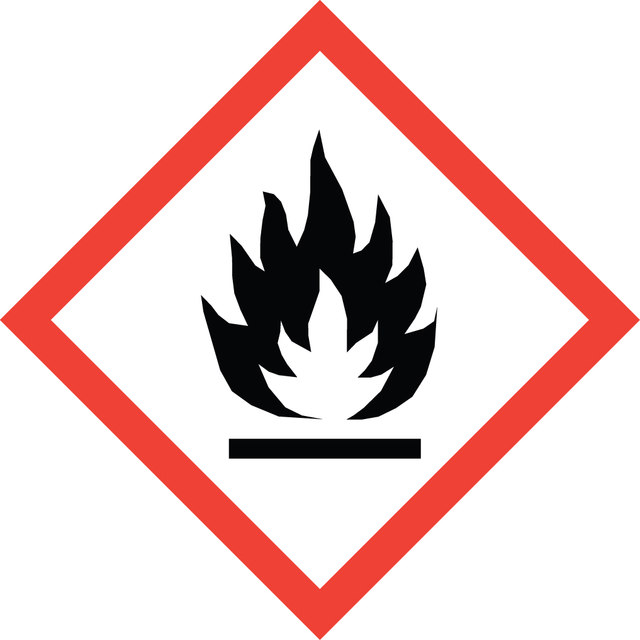
FlameCorrosion

signalword

Danger

Hazard Classifications

Flam. Liq. 2 - Skin Corr. 1B - Water-react 1

supp_hazards

Storage Class

4.3 - Hazardous materials which set free flammable gases upon contact with water

wgk

WGK 3

flash_point_f

-22.0 °F - closed cup

flash_point_c

-30 °C - closed cup

ppe

Faceshields, Gloves, Goggles, type ABEK (EN14387) respirator filter

Regulatory Information

危险化学品
This item has

Choose from one of the most recent versions:

Certificates of Analysis (COA)

Lot/Batch Number

Don't see the Right Version?

If you require a particular version, you can look up a specific certificate by the Lot or Batch number.

Already Own This Product?

Find documentation for the products that you have recently purchased in the Document Library.

Visit the Document Library

Tianshuo Zhao et al.
Proceedings of the National Academy of Sciences of the United States of America, 118(7) (2021-02-10)
Semiconductors of narrow bandgaps and high quantum efficiency have not been broadly utilized for photocatalytic coevolution of H2 and O2 via water splitting. One prominent issue is to develop effective protection strategies, which not only mitigate photocorrosion in an aqueous
Young modulus and Poisson ratio measurements of TiO 2 thin films deposited with atomic layer deposition.
Borgese L, et al.
Surface and Coatings Technology, 206(8), 2459-2463 (2012)
Degao Wang et al.
Proceedings of the National Academy of Sciences of the United States of America, 115(34), 8523-8528 (2018-08-08)
Stabilized photoanodes for light-driven water oxidation have been prepared on nanoparticle core/shell electrodes with surface-stabilized donor-acceptor chromophores, a water oxidation catalyst, and an electron-transfer mediator. For the electrode, fluorine-doped tin oxide FTO|SnO2/TiO2|-Org1-|1.1 nm Al2O3|-RuP2+-WOC (water oxidation catalyst) with Org1 (1-cyano-2-(4-(diphenylamino)phenyl)vinyl)phosphonic
Microstructure and elastic properties of atomic layer deposited TiO 2 anatase thin films.
Borgese L, et al.
Acta Materialia, 59(7), 2891-2900 (2011)
Improving performance via blocking layers in dye-sensitized solar cells based on nanowire photoanodes.
Li L, et al.
ACS Applied Materials & Interfaces, 7(23), 12824-12831 (2015)

Articles

Nanomaterials are considered a route to the innovations required for large-scale implementation of renewable energy technologies in society to make our life sustainable.

The properties of many devices are limited by the intrinsic properties of the materials that compose them.

Continuous efficiency improvements in photovoltaic devices result from material advancements and manufacturing innovation.

Titanium dioxide applications: Semiconducting material characteristics and diverse functionalities.

Our team of scientists has experience in all areas of research including Life Science, Material Science, Chemical Synthesis, Chromatography, Analytical and many others.

Contact Technical Service