Skip to Content
Merck
CN

469319

Poly(dimethylsiloxane)

viscosity 1.0 cSt (25 °C)

Synonym(s):

Octamethyltrisiloxane

Sign In to View Organizational & Contract Pricing.

Select a Size


About This Item

Linear Formula:
[(CH3)3SiO]2Si(CH3)2
CAS Number:
Molecular Weight:
236.53
UNSPSC Code:
12162002
NACRES:
NA.23
PubChem Substance ID:
EC Number:
203-497-4
Beilstein/REAXYS Number:
1753063
MDL number:
Technical Service
Need help? Our team of experienced scientists is here for you.
Let Us Assist
Technical Service
Need help? Our team of experienced scientists is here for you.
Let Us Assist

InChI key

CXQXSVUQTKDNFP-UHFFFAOYSA-N

InChI

1S/C8H24O2Si3/c1-11(2,3)9-13(7,8)10-12(4,5)6/h1-8H3

SMILES string

C[Si](C)(C)O[Si](C)(C)O[Si](C)(C)C

vapor density

>1 (vs air)

refractive index

n20/D 1.384 (lit.)

viscosity

1.0 cSt(25 °C)

bp

153 °C (lit.)

mp

−82 °C (lit.)

density

0.82 g/mL at 25 °C (lit.)

Quality Level

General description

Poly(dimethylsiloxane) (PDMS), also known as dimethicone, is an organosilicon compound that is widely used as a siloxane based elastomer. It is a hydrophobic material with attractive physical and chemical properties such as elasticity, optical transparency, tunable surface chemistry, and low electrical conductivity.

Application

PDMS can be used in microfluidic devices, nanolithography, and other membrane based applications.

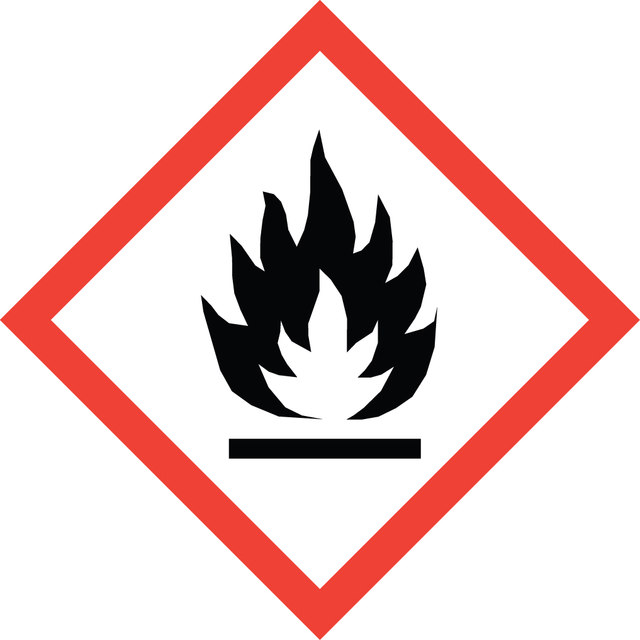
pictograms

Flame

Storage Class

3 - Flammable liquids

wgk

WGK 3

flash_point_f

84.2 °F - (External MSDS)

flash_point_c

29 °C - (External MSDS)

ppe

Eyeshields, Faceshields, Gloves, type ABEK (EN14387) respirator filter

signalword

Danger

Hazard Classifications

Flam. Liq. 3 - vPvB

Regulatory Information

危险化学品
This item has

Choose from one of the most recent versions:

Certificates of Analysis (COA)

Lot/Batch Number

Don't see the Right Version?

If you require a particular version, you can look up a specific certificate by the Lot or Batch number.

Already Own This Product?

Find documentation for the products that you have recently purchased in the Document Library.

Visit the Document Library

Fabrication of microfluidic systems in poly (dimethylsiloxane)
McDonald JC, et al.
Electrophoresis, 21(1), 27-40 (2000)
Chong In Shin et al.
Pharmaceutics, 11(7) (2019-08-03)
The stratum corneum is the outermost skin layer that obstructs the delivery of active ingredients found in cosmeceutical products. Chemical peels and microbeads have been used to overcome this layer, but these methods can cause side effects and are not
Electrospinning of poly (dimethylsiloxane)/poly (methyl methacrylate) nanofibrous membrane: Fabrication and application in protein microarrays
Yang D, et al.
Biomacromolecules, 10(12), 3335-3340 (2009)
Electrokinetic control of fluid flow in native poly (dimethylsiloxane) capillary electrophoresis devices
Ocvirk G, et al.
Electrophoresis, 21(1), 107-115 (2000)
Shira Joudan et al.
Environmental health perspectives, 125(11), 117001-117001 (2017-11-15)
Perfluoroalkyl phosphinic acids (PFPiAs) have been detected in humans, wildlife, and various environmental matrices. These compounds have been used with perfluoroalkyl phosphonic acids (PFPAs) as surfactants in consumer products and as nonfoaming additives in pesticide formulations. Unlike the structurally related

Articles

Self-healing soft electronic materials enable autonomous repair, reducing waste and costs in electronic devices.

Related Content

We offer PDMS surface modification kit which allows for durable hydrophilization of various polydimethylsiloxane (PDMS) surfaces.

Our team of scientists has experience in all areas of research including Life Science, Material Science, Chemical Synthesis, Chromatography, Analytical and many others.

Contact Technical Service