

InChI key
ZRJNGFJIBZKXTP-UHFFFAOYSA-M
InChI
1S/C7H7.BrH.Mg/c1-7-5-3-2-4-6-7;;/h3-6H,1H3;1H;/q;;+1/p-1
vapor density
2.5 (vs air)
vapor pressure
25.8 psi ( 55 °C), 7.99 psi ( 20 °C)
autoignition temp.
475 °F
expl. lim.
8 %
refractive index
n20/D 1.363 (lit.)
bp
30-60 °C (lit.)
density
0.64 g/mL at 25 °C (lit.)
Looking for similar products? Visit Product Comparison Guide
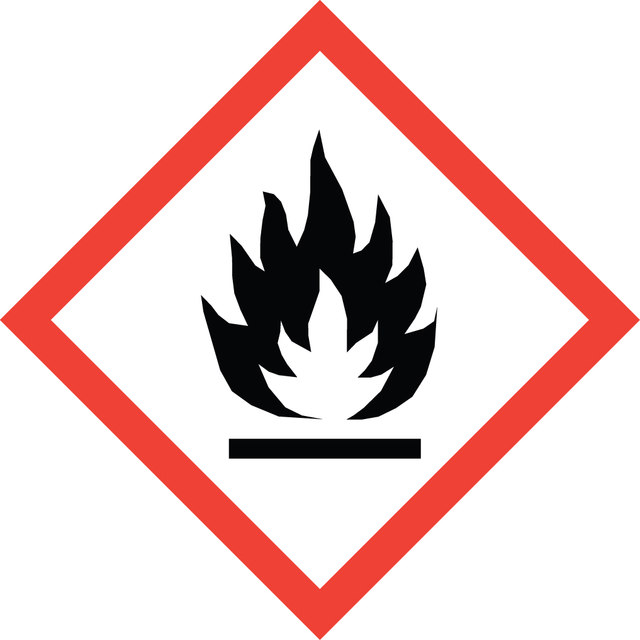
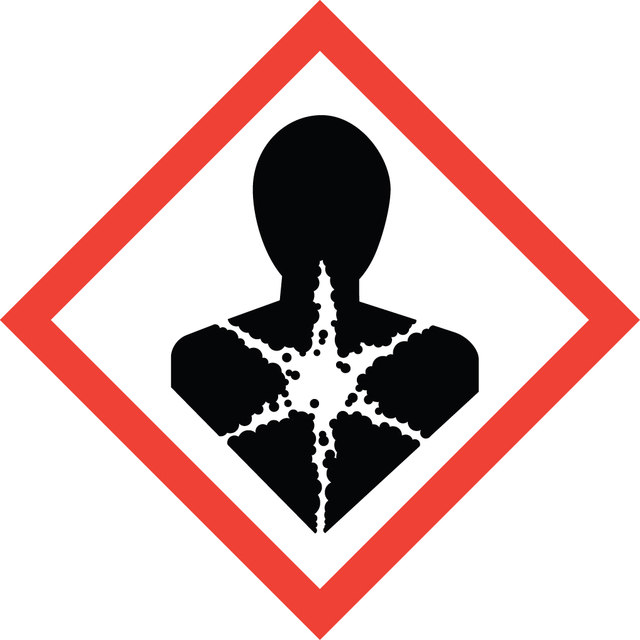
signalword
Danger
hcodes
Hazard Classifications
Asp. Tox. 1 - Carc. 1B - Flam. Liq. 2 - Muta. 1B
Storage Class
3 - Flammable liquids
flash_point_f
-56.2 °F - closed cup
flash_point_c
-49 °C - closed cup
ppe
Eyeshields, Faceshields, Gloves
Regulatory Information
新产品
This item has
Choose from one of the most recent versions:
Already Own This Product?
Find documentation for the products that you have recently purchased in the Document Library.
H R Lam et al.
Toxicology letters, 80(1-3), 39-48 (1995-10-01)
The effects of 3 weeks' or 6 months' inhalation exposure of rats to aromatic white spirit 6 h/day, 5 days/week at 0, 400, or 800 ppm were studied. Synaptosomal neurochemistry was investigated as index of the in situ conditions in
P S Tofts et al.
Magnetic resonance imaging, 15(1), 69-75 (1997-01-01)
The selection of a suitable low dielectric constant liquid for radiofrequency coil nonuniformity measurements is described. Measurements of dielectric constant (relative permittivity) were made on a range of candidate liquids. After excluding liquids that were too inflammable or too viscous
Gunnar Damgård Nielsen et al.
Basic & clinical pharmacology & toxicology, 98(2), 115-123 (2006-02-01)
Numerous studies have suggested that long-term occupational exposure to white spirit may cause chronic toxic encephalopathy (WHO 1996). This review summarizes the chronic nervous system effects of white spirit in animal studies during a 30-year period. First, routine histopathology was
Lena Ernstgård et al.
Journal of applied toxicology : JAT, 29(3), 255-262 (2008-12-17)
A move from 'standard' white spirit (stdWS, 15-20% aromatics) to low-aromatic or dearomatized white spirit (deWS) has been seen, as the latter are considered to carry a smaller risk of health effects. However, data on health risks of deWS on
S Edelfors et al.
Pharmacology & toxicology, 84(5), 197-200 (1999-06-11)
Female rats were exposed to white spirit (400 and 800 ppm for 6 hr/day) at day 7-20 during pregnancy. Thirty-five days after birth all female offspring were sacrificed, the brains removed, and the synaptosomal fractions prepared for in vitro studies.
Our team of scientists has experience in all areas of research including Life Science, Material Science, Chemical Synthesis, Chromatography, Analytical and many others.
Contact Technical Service