Skip to Content
Merck
CN

437344

Ethylbenzene-d10

99 atom % D

Synonym(s):

Decadeuteroethylbenzene

Sign In to View Organizational & Contract Pricing.

Select a Size


About This Item

Linear Formula:
C6D5CD2CD3
CAS Number:
Molecular Weight:
116.23
UNSPSC Code:
12142201
NACRES:
NA.21
PubChem Substance ID:
EC Number:
247-292-8
Beilstein/REAXYS Number:
1960387
MDL number:
Technical Service
Need help? Our team of experienced scientists is here for you.
Let Us Assist
Technical Service
Need help? Our team of experienced scientists is here for you.
Let Us Assist

Product Name

Ethylbenzene-d10, 99 atom % D

InChI key

YNQLUTRBYVCPMQ-CFTAVCBPSA-N

InChI

1S/C8H10/c1-2-8-6-4-3-5-7-8/h3-7H,2H2,1H3/i1D3,2D2,3D,4D,5D,6D,7D

SMILES string

[2H]c1c([2H])c([2H])c(c([2H])c1[2H])C([2H])([2H])C([2H])([2H])[2H]

isotopic purity

99 atom % D

assay

≥99.00%

form

liquid

technique(s)

NMR: suitable

refractive index

n20/D 1.492 (lit.)

bp

134.6 °C (lit.)

mp

-95 °C (lit.)

density

0.949 g/mL at 25 °C (lit.)

mass shift

M+10

Looking for similar products? Visit Product Comparison Guide

Application

Ethylbenzene-d10 may be used as an internal standard in the headspace solid-phase microextraction gas chromatography-mass spectrometry (HS SPME-GC-MS) analysis of odorous volatile aromatic compounds (OVACs).

General description

Ethylbenzene-d10 (d10-ethylbenzene) is a deuterated NMR solvent useful in NMR-based research and analyses. The photodissociation of d10-ethylbenzene at both 193 and 248nm has been studied using vacuum ultraviolet photoionization/multimass ion imaging techniques. The H/D exchange between ethylbenzene-d10 and acidic bridging OH groups in dehydrated zeolites have been investigated in the temperature range of 303 to 393K.

Other Notes

Check out ChemisTwin®, our brand new online portal for identity confirmation and quantification of NMR spectra. Learn more or reach out to us for a free trial.

signalword

Danger

Hazard Classifications

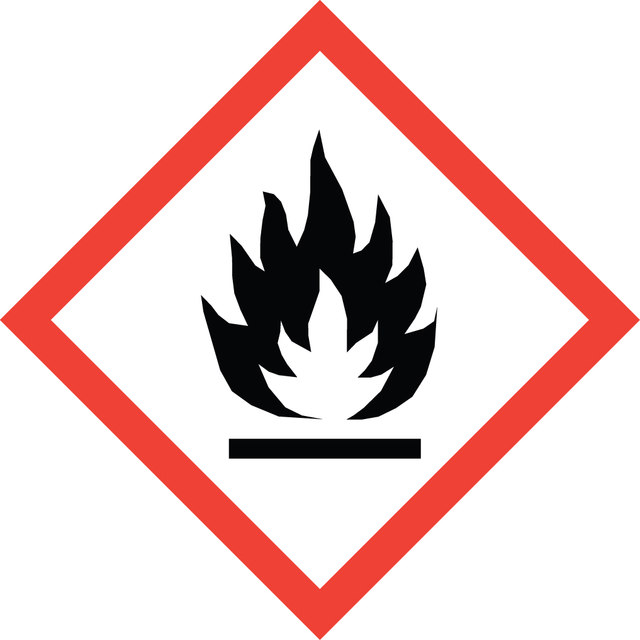
Acute Tox. 4 Inhalation - Aquatic Chronic 3 - Asp. Tox. 1 - Flam. Liq. 2 - STOT RE 2

target_organs

hearing organs

Storage Class

3 - Flammable liquids

wgk

WGK 1

flash_point_f

59.0 °F - closed cup

flash_point_c

15.0 °C - closed cup

Regulatory Information

危险化学品
This item has

Choose from one of the most recent versions:

Certificates of Analysis (COA)

Lot/Batch Number

Don't see the Right Version?

If you require a particular version, you can look up a specific certificate by the Lot or Batch number.

Already Own This Product?

Find documentation for the products that you have recently purchased in the Document Library.

Visit the Document Library

Jianhui Xie et al.
Dalton transactions (Cambridge, England : 2003), 50(2), 715-721 (2020-12-22)
Ferrate(vi), [FeO4]2-, is a very powerful oxidant that can oxidize a wide variety of inorganic and organic compounds. However, the mechanisms of many of these oxidation reactions have not been studied in detail. In this work, we have investigated the
In situ 1H MAS NMR investigations of the H/D exchange of alkylaromatic hydrocarbons on zeolites HY, La, Na-Y, and H-ZSM-5.
Huang J, et al.
Microporous and Mesoporous Materials : The Official Journal of the International Zeolite Association, 99(1), 86-90 (2007)
Brittany A Niccum et al.
mSystems, 5(3) (2020-06-18)
Diversification can generate genomic and phenotypic strain-level diversity within microbial species. This microdiversity is widely recognized in populations, but the community-level consequences of microbial strain-level diversity are poorly characterized. Using the cheese rind model system, we tested whether strain diversity
Yolanta Gruchlik et al.
Water environment research : a research publication of the Water Environment Federation, 89(12), 2103-2112 (2017-11-24)
Applicability of alum addition to wastewater sludge and biosolids produced from different treatment processes was evaluated as a means of odor reduction. Four water resource recovery facilities (WRRFs) were chosen for this study: two used mesophilic anaerobic digestion and two
Odour reduction strategies for biosolids produced from a Western Australian wastewater treatment plant: results from Phase I laboratory trials.
Gruchlik Y, et al.
Water Science and Technology, 68(12), 2552-2552 (2013)

Related Content

Our team of scientists has experience in all areas of research including Life Science, Material Science, Chemical Synthesis, Chromatography, Analytical and many others.

Contact Technical Service