
435759

(S)-(+)-Carvone
96%
Synonym(s):
(+)-Carvone, (S)-5-Isopropenyl-2-methyl-2-cyclohexenone, p-Mentha-6,8-dien-2-one
Sign In to View Organizational & Contract Pricing.
Select a Size
Change View
About This Item
Empirical Formula (Hill Notation):
C10H14O
CAS Number:
Molecular Weight:
150.22
UNSPSC Code:
12352115
NACRES:
NA.22
PubChem Substance ID:
EC Number:
218-827-2
Beilstein/REAXYS Number:
2042970
MDL number:
Assay:
96%
Form:
liquid
Quality Level
assay
96%
form
liquid
optical activity
[α]23/D +55.0±7°, neat
refractive index
n20/D 1.497 (lit.)
bp
96-98 °C/10 mmHg (lit.)
density
0.96 g/mL at 25 °C (lit.)
functional group
ketone
SMILES string
CC(=C)[C@H]1CC=C(C)C(=O)C1
InChI
1S/C10H14O/c1-7(2)9-5-4-8(3)10(11)6-9/h4,9H,1,5-6H2,2-3H3/t9-/m0/s1
InChI key
ULDHMXUKGWMISQ-VIFPVBQESA-N
General description
(S)-(+)-Carvone, a monoterpene found mainly in caraway and dill seed oils, is used in cosmetic, food and pharmaceutical preparations.
Application
(S)-(+)-Carvone can be used as a starting material to synthesize:
- (-)-Samaderine Y, a pentacyclic quassinoid.
- (-)-Ambrox, a terpenoid responsible for the odor of ambergris.
- 3β-Acetoxydrimenin (a sesquiterpene) via conjugated addition of potassium cyanide followed by base catalyzed Robinson annulation reaction.
- Thapsigargin family members such as trilobolide, nortrilobolide, and thapsivillosin F.
Packaging
(S)-(+)-Carvone, a monoterpene found mainly in caraway and dill seed oils, is used in cosmetic, food and pharmaceutical preparations.
Still not finding the right product?
Explore all of our products under (S)-(+)-Carvone
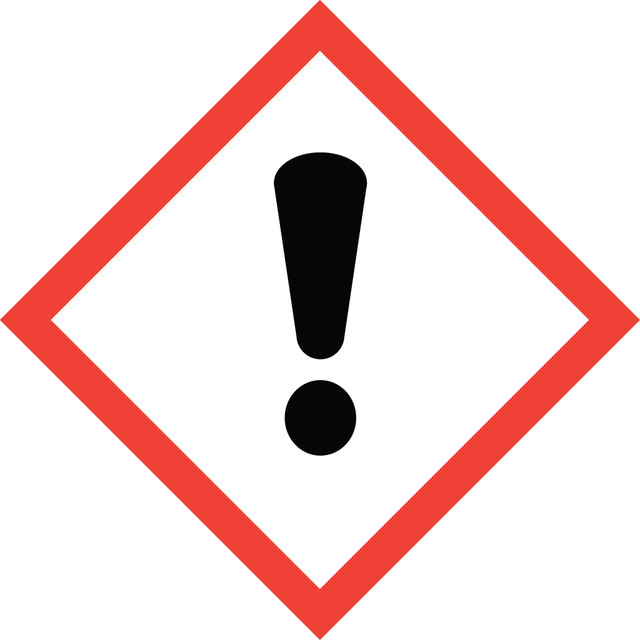
signalword
Warning
hcodes
Hazard Classifications
Skin Sens. 1A
Storage Class
10 - Combustible liquids
wgk
WGK 1
flash_point_f
204.1 °F - closed cup
flash_point_c
95.6 °C - closed cup
ppe
Eyeshields, Gloves, multi-purpose combination respirator cartridge (US)
Choose from one of the most recent versions:
Already Own This Product?
Find documentation for the products that you have recently purchased in the Document Library.
Wladimir J Alonso et al.
Memorias do Instituto Oswaldo Cruz, 98(5), 665-672 (2003-09-16)
The way in which vectors distribute themselves amongst their hosts has important epidemiological consequences. While the role played by active host choice is largely unquestioned, current knowledge relates mostly to the innate response of vectors towards stimuli signalling the presence
A Route to the Thapsigargins from (S)-Carvone Providing a Substrate-Controlled Total Synthesis of Trilobolide, Nortrilobolide, and Thapsivillosin F
Oliver SF, et al.
Angewandte Chemie (International Edition in English), 42(48), 5996-6000 (2003)
Are vectors able to learn about their hosts? A case study with Aedes aegypti mosquitoes.
Alonso WJ, et al.
Memorias do Instituto Oswaldo Cruz, 98(5), 665-672 (2003)
Global Trade Item Number
| SKU | GTIN |
|---|---|
| 435759-5ML | 04061832114606 |
| 435759-25ML | 04061832114590 |