Sign In to View Organizational & Contract Pricing
Select a Size
About This Item
Empirical Formula (Hill Notation):
C23H26N2O3S
CAS Number:
Molecular Weight:
410.53
MDL number:
UNSPSC Code:
12171500
PubChem Substance ID:
NACRES:
NA.47
form
powder
composition
Dye content, 65%
technique(s)
microbe id | staining: suitable
mp
>300 °C (lit.)
solubility
water: 50 g/L
λmax
253 nm
application(s)
diagnostic assay manufacturing
hematology
histology
storage temp.
room temp
SMILES string
CN(C)c1ccc(cc1)C(c2ccc(cc2)N(C)C)c3ccccc3S(O)(=O)=O
InChI
1S/C23H26N2O3S/c1-24(2)19-13-9-17(10-14-19)23(18-11-15-20(16-12-18)25(3)4)21-7-5-6-8-22(21)29(26,27)28/h5-16,23H,1-4H3,(H,26,27,28)
InChI key
MCKLFIWDQVFMEK-UHFFFAOYSA-N
Related Categories
General description
Leucoberbelin Blue I is a colorimetric reagent redox dye. It is a water-soluble leuco base also abbreviated as LBB. Upon oxidation, LBB forms a colored complex which is stoichiometrically related to the oxidation state of the reagent.
Application
Leucoberbelin blue I has been used as a quencher in the time-resolved fluorescence QRET technique for receptor-ligand interaction screening. LBB assay is used to indicate the kinetics of Mn (II) oxides formation.
Signal Word
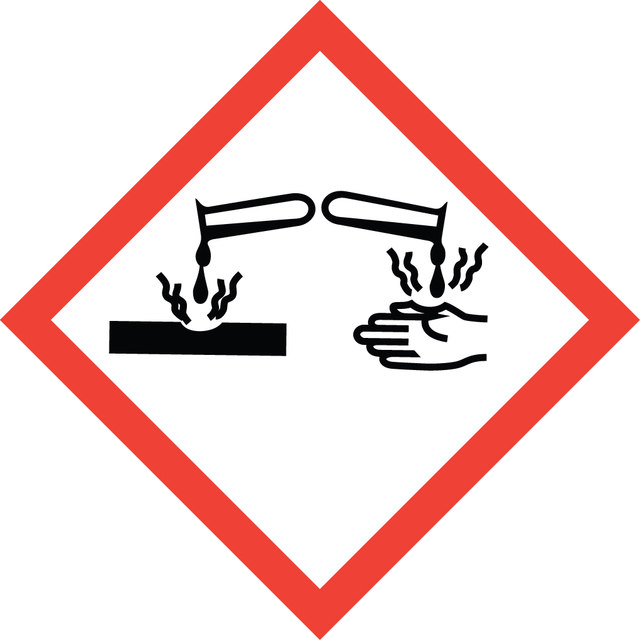
Danger
Hazard Statements
Precautionary Statements
Hazard Classifications
Eye Dam. 1 - Skin Corr. 1B
Storage Class Code
8A - Combustible corrosive hazardous materials
WGK
WGK 3
Personal Protective Equipment
dust mask type N95 (US), Eyeshields, Gloves
Choose from one of the most recent versions:
Already Own This Product?
Find documentation for the products that you have recently purchased in the Document Library.
Laure B Bindels et al.
Microbiome, 5(1), 12-12 (2017-02-09)
Obesity-related diseases, including type 2 diabetes and cardiovascular disease, have reached epidemic proportions in industrialized nations, and dietary interventions for their prevention are therefore important. Resistant starches (RS) improve insulin sensitivity in clinical trials, but the mechanisms underlying this health
E R Estes et al.
Geobiology, 15(1), 158-172 (2016-07-12)
Manganese (Mn) oxides participate in a range of interactions with organic carbon (OC) that can lead to either carbon degradation or preservation. Here, we examine the abundance and composition of OC associated with biogenic and environmental Mn oxides to elucidate
Matthew R Jones et al.
Talanta, 200, 91-99 (2019-05-01)
In terms of its oxidative strength, the MnO2/Mn2+ couple is one of the strongest in the aquatic environment. The intermediate oxidation state, manganese(III), is stabilized by a range of organic ligands (Mn(III)-L) and some of these complexes are also strong
Nhu-Y Thi Nguyen et al.
Scientific reports, 8(1), 16260-16260 (2018-11-06)
Magnesium oxide nanoparticle (nMgO) is a light metal based antimicrobial nanoparticle that can be metabolized and fully resorbed in the body. To take advantage of the antimicrobial properties of nMgO for medical use, it is necessary to determine the minimal
Kellsie L Beasley et al.
PloS one, 15(10), e0240351-e0240351 (2020-10-16)
Pseudomonas aeruginosa is a Gram-negative opportunistic pathogen that produces numerous virulence factors and causes serious infections in trauma patients and patients with severe burns. We previously showed that the growth of P. aeruginosa in blood from severely burned or trauma
Our team of scientists has experience in all areas of research including Life Science, Material Science, Chemical Synthesis, Chromatography, Analytical and many others.
Contact Technical Service