
Skip to Content
Merck
CN

380989

Sodium perrhenate

99.99% trace metals basis

Synonym(s):

Sodium Rhenate(VII), Sodium rhenium oxide, Sodiumoxido(trioxo)rhenium

Sign In to View Organizational & Contract Pricing.

Select a Size


About This Item

Linear Formula:
NaReO4
CAS Number:
Molecular Weight:
273.19
NACRES:
NA.23
PubChem Substance ID:
UNSPSC Code:
12352302
EC Number:
236-742-9
MDL number:
Assay:
99.99% trace metals basis
Form:
powder or crystals
Technical Service
Need help? Our team of experienced scientists is here for you.
Let Us Assist
Technical Service
Need help? Our team of experienced scientists is here for you.
Let Us Assist

Product Name

Sodium perrhenate, 99.99% trace metals basis

InChI key

KMISVFTVBOPTAI-UHFFFAOYSA-N

InChI

1S/Na.4O.Re/q+1;;;;-1;

SMILES string

[Na+].[O-][Re](=O)(=O)=O

assay

99.99% trace metals basis

form

powder or crystals

reaction suitability

core: sodium

impurities

≤150.0 ppm Trace Metal Analysis

density

5.39 g/mL at 25 °C (lit.)

Quality Level

Related Categories
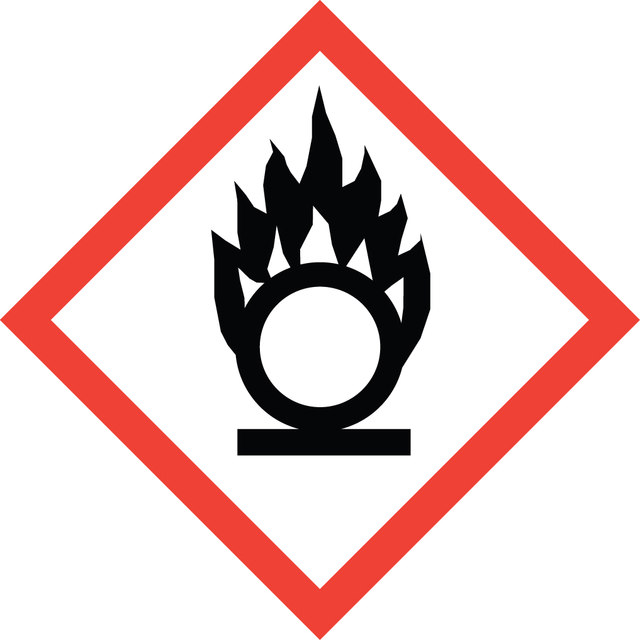
pictograms

Flame over circleExclamation mark

signalword

Danger

Hazard Classifications

Eye Irrit. 2 - Ox. Sol. 2 - Skin Irrit. 2 - STOT SE 3

target_organs

Respiratory system

Storage Class

5.1B - Oxidizing hazardous materials

wgk

WGK 3

flash_point_f

Not applicable

flash_point_c

Not applicable

ppe

dust mask type N95 (US), Eyeshields, Gloves, type P3 (EN 143) respirator cartridges


Choose from one of the most recent versions:

Certificates of Analysis (COA)

Lot/Batch Number

Don't see the Right Version?

If you require a particular version, you can look up a specific certificate by the Lot or Batch number.

Already Own This Product?

Find documentation for the products that you have recently purchased in the Document Library.

Visit the Document Library

Dien Li et al.
Journal of hazardous materials, 374, 177-185 (2019-04-19)
Technetium-99 (99Tc) is a major contaminant at nuclear power plants and several US Department of Energy sites. Its most common aqueous species, pertechnetate (TcO4-), is very mobile in the environment, and currently there are no effective technologies for its sequestration.
Julie Di Bernardo et al.
Analytical biochemistry, 415(1), 32-38 (2011-05-07)
The sodium/iodide symporter (NIS) is primarily responsible for iodide accumulation in the thyroid gland for the synthesis of thyroid hormones; however, it can also transport other lyotropic anions in the thyroid gland and nonthyroid tissues. Some NIS substrates have important
Olesya A Nikonova et al.
Langmuir : the ACS journal of surfaces and colloids, 27(18), 11622-11628 (2011-08-13)
The use of an inorganic perrhenate ligand in the structure of early-transition-metal alkoxide precursors permits to achieve uniform self-assembly of the primary nanoparticles produced by their hydrolysis. The latter has been carried out in a hydrocarbon reaction medium by the
Baikuntha P Aryal et al.
Journal of biological inorganic chemistry : JBIC : a publication of the Society of Biological Inorganic Chemistry, 17(1), 97-106 (2011-08-24)
Radiolabeled biomolecules are routinely used for clinical diagnostics. (99m)Tc is the most commonly used radioactive tracer in radiopharmaceuticals. (188)Re and (186)Re are also commonly used as radioactive tracers in medicine. However, currently available methods for radiolabeling are lengthy and involve
David P Cormode et al.
Dalton transactions (Cambridge, England : 2003), 39(28), 6532-6541 (2010-06-17)
A disulfide functionalized bis-ferrocene urea acyclic receptor and disulfide functionalized mono- and bis-ferrocene amide and urea appended upper rim calix[4]arene receptors were prepared for the fabrication of SAM redox-active anion sensors. 1H NMR and diffusive voltammetric anion recognition investigations revealed

Our team of scientists has experience in all areas of research including Life Science, Material Science, Chemical Synthesis, Chromatography, Analytical and many others.

Contact Technical Service
