Skip to Content
Merck
CN

379840

Platinum(IV) chloride

≥99.99% trace metals basis

Synonym(s):

Platinum tetrachloride

Sign In to View Organizational & Contract Pricing.

Select a Size


About This Item

Linear Formula:
PtCl4
CAS Number:
Molecular Weight:
336.89
NACRES:
NA.23
PubChem Substance ID:
UNSPSC Code:
12352302
EC Number:
236-645-1
MDL number:
Assay:
≥99.99% trace metals basis
Form:
powder and chunks
Technical Service
Need help? Our team of experienced scientists is here for you.
Let Us Assist
Technical Service
Need help? Our team of experienced scientists is here for you.
Let Us Assist

Product Name

Platinum(IV) chloride, ≥99.99% trace metals basis

InChI key

FBEIPJNQGITEBL-UHFFFAOYSA-J

InChI

1S/4ClH.Pt/h4*1H;/q;;;;+4/p-4

SMILES string

Cl[Pt](Cl)(Cl)Cl

assay

≥99.99% trace metals basis

form

powder and chunks

reaction suitability

core: platinum
reagent type: catalyst

impurities

≤100.0 ppm Trace Metal Analysis

mp

370 °C (dec.) (lit.)

density

4.303 g/mL at 25 °C (lit.)

application(s)

PEM fuel cells
homogeneous catalyst
material synthesis precursor

Quality Level

Looking for similar products? Visit Product Comparison Guide

Application

Platinum (IV) chloride can be used:
  • As a precursor to synthesize Pt nanoparticles for photocatalytic hydrogen generation.
  • As a starting material to prepare Pt/Al2O3 and Pt/ZrO2-SiO2 catalysts.
  • To fabricate an electrocatalyst for proton exchange fuel cells.
  • As a catalyst for the cyclization of arene−alkynesubstrates via intramolecular electrophilic hydroarylation.
General description

Platinum (IV)chloride is a highly oxidizing crystalline compound that can easily undergo reduction-oxidation reactions. It is widely used to synthesize Pt-based nanomaterials and catalysts.

signalword

Danger

Hazard Classifications

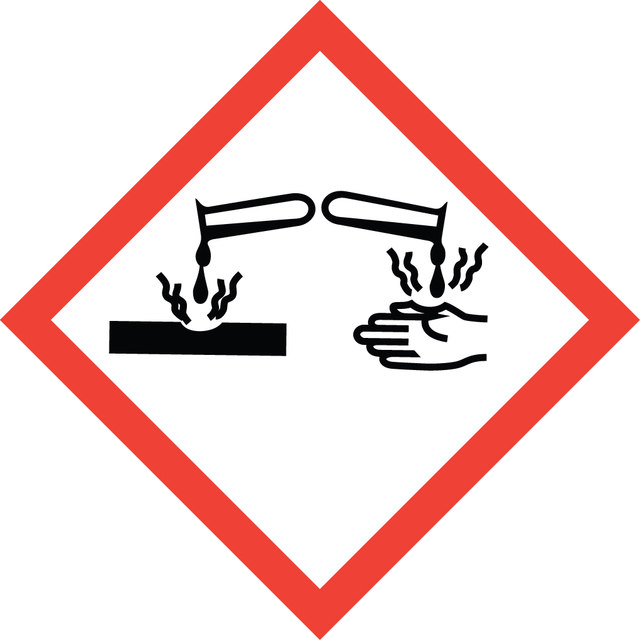
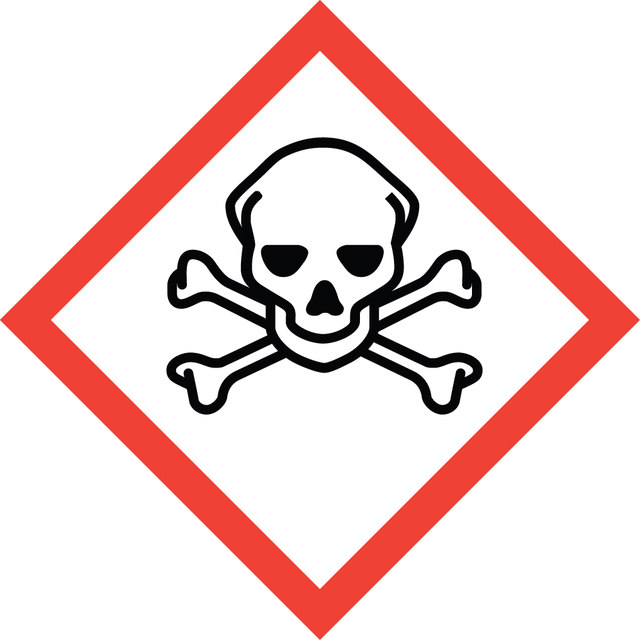
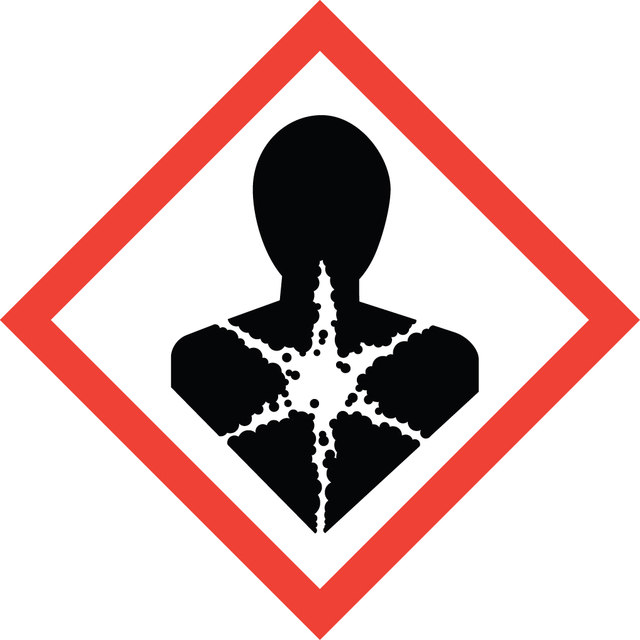
Acute Tox. 3 Oral - Eye Dam. 1 - Resp. Sens. 1 - Skin Corr. 1B - Skin Sens. 1

Storage Class

6.1A - Combustible acute toxic Cat. 1 and 2 / very toxic hazardous materials

wgk

WGK 2

flash_point_f

Not applicable

flash_point_c

Not applicable

ppe

Eyeshields, Faceshields, Gloves, type P3 (EN 143) respirator cartridges


Choose from one of the most recent versions:

Certificates of Analysis (COA)

Lot/Batch Number

Don't see the Right Version?

If you require a particular version, you can look up a specific certificate by the Lot or Batch number.

Already Own This Product?

Find documentation for the products that you have recently purchased in the Document Library.

Visit the Document Library

Third-body effects of native surfactants on Pt nanoparticle electrocatalysts in proton exchange fuel cells
Young-Hoon Chung, et al.
Chemical Communications (Cambridge, England), 51, 2968-2971 (2015)
Syngas production by carbon dioxide reforming of methane over Pt/Al2O3 and Pt/ZrO2-SiO2 catalysts
Ashvin L. Karemore, et al.
Chemical Engineering Science, 249, 117347-117347 (2022)
Hybrid metal-Cu2S nanostructures as efficient co-catalysts for photocatalytic hydrogen generation
Jeong-Hyun Park, et al.
Chemical Communications (Cambridge, England), 53, 3277-3280 (2017)
PtIV-Catalyzed Cyclization of Arene?Alkyne Substrates via Intramolecular Electrophilic Hydroarylation
Stefan J. Pastine, et al.},
Organic Letters, 5, 1055-1058 (2003)
Eric Ennifar et al.
Nucleic acids research, 31(10), 2671-2682 (2003-05-09)
Metal ions, and magnesium in particular, are known to be involved in RNA folding by stabilizing secondary and tertiary structures, and, as cofactors, in RNA enzymatic activity. We have conducted a systematic crystallographic analysis of cation binding to the duplex

Articles

Plasmonic nanoparticles have unique optical properties that can be tailored to suit a variety of applications in the biotechnology1–8 and electronics9–16 industries.

Our team of scientists has experience in all areas of research including Life Science, Material Science, Chemical Synthesis, Chromatography, Analytical and many others.

Contact Technical Service