Skip to Content
Merck
CN

379212

Hexamethyldisilazane

ReagentPlus®, 99.9%

Synonym(s):

1,1,1,3,3,3-Hexamethyldisilazane, HMDS

Sign In to View Organizational & Contract Pricing.

Select a Size


About This Item

Linear Formula:
(CH3)3SiNHSi(CH3)3
CAS Number:
Molecular Weight:
161.39
UNSPSC Code:
12352103
NACRES:
NA.23
PubChem Substance ID:
EC Number:
213-668-5
Beilstein/REAXYS Number:
635752
MDL number:
Technical Service
Need help? Our team of experienced scientists is here for you.
Let Us Assist
Technical Service
Need help? Our team of experienced scientists is here for you.
Let Us Assist

Product Name

Hexamethyldisilazane, ReagentPlus®, 99.9%

InChI key

FFUAGWLWBBFQJT-UHFFFAOYSA-N

InChI

1S/C6H19NSi2/c1-8(2,3)7-9(4,5)6/h7H,1-6H3

SMILES string

C[Si](C)(C)N[Si](C)(C)C

product line

ReagentPlus®

assay

99.9%

form

liquid

refractive index

n20/D 1.407 (lit.)

bp

125 °C (lit.)

Quality Level

Looking for similar products? Visit Product Comparison Guide

Application

Hexamethyldisilazane can be used:
  • As a precursor to fabricate multilayer quantum dot light-emitting diodes.
  • To modify dielectric surfaces of organic thin film transistors.
  • To fabricate superhydrophobic coatings on epoxy resins.
  • For the silylation of alcohols and phenols.

General description

Hexamethyldisilazane (HDMS) is an organoslicon compound. HDMS is a colorless liquid used as a reagent and precursor in organic synthesis and organometallic chemistry. It is also used as a sol-gel precursor to fabricate thin films for semiconductor devices.

Legal Information

ReagentPlus is a registered trademark of Merck KGaA, Darmstadt, Germany

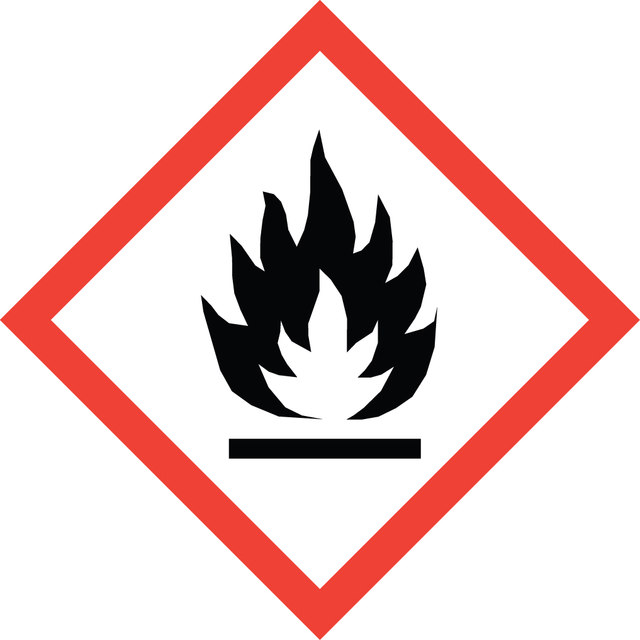
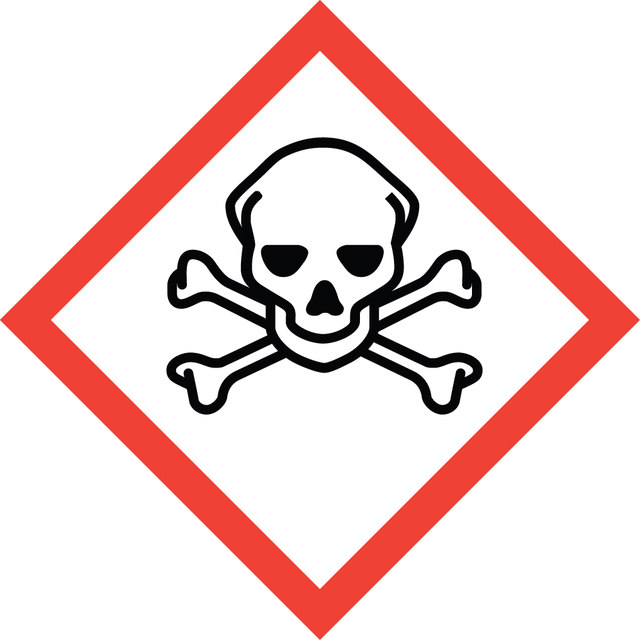
pictograms

FlameSkull and crossbones

signalword

Danger

Hazard Classifications

Acute Tox. 3 Dermal - Acute Tox. 4 Inhalation - Acute Tox. 4 Oral - Aquatic Chronic 3 - Flam. Liq. 2

Storage Class

3 - Flammable liquids

wgk

WGK 2

flash_point_f

52.5 °F - closed cup

flash_point_c

11.4 °C - closed cup

ppe

Faceshields, Gloves, Goggles, type ABEK (EN14387) respirator filter

Regulatory Information

危险化学品
This item has

Choose from one of the most recent versions:

Certificates of Analysis (COA)

Lot/Batch Number

Don't see the Right Version?

If you require a particular version, you can look up a specific certificate by the Lot or Batch number.

Already Own This Product?

Find documentation for the products that you have recently purchased in the Document Library.

Visit the Document Library

I-Shuo Huang et al.
Biology, 9(8) (2020-07-28)
Aside from two samples collected nearly 50 years ago, little is known about the microbial composition of wind tidal flats in the hypersaline Laguna Madre, Texas. These mats account for ~42% of the lagoon's area. These microbial communities were sampled
G Chiavari et al.
Journal of chromatography. A, 922(1-2), 235-241 (2001-08-07)
Alpha-amino acids were pyrolysed at 600 degrees C in the presence of hexamethyldisilazane (HMDS) and the formed volatile products were analysed on line by gas chromatography-mass spectrometry (GC-MS). Glycine, alanine, valine, leucine, isoleucine, norleucine, methionine, phenylalanine yielded principally the trimethylsilyl
A simple and efficient room temperature silylation of diverse functional groups with hexamethyldisilazane using CeO2 nanoparticles as solid catalysts
Nagaraj Anbu, et al
Molecular Catalysis, 474, 110357-110357 (2019)
Ar/HMDS Plasma Jet as a Tool for Superhydrophobic Coatings on Epoxy Resin
Jingang Wang, et al.
Nanotechnology, IEEE Transactions, 50, 1867-1874 (2022)
D F Bray et al.
Microscopy research and technique, 26(6), 489-495 (1993-12-15)
Three different drying methods, critical-point drying (CPD), Peldri II, and hexamethyldisilazane (HMDS), were compared using representative animal (rat kidney, trachea, duodenum, lung, and red blood cells) and plant (leaves from ten species of monocotyledons and dicotyledons) specimens. All three drying

Articles

atomic layer deposition (ALD), microelectronics, Mo:Al2O3 films, nanocomposite coating, photovoltaics, semiconductor devices, W:Al2O3 films, composite films, layer-by-layer

Spintronics offer breakthroughs over conventional memory/logic devices with lower power, leakage, saturation, and complexity.

The properties of many devices are limited by the intrinsic properties of the materials that compose them.

Synthesis of Melting Gels Using Mono-Substituted and Di-Substituted Alkoxysiloxanes

Our team of scientists has experience in all areas of research including Life Science, Material Science, Chemical Synthesis, Chromatography, Analytical and many others.

Contact Technical Service