Skip to Content
Merck
CN

357294

Indium

foil, thickness 0.25 mm, 99.99% trace metals basis

Synonym(s):

Indium element

Sign In to View Organizational & Contract Pricing.

Select a Size


About This Item

Empirical Formula (Hill Notation):
In
CAS Number:
Molecular Weight:
114.82
NACRES:
NA.23
PubChem Substance ID:
UNSPSC Code:
12141719
EC Number:
231-180-0
MDL number:
Technical Service
Need help? Our team of experienced scientists is here for you.
Let Us Assist
Technical Service
Need help? Our team of experienced scientists is here for you.
Let Us Assist

Product Name

Indium, foil, thickness 0.25 mm, 99.99% trace metals basis

InChI key

APFVFJFRJDLVQX-UHFFFAOYSA-N

InChI

1S/In

SMILES string

[In]

vapor pressure

<0.01 mmHg ( 25 °C)

assay

99.99% trace metals basis

form

foil

resistivity

8.37 μΩ-cm

thickness

0.25 mm

mp

156.6 °C (lit.)

density

7.3 g/mL at 25 °C (lit.)

Quality Level

Looking for similar products? Visit Product Comparison Guide

Application


  • High sodium ionic conductivity in PEO/PVP solid polymer electrolytes with InAs nanowire fillers.: Explores the enhancement of ionic conductivity in polymer electrolytes through the incorporation of indium arsenide nanowires, offering significant implications for battery efficiency ( Devi et al., 2021).

  • A Corrosion-Resistant and Dendrite-Free Zinc Metal Anode in Aqueous Systems.: Introduces a corrosion-resistant indium-containing anode design for aqueous batteries, which prevents dendrite formation and enhances overall battery safety ( Han et al., 2020).

General description

Indium foil is widely used in nuclear facilities to capture thermal neutrons, because it shows a high cross section of neutron capture reaction. Hence, it may be used in dosemeters to measure exposure. Indium foils were studied for simultaneous monitoring neutron and photon intensities in a reactor core.

Preparation Note

  • 50 × 50 mm (approximately 4.6 g)
  • 100 × 100 mm (approximately 18.4 g)
  • 150 × 150 mm (approximately 41.4 g)

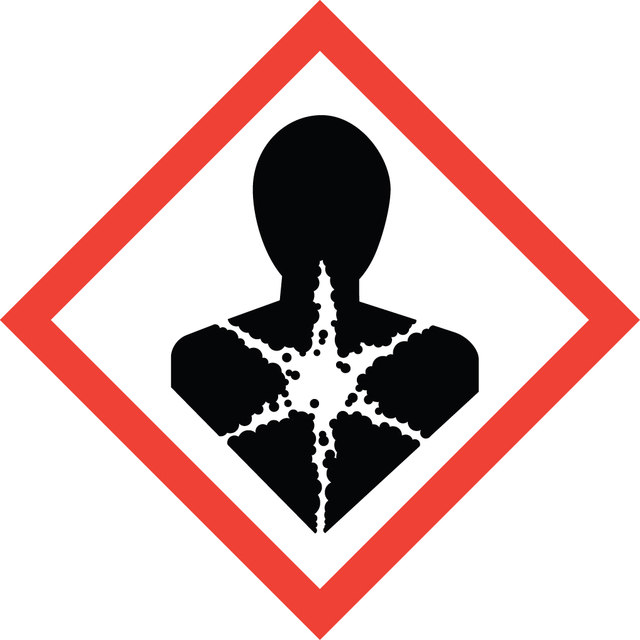
pictograms

Health hazard

signalword

Danger

hcodes

Hazard Classifications

STOT RE 1 Inhalation

target_organs

Lungs

Storage Class

6.1C - Combustible acute toxic Cat.3 / toxic compounds or compounds which causing chronic effects

wgk

WGK 1

flash_point_f

Not applicable

flash_point_c

Not applicable

ppe

dust mask type N95 (US), Eyeshields, Gloves


Choose from one of the most recent versions:

Certificates of Analysis (COA)

Lot/Batch Number

Don't see the Right Version?

If you require a particular version, you can look up a specific certificate by the Lot or Batch number.

Already Own This Product?

Find documentation for the products that you have recently purchased in the Document Library.

Visit the Document Library

Activation detection using indium foils for simultaneous monitoring neutron and photon intensities in a reactor core.
Chao JH and Chiang AC
Radiation Measurements, 45, 1024-1033 (2010)
Recalibration of Indium foil for personnel screening in criticality accidents
Takada C, et al.
Radiation Protection Dosimetry, 144(1-4), 575-579 (2010)
G W Shu et al.
Physical chemistry chemical physics : PCCP, 15(10), 3618-3622 (2013-02-06)
Nonradiative energy transfer from an InGaN quantum well to Ag nanoparticles is unambiguously demonstrated by the time-resolved photoluminescence. The distance dependence of the energy transfer rate is found to be proportional to 1/d(3), in good agreement with the prediction of
Vahid A Akhavan et al.
ChemSusChem, 6(3), 481-486 (2013-02-13)
Thin-film photovoltaic devices (PVs) were prepared by selenization using oleylamine-capped Cu(In,Ga)Se2 (CIGS) nanocrystals sintered at a high temperature (>500 °C) under Se vapor. The device performance varied significantly with [Ga]/[In+Ga] content in the nanocrystals. The highest power conversion efficiency (PCE) observed
Han-Youl Ryu et al.
Optics express, 21 Suppl 1, A190-A200 (2013-02-15)
We investigate the dependence of various efficiencies in GaN-based vertical blue light-emitting diode (LED) structures on the thickness and doping concentration of the n-GaN layer by using numerical simulations. The electrical efficiency (EE) and the internal quantum efficiency (IQE) are

Articles

Combinatorial Materials Science identifies breakthrough materials through systematic exploration, aiding material discovery.

Our team of scientists has experience in all areas of research including Life Science, Material Science, Chemical Synthesis, Chromatography, Analytical and many others.

Contact Technical Service