
307815

Sodium metasilicate
Synonym(s):
Disodium metasilicate, Disodium silicate, Sodium silicate, Sodium silicon oxide
Sign In to View Organizational & Contract Pricing.
Select a Size
Change View
About This Item
Linear Formula:
Na2SiO3
CAS Number:
Molecular Weight:
122.06
NACRES:
NA.22
PubChem Substance ID:
UNSPSC Code:
12352302
EC Number:
229-912-9
MDL number:
composition
SiO2, 50-53%
Quality Level
SMILES string
[Na+].[Na+].[O-][Si]([O-])=O
InChI
1S/2Na.O3Si/c;;1-4(2)3/q2*+1;-2
InChI key
NTHWMYGWWRZVTN-UHFFFAOYSA-N
General description
SMS is a silicon source for silica materials and can be used as a chemical intermediate for silica gel catalysts.
Application
Sodium metasilicate (SMS) has been used in the preparation of polypyrrole/sodium metasilicate (PPy/Na2SiO3) and polythiophene/sodium metasilicate (PT/Na2SiO3) composites, novel high dielectric constant materials for use in power electronic systems.
SMS can also be used:
SMS can also be used:
- To prepare NaZnSiO3OH, a novel chiral framework material which has potential application in ion exchange, adsorption and catalysis.
- As a low-cost alternative to tetraethyl orthosilicate (TEOS) to synthesize highly ordered mesoporous silicas.
- To prepare geopolymer concrete.
Reactant for:
- Hydrothermal preparation of thorium uranium silicate (Th1-xUxSiO4) uranothorite solid solutions
- Fabrication of dense NaA zeolite coatings
- Reactant for preparation of tungsten modified silica as catalyst for liquid phase oxidation of styrene
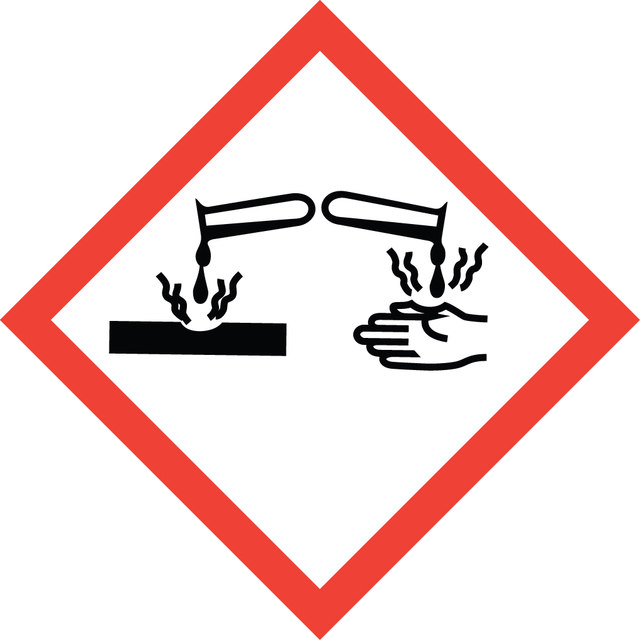
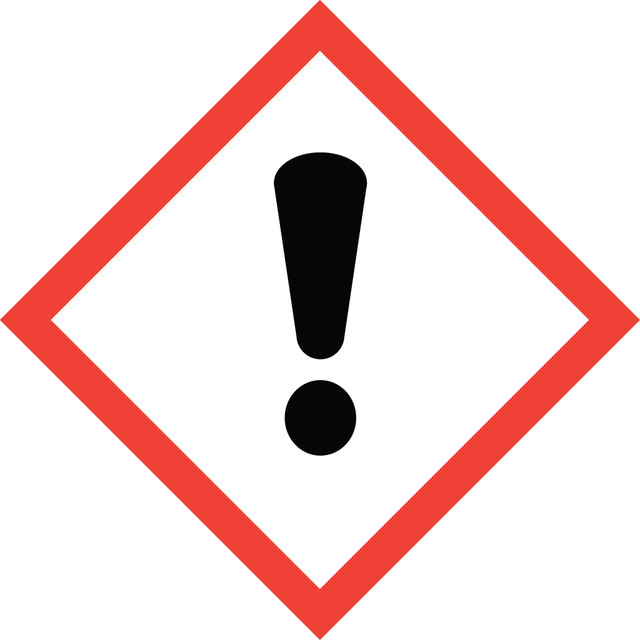
signalword
Danger
hcodes
Hazard Classifications
Eye Dam. 1 - Met. Corr. 1 - Skin Corr. 1B - STOT SE 3
target_organs
Respiratory system
Storage Class
8B - Non-combustible corrosive hazardous materials
wgk
WGK 1
flash_point_f
Not applicable
flash_point_c
Not applicable
ppe
Eyeshields, Faceshields, Gloves, type P3 (EN 143) respirator cartridges
Regulatory Information
危险化学品
This item has
Choose from one of the most recent versions:
Already Own This Product?
Find documentation for the products that you have recently purchased in the Document Library.
Highly porous silica networks derived from gelatin/siloxane hybrids prepared starting from sodium metasilicate
Retuert J, et al.
Journal of Non-Crystalline Solids, 347(1-3), 273-278 (2004)
Synthesis of highly ordered mesoporous silica materials using sodium silicate and amphiphilic block copolymers.
Kim J M and Stucky G D
Chemical Communications (Cambridge, England), 13, 1159-1160 (2000)
J Najda et al.
Biological trace element research, 42(1), 63-70 (1994-07-01)
The effect of an excessive inorganic silicon oral intake on the activity of basic antioxidant enzymes was studied in rats. Activities of superoxide dismutase, catalase, and glutathione peroxidase were measured in liver and kidney tissues of animals receiving per os
Global Trade Item Number
| SKU | GTIN |
|---|---|
| 307815-25G | 04061826673911 |
| 307815-1KG | 04061826673904 |