Skip to Content
Merck
CN

301493

2,4-Dimethylaniline

98%

Synonym(s):

1-Amino-2,4-dimethylbenzene, 2,4-Xylidine, 4-Amino-m-xylene

Sign In to View Organizational & Contract Pricing.

Select a Size


About This Item

Linear Formula:
(CH3)2C6H3NH2
CAS Number:
Molecular Weight:
121.18
UNSPSC Code:
12352100
NACRES:
NA.22
PubChem Substance ID:
EC Number:
202-440-0
Beilstein/REAXYS Number:
636243
MDL number:
Assay:
98%
Form:
liquid
Technical Service
Need help? Our team of experienced scientists is here for you.
Let Us Assist
Technical Service
Need help? Our team of experienced scientists is here for you.
Let Us Assist

InChI key

CZZZABOKJQXEBO-UHFFFAOYSA-N

InChI

1S/C8H11N/c1-6-3-4-8(9)7(2)5-6/h3-5H,9H2,1-2H3

SMILES string

Cc1ccc(N)c(C)c1

vapor density

4.2 (vs air)

vapor pressure

0.16 mmHg ( 25 °C)

assay

98%

form

liquid

autoignition temp.

860 °F

expl. lim.

7 %

refractive index

n20/D 1.558 (lit.)

bp

218 °C (lit.)

mp

−14.3 °C (lit.)

density

0.98 g/mL at 25 °C (lit.)

Looking for similar products? Visit Product Comparison Guide

General description
2,4-Dimethylaniline is hydrolysis product of amitraz (sum) in pears. Electrochemical method for the determination of total amitraz residues and its final breakdown product, 2,4-dimethylaniline was reported.

signalword

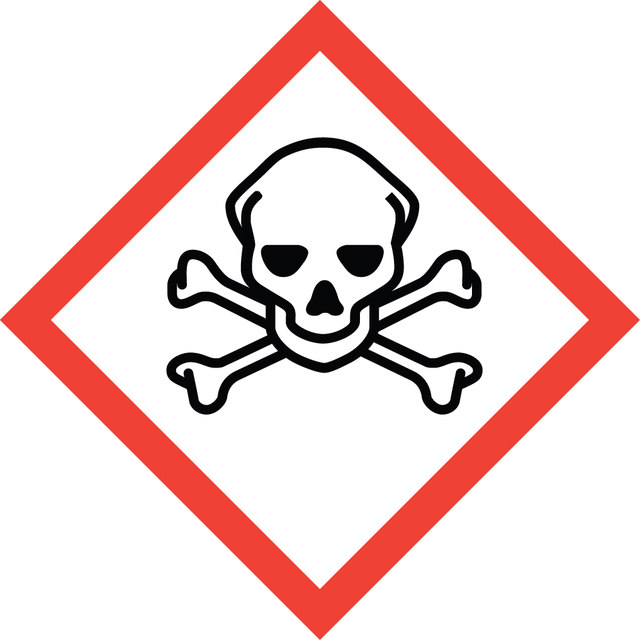
Danger

Hazard Classifications

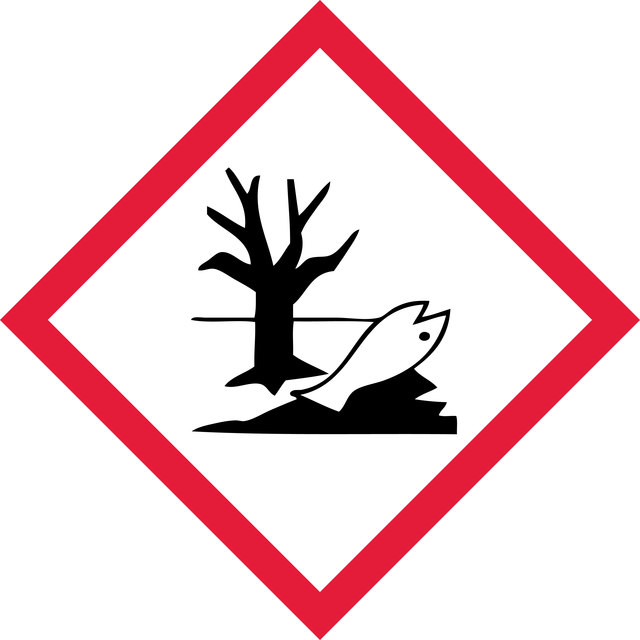
Acute Tox. 3 Dermal - Acute Tox. 3 Inhalation - Acute Tox. 3 Oral - Aquatic Chronic 2 - STOT RE 2

Storage Class

6.1A - Combustible acute toxic Cat. 1 and 2 / very toxic hazardous materials

wgk

WGK 3

flash_point_f

208.4 °F - closed cup

flash_point_c

98 °C - closed cup

ppe

Eyeshields, Faceshields, Gloves, type ABEK (EN14387) respirator filter

Regulatory Information

危险化学品
This item has

Choose from one of the most recent versions:

Certificates of Analysis (COA)

Lot/Batch Number

Don't see the Right Version?

If you require a particular version, you can look up a specific certificate by the Lot or Batch number.

Already Own This Product?

Find documentation for the products that you have recently purchased in the Document Library.

Visit the Document Library

R Brimecombe et al.
Talanta, 71(3), 1298-1303 (2007-02-28)
Amitraz is a formamide acaracide used in the control of ticks and mites in livestock. An electrochemical method for the determination of total amitraz residues and its final breakdown product, 2,4-dimethylaniline, is presented. Cyclic voltammetry at a glassy carbon electrode
Julia Hepperle et al.
Food chemistry, 166, 240-247 (2014-07-24)
We developed a method for the hydrolysis of amitraz, and its degradation products 2,4-dimethylphenyl-N'-methylformamidine (DMPF) and 2,4-dimethylformamide (DMF) into 2,4-dimethylaniline (DMA), directly from QuEChERS extracts. The hydrolysis product DMA was analysed using liquid chromatography-electrospray tandem mass spectrometry (LC-ESI-MS/MS) in the
R D Brimecombe et al.
Journal of agricultural and food chemistry, 54(21), 8139-8143 (2006-10-13)
The widespread use of the pesticide amitraz for pest control of crops, livestock and honeybees has warranted several studies aimed at understanding the degradation of this compound during storage and use. In particular the degradation of amitraz and the nature
S Göb et al.
Water science and technology : a journal of the International Association on Water Pollution Research, 44(5), 339-345 (2001-11-07)
Among advanced oxidation processes (AOPs), the photochemically enhanced Fenton reaction may be considered as one of the most efficient for the degradation of contaminants in industrial wastewater. This process involves a series of complex reactions. Therefore, an empirical model based
R D Brimecombe et al.
Journal of agricultural and food chemistry, 54(23), 8799-8803 (2006-11-09)
2,4-Dimethylaniline is a recalcitrant degradant of the pesticide amitraz and is also an industrial pollutant which is genotoxic, teratogenic and carcinogenic. The biological degradation of 2,4-dimethylaniline was examined and monitored by cyclic voltammetry. Pseudomonas species isolated from cattle dip tanks

Our team of scientists has experience in all areas of research including Life Science, Material Science, Chemical Synthesis, Chromatography, Analytical and many others.

Contact Technical Service