Skip to Content
Merck
CN

298115

Potassium dicyanoaurate(I)

98%

Synonym(s):

Gold (I) potassium cyanide, Potassium gold cyanide

Sign In to View Organizational & Contract Pricing.

Select a Size


About This Item

Linear Formula:
KAu(CN)2
CAS Number:
Molecular Weight:
288.10
UNSPSC Code:
12352302
NACRES:
NA.23
PubChem Substance ID:
EC Number:
237-748-4
Beilstein/REAXYS Number:
6235525
MDL number:
Assay:
98%
Form:
solid
Technical Service
Need help? Our team of experienced scientists is here for you.
Let Us Assist
Technical Service
Need help? Our team of experienced scientists is here for you.
Let Us Assist

Product Name

Potassium dicyanoaurate(I), 98%

InChI key

OQHPFUBKFKRHKZ-UHFFFAOYSA-N

InChI

1S/2CN.Au.K/c2*1-2;;/q;;-1;+1

SMILES string

[K+].N#C[Au-]C#N

assay

98%

form

solid

reaction suitability

core: potassium

density

3.45 g/mL at 25 °C (lit.)

Quality Level

Looking for similar products? Visit Product Comparison Guide

Related Categories

Application

Potassium dicyanoaurate(I) can be used as:     
  • A precursor in the synthesis of gold nanoparticles and nanowires, which are crucial for applications in electronics, photonics, and catalysis     
  • An electrolyte in the potentiostatic deposition of gold nanowires, which are used in electronics and photonics.    
  • A key component in the production of conductive inks and coatings, which are essential for printed circuit boards and other electronic components.
  • A catalyst in certain chemical reactions.
General description

Potassium dicyanoaurate, also known as potassium gold cyanide. It is a water-soluble salt that is commonly used in gold electroplating, as a precursor for the synthesis of other gold compounds, and in certain chemical processes.

pictograms

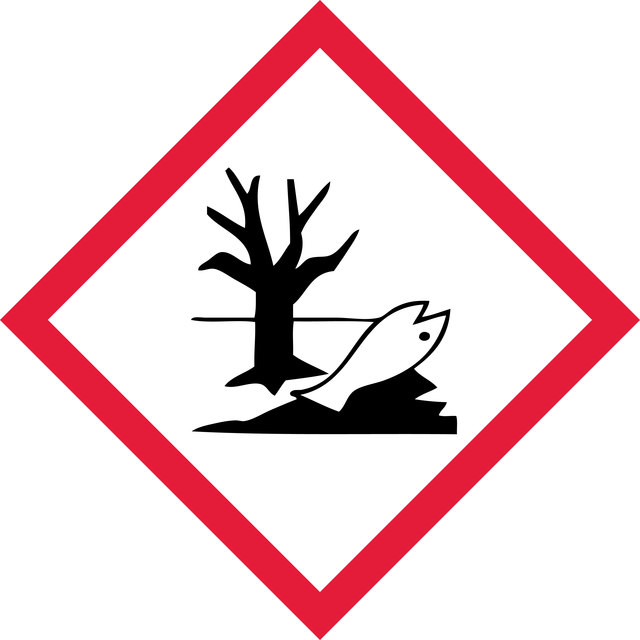
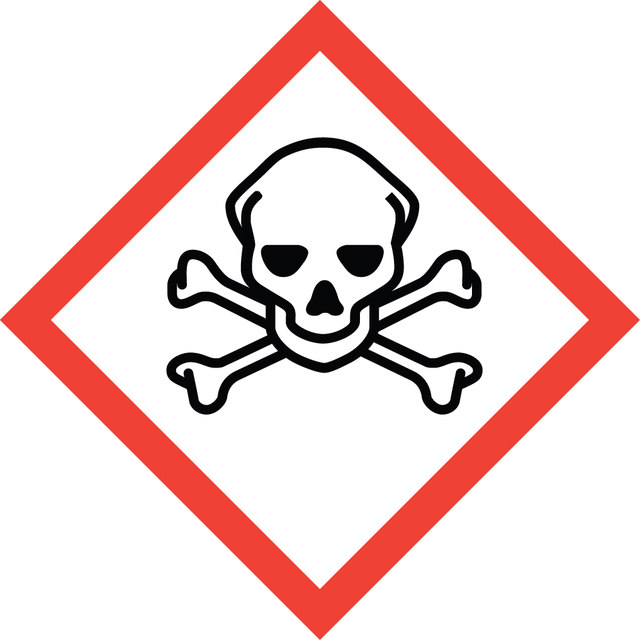
Skull and crossbonesEnvironment

signalword

Danger

Hazard Classifications

Acute Tox. 1 Dermal - Acute Tox. 2 Inhalation - Acute Tox. 2 Oral - Aquatic Acute 1 - Aquatic Chronic 1

supp_hazards

Storage Class

6.1B - Non-combustible acute toxic Cat. 1 and 2 / very toxic hazardous materials

wgk

WGK 3

flash_point_f

Not applicable

flash_point_c

Not applicable

ppe

Eyeshields, Faceshields, Gloves, type P3 (EN 143) respirator cartridges

Regulatory Information

监管及禁止进口产品
This item has

Choose from one of the most recent versions:

Certificates of Analysis (COA)

Lot/Batch Number

Don't see the Right Version?

If you require a particular version, you can look up a specific certificate by the Lot or Batch number.

Already Own This Product?

Find documentation for the products that you have recently purchased in the Document Library.

Visit the Document Library

Synthesis of gold nanowires with controlled crystallographic characteristics.
Karim S, et al.
Applied Physics. A, Materials Science & Processing, 84(4), 403-407 (2006)
Hong-ping Tang et al.
Guang pu xue yu guang pu fen xi = Guang pu, 24(6), 752-755 (2005-03-16)
Quaternary ammonium salt has strong affinity with gold in cyanide solutions, but it is not readily stripped. Stripping with acidic thiourea solutions and air sparging shows promise. There are some reports on the process of thiourea stripping, but little about
Xiandi Gong et al.
The Journal of physiology, 540(Pt 1), 39-47 (2002-04-03)
Lyotropic anions with low free energy of hydration show both high permeability and tight binding in the cystic fibrosis transmembrane conductance regulator (CFTR) Cl(-) channel pore. However, the molecular bases of anion selectivity and anion binding within the CFTR pore
S Ishikawa et al.
Applied biochemistry and biotechnology, 70-72, 719-728 (1998-06-17)
Animal fibrous proteins (AFPs) such as egg-shell membrane (ESM), chicken feather (CF), wool, silk, or elastin are an intricate network of stable and water-insoluble fibers with high surface area and are abundant bioresources. Every AFP tested was found to accumulate
Xiandi Gong et al.
The Journal of general physiology, 122(6), 673-687 (2003-11-12)
Chloride permeation through the cystic fibrosis transmembrane conductance regulator (CFTR) Cl- channel is blocked by a broad range of anions that bind tightly within the pore. Here we show that the divalent anion Pt(NO2)42- acts as an impermeant voltage-dependent blocker

Our team of scientists has experience in all areas of research including Life Science, Material Science, Chemical Synthesis, Chromatography, Analytical and many others.

Contact Technical Service