Skip to Content
Merck
CN

296961

Lithium diisopropylamide

10 wt. % suspension in hexanes

Synonym(s):

LDA

Sign In to View Organizational & Contract Pricing.

Select a Size


About This Item

Linear Formula:
[(CH3)2CH]2NLi
CAS Number:
Molecular Weight:
107.12
UNSPSC Code:
12352001
NACRES:
NA.22
PubChem Substance ID:
MDL number:
Beilstein/REAXYS Number:
3655042
Concentration:
10 wt. % suspension in hexanes
Technical Service
Need help? Our team of experienced scientists is here for you.
Let Us Assist
Technical Service
Need help? Our team of experienced scientists is here for you.
Let Us Assist

InChI

1S/C6H14N.Li/c1-5(2)7-6(3)4;/h5-6H,1-4H3;/q-1;+1

SMILES string

[Li]N(C(C)C)C(C)C

InChI key

ZCSHNCUQKCANBX-UHFFFAOYSA-N

vapor density

>1 (vs air)

concentration

10 wt. % suspension in hexanes

density

0.864 g/mL at 25 °C (lit.)

functional group

amine

Looking for similar products? Visit Product Comparison Guide

flash_point_c

-26 °C - closed cup
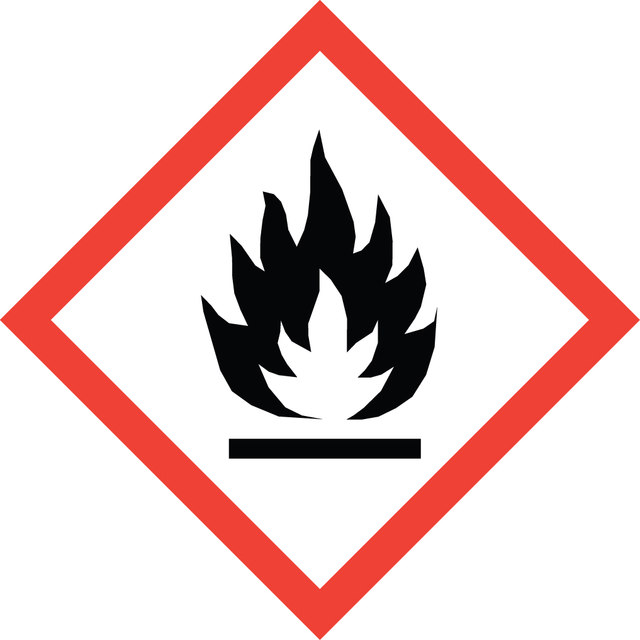
signalword

Danger

Hazard Classifications

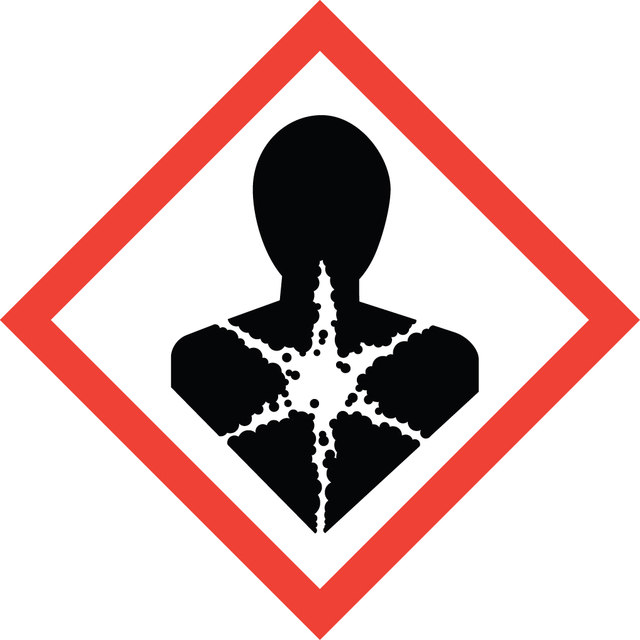
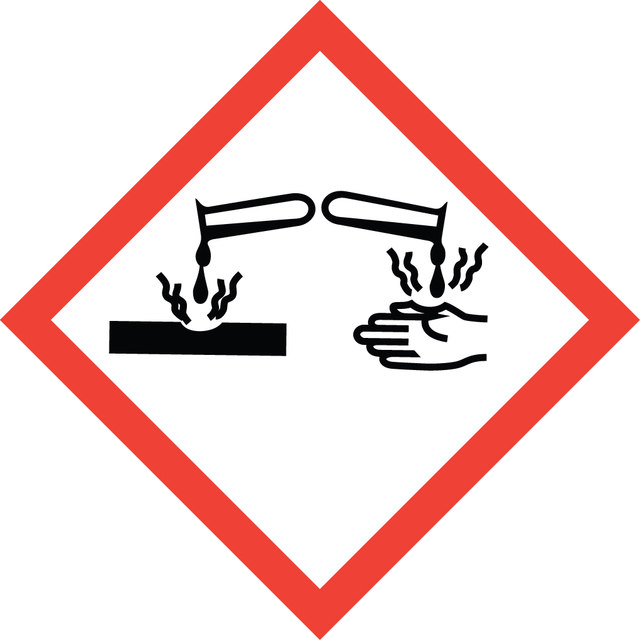
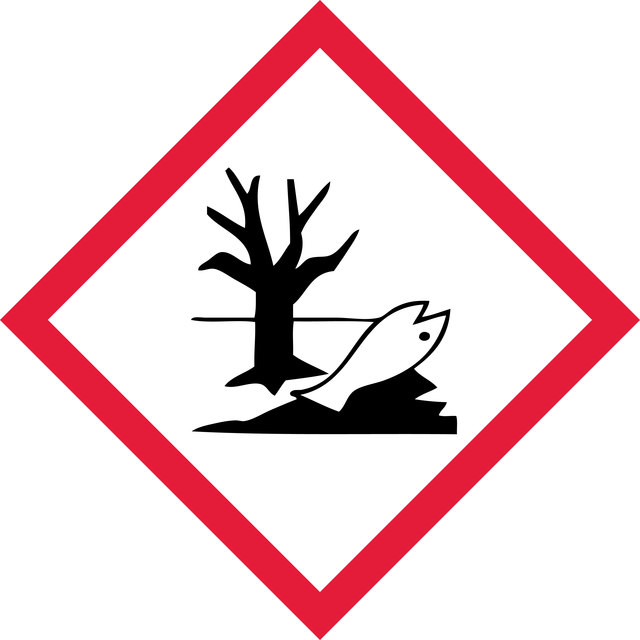
Aquatic Chronic 2 - Asp. Tox. 1 - Eye Dam. 1 - Flam. Liq. 2 - Repr. 2 - Skin Corr. 1B - STOT RE 1 Inhalation - STOT SE 3

target_organs

Central nervous system, Nervous system

Storage Class

3 - Flammable liquids

wgk

WGK 3

flash_point_f

-14.8 °F - closed cup

Regulatory Information

新产品
This item has

Choose from one of the most recent versions:

Certificates of Analysis (COA)

Lot/Batch Number

Don't see the Right Version?

If you require a particular version, you can look up a specific certificate by the Lot or Batch number.

Already Own This Product?

Find documentation for the products that you have recently purchased in the Document Library.

Visit the Document Library

Joshua D Schaefferkoetter et al.
Physics in medicine and biology, 60(14), 5543-5556 (2015-07-03)
In the context of investigating the potential of low-dose PET imaging for screening applications, we developed methods to assess small lesion detectability as a function of the number of counts in the scan. We present here our methods and preliminary
Juan Eugenio Iglesias et al.
NeuroImage, 115, 117-137 (2015-05-06)
Automated analysis of MRI data of the subregions of the hippocampus requires computational atlases built at a higher resolution than those that are typically used in current neuroimaging studies. Here we describe the construction of a statistical atlas of the
Martin E Gosnell et al.
Biochimica et biophysica acta, 1863(1), 56-63 (2015-10-04)
Hyperspectral imaging uses spectral and spatial image information for target detection and classification. In this work hyperspectral autofluorescence imaging was applied to patient olfactory neurosphere-derived cells, a cell model of a human metabolic disease MELAS (mitochondrial myopathy, encephalomyopathy, lactic acidosis
Paweł Mandera et al.
Quarterly journal of experimental psychology (2006), 68(8), 1623-1642 (2015-02-20)
Subjective ratings for age of acquisition, concreteness, affective valence, and many other variables are an important element of psycholinguistic research. However, even for well-studied languages, ratings usually cover just a small part of the vocabulary. A possible solution involves using
Erwei Yin et al.
IEEE transactions on neural systems and rehabilitation engineering : a publication of the IEEE Engineering in Medicine and Biology Society, 23(4), 693-701 (2015-02-24)
The present study proposes a hybrid brain-computer interface (BCI) with 64 selectable items based on the fusion of P300 and steady-state visually evoked potential (SSVEP) brain signals. With this approach, row/column (RC) P300 and two-step SSVEP paradigms were integrated to

Our team of scientists has experience in all areas of research including Life Science, Material Science, Chemical Synthesis, Chromatography, Analytical and many others.

Contact Technical Service