
295477

Methane
≥99.0%
Sign In to View Organizational & Contract Pricing.
Select a Size
About This Item
Empirical Formula (Hill Notation):
CH4
CAS Number:
Molecular Weight:
16.04
UNSPSC Code:
12142100
NACRES:
NA.22
PubChem Substance ID:
EC Number:
200-812-7
Beilstein/REAXYS Number:
1718732
MDL number:
Assay:
≥99.0%
Form:
gas
InChI key
VNWKTOKETHGBQD-UHFFFAOYSA-N
InChI
1S/CH4/h1H4
SMILES string
[H]C([H])([H])[H]
vapor density
0.55 (vs air)
assay
≥99.0%
form
gas
autoignition temp.
998 °F
expl. lim.
15 %
bp
−161 °C (lit.)
mp
−183 °C (lit.)
density
0.716 g/mL at 25 °C (lit.)
Quality Level
Looking for similar products? Visit Product Comparison Guide
Features and Benefits
Methane is used as a carbon source for the chemical vapor deposition (CVD) of carbide and diamond thin films.
Other Notes
Brass control valve Z146943 or either of brass regulators Z146706 and Z146714 is recommended.
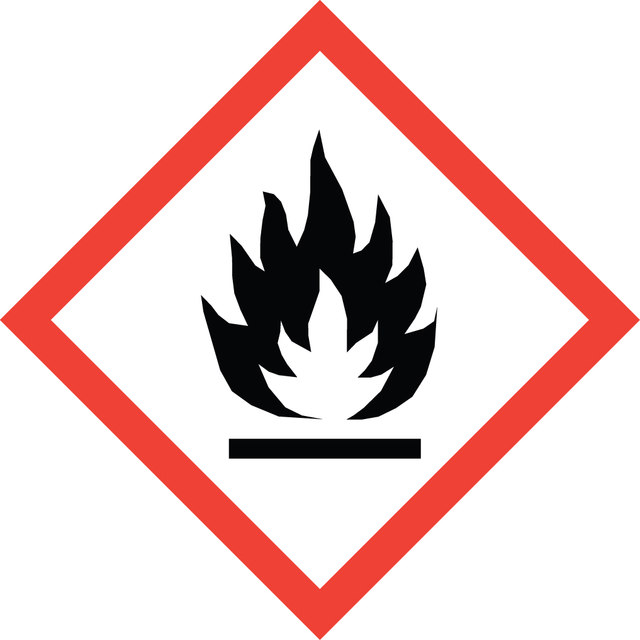

signalword
Danger
hcodes
Hazard Classifications
Flam. Gas 1A - Press. Gas Compr. Gas
Storage Class
2A - Gases
wgk
nwg
flash_point_f
-306.4 °F - closed cup
flash_point_c
-188 °C - closed cup
ppe
Eyeshields, Faceshields, Gloves, multi-purpose combination respirator cartridge (US)
Regulatory Information
新产品
This item has
Choose from one of the most recent versions:
Already Own This Product?
Find documentation for the products that you have recently purchased in the Document Library.
Judlyn Fernandes et al.
The Journal of nutrition, 143(8), 1269-1275 (2013-06-07)
Recent attention has focused on the significance of colonic Archaea in human health and energy metabolism. The main objectives of this study were to determine the associations among the number of fecal Archaea, body mass index (BMI), fecal short chain
T H Florin et al.
Gut, 37(3), 418-421 (1995-09-01)
The factors that regulate methanogenesis in humans have not been established. The presence of bile acid, which is lost into the colon from the small intestine, may be an important regulatory factor of methanogenesis. To examine this possibility, the effect
Ceri Hammond et al.
ChemSusChem, 5(9), 1668-1686 (2012-08-01)
The economically viable oxidative upgrading of methane presents one of the most difficult but rewarding challenges within catalysis research. Its potential to revolutionalise the chemical value chain, coupled with the associated supremely challenging scientific aspects, has ensured this topic's high
Jeanette Ringvoll et al.
The EMBO journal, 25(10), 2189-2198 (2006-04-28)
Two human homologs of the Escherichia coli AlkB protein, denoted hABH2 and hABH3, were recently shown to directly reverse 1-methyladenine (1meA) and 3-methylcytosine (3meC) damages in DNA. We demonstrate that mice lacking functional mABH2 or mABH3 genes, or both, are
Feng-Ping Wang et al.
The ISME journal, 8(5), 1069-1078 (2013-12-18)
Anaerobic oxidation of methane (AOM) is a crucial process limiting the flux of methane from marine environments to the atmosphere. The process is thought to be mediated by three groups of uncultivated methane-oxidizing archaea (ANME-1, 2 and 3). Although the
Our team of scientists has experience in all areas of research including Life Science, Material Science, Chemical Synthesis, Chromatography, Analytical and many others.
Contact Technical Service