Skip to Content
Merck
CN

291250

1,3-Propanesultone

≥99%

Synonym(s):

3-Hydroxypropanesulfonic acid γ-sultone

Sign In to View Organizational & Contract Pricing.

Select a Size


About This Item

Empirical Formula (Hill Notation):
C3H6O3S
CAS Number:
Molecular Weight:
122.14
UNSPSC Code:
12352100
NACRES:
NA.22
PubChem Substance ID:
EC Number:
214-317-9
Beilstein/REAXYS Number:
109782
MDL number:
Assay:
≥99%
Technical Service
Need help? Our team of experienced scientists is here for you.
Let Us Assist
Technical Service
Need help? Our team of experienced scientists is here for you.
Let Us Assist

InChI key

FSSPGSAQUIYDCN-UHFFFAOYSA-N

InChI

1S/C3H6O3S/c4-7(5)3-1-2-6-7/h1-3H2

SMILES string

O=S1(OCCC1)=O

assay

≥99%

bp

180 °C/30 mmHg (lit.)

mp

30-33 °C (lit.)

density

1.392 g/mL at 25 °C (lit.)

functional group

sulfonic acid

Quality Level

Looking for similar products? Visit Product Comparison Guide

Application

1,3-Propanesultone has been used in:
  • preparation of poly[2-ethynyl-N-(propylsulfonate)pyridinium betaine], a new ionic conjugated polymer
  • preparation of novel poly(4-vinylpyridine) supported acidic ionic liquid catalyst
  • preparation of poly((2-(dimethylamino)ethyl methacrylate)-co-3-dimethyl(methacryloyloxyethyl)ammonium propanesulfonate)-coated mesoporous silica nanoparticles
  • sulfonation of surface of self-assembled nanoporous silica colloidal crystalline films comprised of 184nm-diameter silica spheres
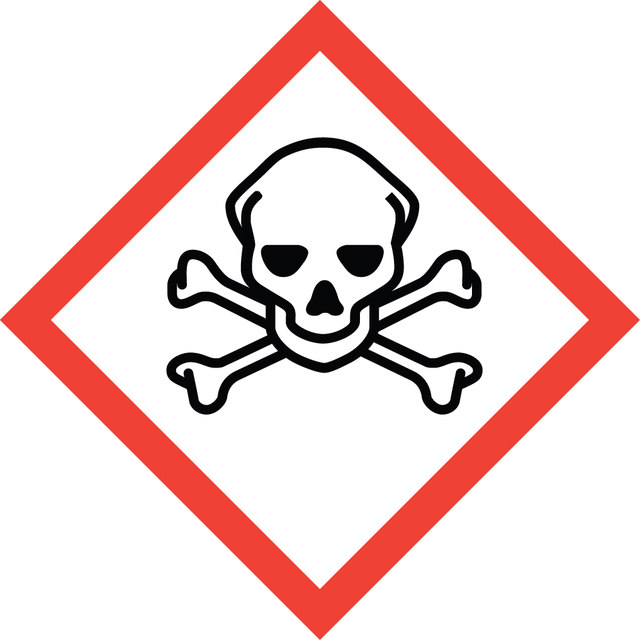

signalword

Danger

Hazard Classifications

Acute Tox. 3 Oral - Acute Tox. 4 Dermal - Carc. 1B - Eye Dam. 1 - Skin Irrit. 2

Storage Class

6.1C - Combustible acute toxic Cat.3 / toxic compounds or compounds which causing chronic effects

wgk

WGK 3

flash_point_f

340.7 °F

flash_point_c

171.5 °C

ppe

Eyeshields, Faceshields, Gloves, type P3 (EN 143) respirator cartridges


Choose from one of the most recent versions:

Certificates of Analysis (COA)

Lot/Batch Number

Don't see the Right Version?

If you require a particular version, you can look up a specific certificate by the Lot or Batch number.

Already Own This Product?

Find documentation for the products that you have recently purchased in the Document Library.

Visit the Document Library

Junke Wang et al.
Ultrasonics sonochemistry, 21(1), 29-34 (2013-06-12)
A novel poly(4-vinylpyridine) supported acidic ionic liquid catalyst was synthesized by the reaction of 4-vinylpyridine with 1,3-propanesultone, followed by the polymerization and the addition of the heteropolyacid. Due to the combination of polymer features and ionic liquid, it acted as
Yeong-Soon Gal et al.
Journal of nanoscience and nanotechnology, 14(7), 5480-5484 (2014-04-25)
A new ionic conjugated polymer was prepared by the activated polymerization of 2-ethynylpyridine with the ring-opening of 1,3-propanesultone without any additional initiator or catalyst. This polymer was characterized by various instrumental methods to have conjugated polymer backbone system with pendant
Kang-Ting Huang et al.
Biomacromolecules, 20(9), 3524-3534 (2019-08-06)
This work presents a salt-responsive interpenetrating network (IPN) hydrogel with effective antimicrobial properties and surface regeneration. The hydrogels were engineered using the double network strategy to form loosely cross-linked zwitterionic poly(sulfobetaine vinylimidazole) (pSBVI) networks into the highly cross-linked cationic poly((trimethylamino)ethyl
C Singh et al.
Mutation research, 144(4), 239-242 (1985-12-01)
Pre- and post-treatments with caffeine enhanced propane sultone (PS)-induced growth damage in barley. The caffeine post-treatments were, however, more effective in potentiating PS-induced growth damage and caused an additive effect on the frequency of chlorophyll mutations.
G E Milo et al.
Proceedings of the National Academy of Sciences of the United States of America, 93(11), 5229-5234 (1996-05-28)
Two structurally unrelated chemicals, aflatoxin B1 and propane sultone, transformed human foreskin cells to a stage of anchorage-independent growth. Isolation from agar and repopulation in monolayer culture of these transformed cells was followed by transfection with a cDNA library, which

Our team of scientists has experience in all areas of research including Life Science, Material Science, Chemical Synthesis, Chromatography, Analytical and many others.

Contact Technical Service