Skip to Content
Merck
CN

283606

Palladium(II) chloride solution

5 wt. % in 10 wt. % HCl, liquid

Synonym(s):

Dichloropalladium, Palladium dichloride, Palladous chloride

Sign In to View Organizational & Contract Pricing.

Select a Size


About This Item

Linear Formula:
PdCl2
CAS Number:
Molecular Weight:
177.33
UNSPSC Code:
12161600
PubChem Substance ID:
NACRES:
NA.22
MDL number:
Technical Service
Need help? Our team of experienced scientists is here for you.
Let Us Assist
Technical Service
Need help? Our team of experienced scientists is here for you.
Let Us Assist

Product Name

Palladium(II) chloride solution, 5 wt. % in 10 wt. % HCl

SMILES string

Cl[Pd]Cl

InChI

1S/2ClH.Pd/h2*1H;/q;;+2/p-2

InChI key

PIBWKRNGBLPSSY-UHFFFAOYSA-L

form

liquid

reaction suitability

core: palladium
reaction type: Buchwald-Hartwig Cross Coupling Reaction
reaction type: Heck Reaction
reaction type: Hiyama Coupling
reaction type: Negishi Coupling
reaction type: Sonogashira Coupling
reaction type: Stille Coupling
reaction type: Suzuki-Miyaura Coupling
reagent type: catalyst

concentration

5 wt. % in 10 wt. % HCl

density

1.06 g/mL at 25 °C

Quality Level

Application

Used in the synthesis of semiconducting metal-containing polymers in which the polypyrrole backbone has a conformational energy minimum and is nearly planar.

General description

Palladium(II) chloride is a representative salt of Pd(II) that is used as a precursor to prepare palladium catalysts for various reactions, such as Heck coupling, Suzuki coupling, Sonagashira coupling, and Buchwald-Hartwig coupling. It is also used as an oxidizing agent.

signalword

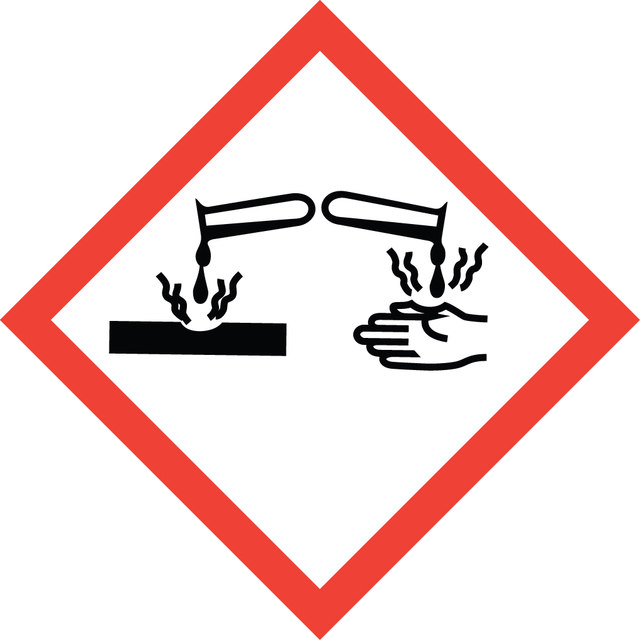
Danger

Hazard Classifications

Aquatic Acute 1 - Aquatic Chronic 1 - Eye Dam. 1 - Met. Corr. 1 - Skin Sens. 1

Storage Class

8B - Non-combustible corrosive hazardous materials

wgk

WGK 3

flash_point_f

Not applicable

flash_point_c

Not applicable


Choose from one of the most recent versions:

Certificates of Analysis (COA)

Lot/Batch Number

Don't see the Right Version?

If you require a particular version, you can look up a specific certificate by the Lot or Batch number.

Already Own This Product?

Find documentation for the products that you have recently purchased in the Document Library.

Visit the Document Library

Mathis, M. et al.
Chemistry of Materials, 10, 3568-3568 (1998)
Gábor Kovács et al.
Chemistry (Weinheim an der Bergstrasse, Germany), 18(18), 5612-5619 (2012-03-31)
First-principles molecular dynamics coupled with metadynamics have been used to gain a deeper insight into the reaction mechanism of the Wacker process by determining the nature of the active species. An explicit and dynamic representation of the aqueous solvent, which
[(RCN)2PdCl2]-catalyzed E/Z isomerization of alkenes: a non-hydride binuclear addition-elimination pathway.
Emily H P Tan et al.
Angewandte Chemie (International ed. in English), 50(41), 9602-9606 (2011-09-23)
Chun Liu et al.
Organic & biomolecular chemistry, 9(4), 1054-1060 (2010-12-15)
A simple and efficient protocol has been developed for the PdCl(2)-catalyzed ligand-free and aerobic Suzuki reaction of aryl bromides or nitrogen-based heteroaryl bromides with arylboronic acids in good to excellent yields in aqueous ethanol. A systematic investigation on the effect
Feng-Quan Yuan et al.
Chemical communications (Cambridge, England), 47(18), 5289-5291 (2011-04-01)
We present a PdCl(2)-catalyzed protocol for highly efficient allylation and benzylation of a rich variety of N-, O-, and S-containing heteroarenes under base/acid, additive, and ligand-free conditions. The method represents the very few examples for simple, universally applicable, clean, and

Our team of scientists has experience in all areas of research including Life Science, Material Science, Chemical Synthesis, Chromatography, Analytical and many others.

Contact Technical Service