Skip to Content
Merck
CN

268542

Hydroxypropyl methacrylate

Mixture of hydroxypropyl and hydroxyisopropyl methacrylates, 97%, contains 180-220 ppm monomethyl ether hydroquinone as inhibitor

Synonym(s):

HPMA

Sign In to View Organizational & Contract Pricing.

Select a Size


About This Item

CAS Number:
MDL number:
UNSPSC Code:
12162002
PubChem Substance ID:
NACRES:
NA.23
Beilstein/REAXYS Number:
1752228
Technical Service
Need help? Our team of experienced scientists is here for you.
Let Us Assist
Technical Service
Need help? Our team of experienced scientists is here for you.
Let Us Assist

SMILES string

CC(=C)C(=O)OCCCO

InChI

1S/C7H12O3/c1-5(2)7(9)10-6(3)4-8/h6,8H,1,4H2,2-3H3

InChI key

ZMARGGQEAJXRFP-UHFFFAOYSA-N

vapor density

>1 (vs air)

vapor pressure

0.05 mmHg ( 20 °C)

assay

97%

form

liquid

contains

180-220 ppm monomethyl ether hydroquinone as inhibitor

refractive index

n20/D 1.447 (lit.)

bp

57 °C/0.5 mmHg (lit.)

density

1.066 g/mL at 25 °C (lit.)

storage temp.

2-8°C

Quality Level

Application


  • Synthesis of poly hydroxypropyl methacrylate cryogel incorporated with Zn/Ce substituted hydroxyapatite nanoparticles for rejuvenation of femoral fracture: This study explores the synthesis of a cryogel incorporating hydroxypropyl methacrylate and Zn/Ce substituted hydroxyapatite nanoparticles, aimed at bone fracture healing (H Zhou, H Jiao, J Xu, Y Liu, S Wei, 2019).

  • Poly(Hydroxypropyl methacrylate-co-glycidyl methacrylate): Facile synthesis of well-defined hydrophobic gels containing hydroxy-functional methacrylates: This article presents the synthesis of hydrophobic gels using hydroxypropyl methacrylate and glycidyl methacrylate, useful in various material applications (N Orakdogen, B Sanay, 2017).

  • Initiated chemical vapor deposition of poly(Hydroxypropyl methacrylate) thin films: The study covers the chemical vapor deposition process for creating thin films of poly(hydroxypropyl methacrylate) on membranes, enhancing their functional properties (E Sevgili, M Karaman, 2019).

flash_point_f

203.0 °F - closed cup
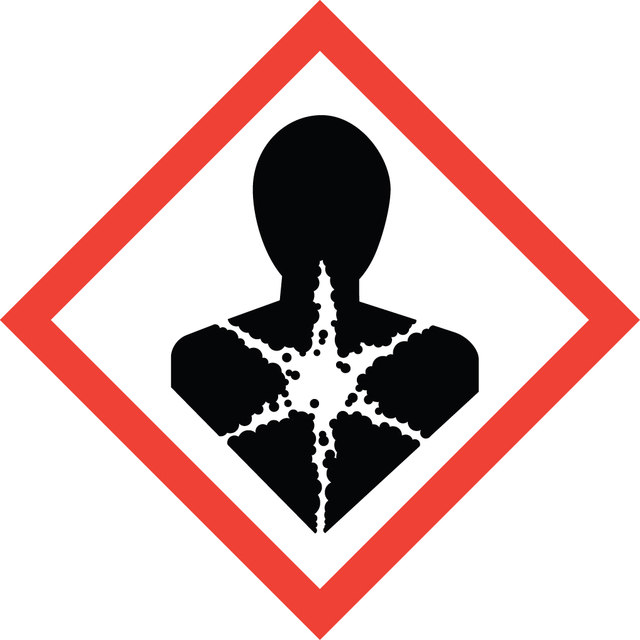
pictograms

Health hazardExclamation mark

signalword

Danger

Hazard Classifications

Carc. 1B - Eye Irrit. 2 - Muta. 1B - Skin Irrit. 2 - Skin Sens. 1 - STOT SE 3

target_organs

Respiratory system

Storage Class

6.1C - Combustible acute toxic Cat.3 / toxic compounds or compounds which causing chronic effects

wgk

WGK 3

flash_point_c

95 °C - closed cup


Choose from one of the most recent versions:

Certificates of Analysis (COA)

Lot/Batch Number

Don't see the Right Version?

If you require a particular version, you can look up a specific certificate by the Lot or Batch number.

Already Own This Product?

Find documentation for the products that you have recently purchased in the Document Library.

Visit the Document Library

Annette Kelsch et al.
Biomacromolecules, 13(12), 4179-4187 (2012-11-28)
In this work we describe the application of amphiphilic N-(2-hydroxypropyl)methacrylamide (HPMA)-based copolymers as polymeric surfactants in miniemulsion techniques. HPMA-based copolymers with different ratios of HPMA (hydrophilic) to laurylmethacrylate (LMA; hydrophobic) units were synthesized by RAFT polymerization and postpolymerization modification. The
Yang Yang et al.
Biomaterials, 33(7), 2260-2271 (2011-12-23)
Galectin-3 (Gal-3), over-expressed on a variety of human tumor cells, is a potential binding site for targeted metastatic prostate cancer therapy. The aim of this study was to develop a G3-C12-mediated drug delivery system based on N-(2-hydroxypropyl) methacrylamide (HPMA) copolymers
Adam J Gormley et al.
Journal of controlled release : official journal of the Controlled Release Society, 166(2), 130-138 (2012-12-25)
Effective drug delivery to tumors requires both transport through the vasculature and tumor interstitium. Previously, it was shown that gold nanorod (GNR) mediated plasmonic photothermal therapy (PPTT) is capable of increasing the overall accumulation of N-(2-hydroxypropyl)methacrylamide (HPMA) copolymers in prostate
Stefan Hoffmann et al.
Biomacromolecules, 13(3), 652-663 (2012-01-24)
Preclinical in vivo characterization of new polymeric drug conjugate candidates is crucial for understanding the effects of certain chemical modifications on distribution and elimination of these carrier systems, which is the basis for rational drug design. In our study we
Russell N Johnson et al.
Biomacromolecules, 13(3), 727-735 (2012-02-01)
High-molecular-weight, branched N-(2-hydroxypropyl)methacrylamide (HPMA) copolymers were synthesized and conjugated with Fab' fragments of the anti-CD20 antibody, 1F5. This produced multivalent conjugates with varying valency (amount of Fab' per macromolecule) targeted to the B-cell antigen CD20. The apoptotic activity of the

Our team of scientists has experience in all areas of research including Life Science, Material Science, Chemical Synthesis, Chromatography, Analytical and many others.

Contact Technical Service