Skip to Content
Merck
CN

255718

Cesium fluoride

99.99% trace metals basis

Synonym(s):

NSC 84270

Sign In to View Organizational & Contract Pricing.

Select a Size


About This Item

Empirical Formula (Hill Notation):
CsF
CAS Number:
Molecular Weight:
151.90
NACRES:
NA.23
PubChem Substance ID:
UNSPSC Code:
12352302
EC Number:
236-487-3
MDL number:
Assay:
99.99% trace metals basis
Form:
solid
Solubility:
methanol: slightly soluble(lit.)
pyridine: insoluble(lit.)
Technical Service
Need help? Our team of experienced scientists is here for you.
Let Us Assist
Technical Service
Need help? Our team of experienced scientists is here for you.
Let Us Assist

Product Name

Cesium fluoride, 99.99% trace metals basis

InChI key

XJHCXCQVJFPJIK-UHFFFAOYSA-M

InChI

1S/Cs.FH/h;1H/q+1;/p-1

SMILES string

[F-].[Cs+]

assay

99.99% trace metals basis

form

solid

impurities

≤150.0 ppm Trace Metal Analysis

mp

682 °C (lit.)

solubility

methanol: slightly soluble(lit.)
pyridine: insoluble(lit.)

density

4.115 g/mL at 25 °C (lit.)

Quality Level

Looking for similar products? Visit Product Comparison Guide

Application

Reactant for:
  • Preparation of building blocks for synthesis of fluoroallylic compounds
  • Synthesis of alcohols via hydrolysis of alkyl silyl ethers at neutral pH in buffered mixed organic-aqueous solutions
  • Nucleophilic fluorination of alkynyliodonium salts to form fluorovinylic compounds
  • Nucleophilic aromatic substitution (SNAr) reactions
Used as a base in the Suzuki carbonylative coupling of enol triflates with vinyl boronic acids.
Used in the successful synthesis of a single-crystal Dion-Jacobson phase, CsLaTa2O7, that has applications in photocatalysis and superconductivity.

signalword

Danger

Hazard Classifications

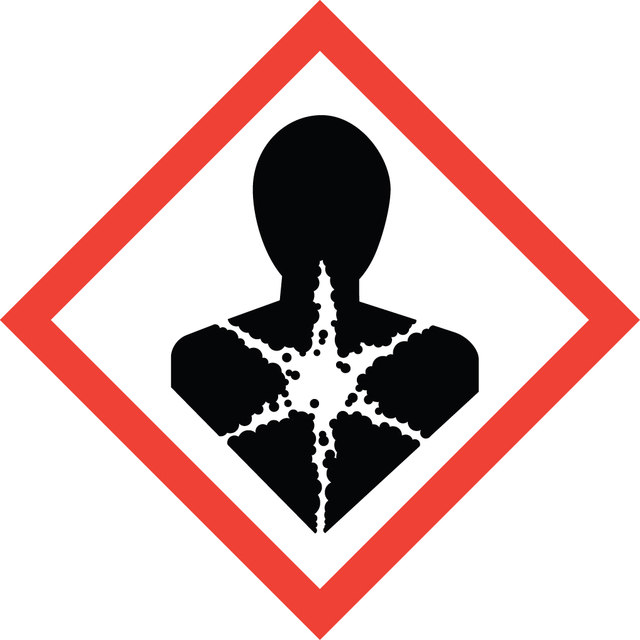
Acute Tox. 4 Oral - Aquatic Chronic 3 - Eye Dam. 1 - Repr. 2 - STOT RE 2

target_organs

Kidney,Adrenal gland

supp_hazards

Storage Class

11 - Combustible Solids

wgk

WGK 2

flash_point_f

Not applicable

flash_point_c

Not applicable

ppe

Eyeshields, Faceshields, Gloves, type P3 (EN 143) respirator cartridges

Regulatory Information

危险化学品
This item has

Choose from one of the most recent versions:

Certificates of Analysis (COA)

Lot/Batch Number

Don't see the Right Version?

If you require a particular version, you can look up a specific certificate by the Lot or Batch number.

Already Own This Product?

Find documentation for the products that you have recently purchased in the Document Library.

Visit the Document Library

European Journal of Organic Chemistry, 2152-2152 (2007)
S Nelson et al.
Science (New York, N.Y.), 265(5173), 774-777 (1994-08-05)
Neurons in the primary visual cortex of the cat are selectively activated by stimuli with particular orientations. This selectivity can be disrupted by the application of antagonists of the inhibitory neurotransmitter gamma-aminobutyric acid (GABA) to a local region of the
T C Melville et al.
Spectrochimica acta. Part A, Molecular and biomolecular spectroscopy, 57(6), 1171-1176 (2001-06-23)
A procedure for directly fitting the potential energy curve of a diatomic molecule has been applied to the X1sigma+ ground states of LiCl, TlCl, RbF and CsF. Extensive, high-precision infrared and pure-rotational data sets for all isotopomers of the aforementioned
E D Risby et al.
Archives of general psychiatry, 48(6), 513-524 (1991-06-01)
As part of a study of the effects of lithium carbonate on neurochemical function in man, platelet and lymphocyte adenylate cyclase activity and lymphocyte beta-adrenergic receptor binding characteristics were determined before and after 2 weeks of lithium treatment in 10
E A Lesnik et al.
Journal of biomolecular structure & dynamics, 5(3), 601-614 (1987-12-01)
We have determined the 1H----3H exchange rate constants between water and C8H groups of purinic residues of alternating polynucleotides poly(dA-dT).poly(dA-dT), poly(dG-dC).poly(dG-dC) and poly(dA-dC).poly(dG-dT) as well as homopolynucleotides poly(dA).poly(dT) and poly(dG).poly(dC) in aqueous solutions with high-salt concentrations (3 M NaCl and

Articles

Colloidal quantum dots (CQDs) are semiconducting crystals of only a few nanometers (ca. 2–12 nm) coated with ligand/surfactant molecules to help prevent agglomeration.

Our team of scientists has experience in all areas of research including Life Science, Material Science, Chemical Synthesis, Chromatography, Analytical and many others.

Contact Technical Service