Skip to Content
Merck
CN

254029

Chloroplatinic acid hydrate

99.995% trace metals basis

Synonym(s):

Hexachloroplatinic(IV) acid hydrate, Hydrogen hexachloroplatinate(IV) hydrate, Platinic chloride hydrate

Sign In to View Organizational & Contract Pricing.

Select a Size


About This Item

Linear Formula:
H2PtCl6 · xH2O
CAS Number:
Molecular Weight:
409.81 (anhydrous basis)
NACRES:
NA.23
PubChem Substance ID:
UNSPSC Code:
12161600
EC Number:
241-010-7
MDL number:
Technical Service
Need help? Our team of experienced scientists is here for you.
Let Us Assist
Technical Service
Need help? Our team of experienced scientists is here for you.
Let Us Assist

Product Name

Chloroplatinic acid hydrate, 99.995% trace metals basis

InChI key

SLIOYUPLNYLSSR-UHFFFAOYSA-J

InChI

1S/6ClH.H2O.Pt/h6*1H;1H2;/q;;;;;;;+4/p-4

SMILES string

O.Cl.Cl.Cl[Pt](Cl)(Cl)Cl

assay

99.995% trace metals basis

composition

Pt, 38-40%

mp

60 °C (lit.)

density

2.43 g/mL at 25 °C (lit.)

Quality Level

Looking for similar products? Visit Product Comparison Guide

Application

Used for the production of platinum metal and its compounds.

General description

Chloroplatinic acid hydrate is one of the most soluble compounds of platinum.

Packaging

Packaged under dry Nitrogen gas

Preparation Note

1. Hygroscopic material, always handle in a glove bag or a glove box filled with dry inert gas
2. Recommended for one time use to prevent water absorption and degradation. If necessary, once opened, repack and seal under dry inert gas.
3. Store with care. Prevent from light. Always store in well-sealed containers in a dry inert atmosphere. Recommended to store containers in a secondary desiccator with desiccant in a dry inert atmosphere.

signalword

Danger

Hazard Classifications

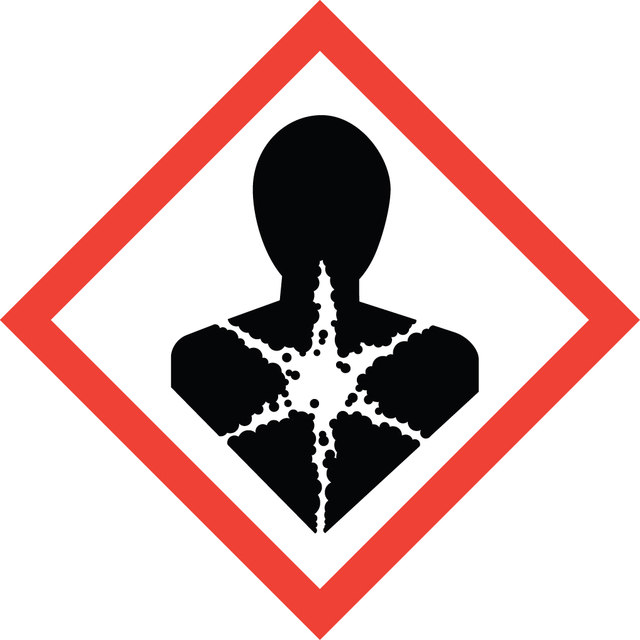
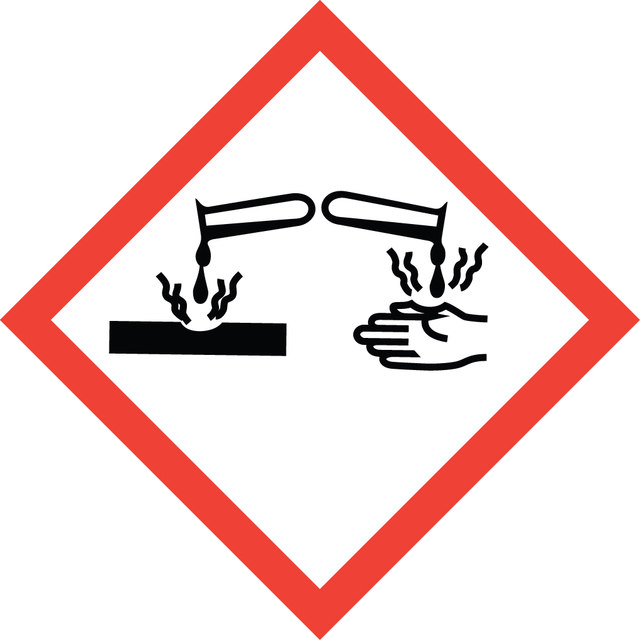
Acute Tox. 3 Oral - Eye Dam. 1 - Resp. Sens. 1 - Skin Corr. 1B - Skin Sens. 1

Storage Class

6.1C - Combustible acute toxic Cat.3 / toxic compounds or compounds which causing chronic effects

wgk

WGK 1

flash_point_f

Not applicable

flash_point_c

Not applicable

ppe

Eyeshields, Faceshields, Gloves, type P3 (EN 143) respirator cartridges

Regulatory Information

危险化学品
This item has

Choose from one of the most recent versions:

Certificates of Analysis (COA)

Lot/Batch Number

Don't see the Right Version?

If you require a particular version, you can look up a specific certificate by the Lot or Batch number.

Already Own This Product?

Find documentation for the products that you have recently purchased in the Document Library.

Visit the Document Library

Víctor de la Asunción-Nadal et al.
Chemical science, 11(1), 132-140 (2020-02-29)
Tungsten disulfide (WS2)-based micromotors with enhanced electrochemical and photo-catalytic activities are synthesized using a greatly simplified electrochemical deposition protocol at room temperature involving exclusively tungstic acid and sulfate as metal and sulfur sources without further building chemistry. The WS2-based micromotors
Galvanic synthesis of three-dimensional and hollow metallic nanostructures
Park SH, et al.
Nanoscale Research Letters, 9(1), 679-679 (2014)
Control over the branched structures of platinum nanocrystals for electrocatalytic applications.
Ma L, et al.
ACS Nano, 6(11), 9797-9806 (2012)
Impact of three different TiO 2 morphologies on hydrogen evolution by methanol assisted water splitting: nanoparticles, nanotubes and aerogels
D?Elia D, et al.
International Journal of Hydrogen Energy, 36(22), 14360-14373 (2011)
Chun-Yuan Wang et al.
Nature communications, 6, 7734-7734 (2015-07-16)
The development of ultrasmooth, macroscopic-sized silver (Ag) crystals exhibiting reduced losses is critical to fully characterize the ultimate performance of Ag as a plasmonic material, and to enable cascaded and integrated plasmonic devices. Here we demonstrate the growth of single-crystal

Our team of scientists has experience in all areas of research including Life Science, Material Science, Chemical Synthesis, Chromatography, Analytical and many others.

Contact Technical Service