
Skip to Content
Merck
CN

250171

Sodium hexafluorosilicate

Synonym(s):

Disodium hexafluorosilicon(2-), Sodium fluosilicate

Sign In to View Organizational & Contract Pricing.

Select a Size


About This Item

Linear Formula:
Na2SiF6
CAS Number:
Molecular Weight:
188.06
NACRES:
NA.23
PubChem Substance ID:
UNSPSC Code:
12352302
EC Number:
240-934-8
MDL number:
Form:
powder
Technical Service
Need help? Our team of experienced scientists is here for you.
Let Us Assist
Technical Service
Need help? Our team of experienced scientists is here for you.
Let Us Assist

InChI key

TWGUZEUZLCYTCG-UHFFFAOYSA-N

InChI

1S/F6Si.2Na/c1-7(2,3,4,5)6;;/q-2;2*+1

SMILES string

[Na+].[Na+].F[Si--](F)(F)(F)(F)F

form

powder

density

2.68 g/mL at 25 °C (lit.)

Quality Level
Looking for similar products? Visit Product Comparison Guide

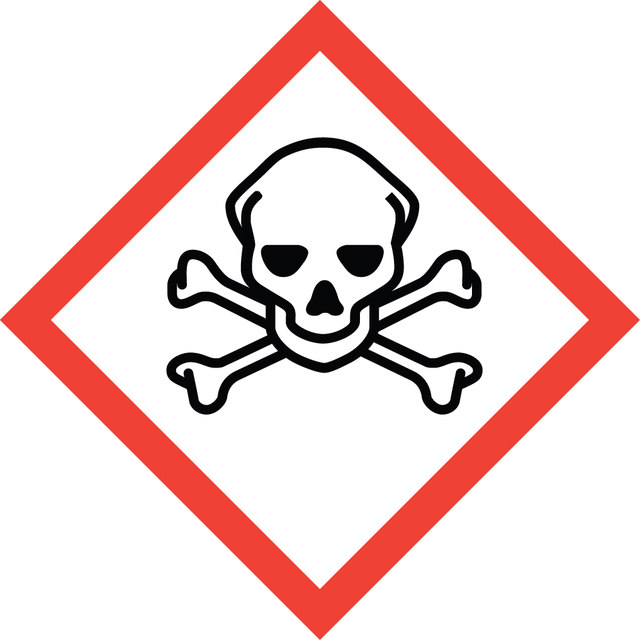
pictograms

Skull and crossbones

signalword

Danger

Hazard Classifications

Acute Tox. 3 Dermal - Acute Tox. 3 Inhalation - Acute Tox. 3 Oral

Storage Class

6.1D - Non-combustible acute toxic Cat.3 / toxic hazardous materials or hazardous materials causing chronic effects

wgk

WGK 2

flash_point_f

Not applicable

flash_point_c

Not applicable

ppe

Eyeshields, Faceshields, Gloves, type P2 (EN 143) respirator cartridges

Regulatory Information

危险化学品
This item has

Choose from one of the most recent versions:

Certificates of Analysis (COA)

Lot/Batch Number

Don't see the Right Version?

If you require a particular version, you can look up a specific certificate by the Lot or Batch number.

Already Own This Product?

Find documentation for the products that you have recently purchased in the Document Library.

Visit the Document Library

S Nakabo et al.
Journal of oral rehabilitation, 29(7), 675-681 (2002-08-03)
Regulation of fluoride release from restorative resin or sealant is beneficial to patients as it will prevent the occurrence of the secondary caries. In this study, we evaluated whether or not the formation of a hydrophobic polysiloxane layer on the
Teresa Lech
Forensic science international, 206(1-3), e20-e24 (2010-07-27)
Fluoride, of all inorganic substances, is among the least likely to be identified by a routine toxicological analysis. Acute poisonings with salts of hydrofluoric or fluorosilicic acid, however, although relatively uncommon, may occur. Some fluorosilicates, salts of fluorosilicic acid (e.g.
[Recurrent ventricular fibrillation in magnesium fluosilicate poisoning].
B Suberviola Cañas et al.
Medicina intensiva, 31(6), 344-346 (2007-08-01)
Toshiyuki Suge et al.
American journal of dentistry, 19(4), 248-252 (2006-08-31)
To evaluate the occluding ability of ammonium hexafluorosilicate (SiF). Dentin disks prepared from human extracted teeth were grouped as follows to prepare different situations of dentin hypersensitivity: (1) those sonicated for 20 minutes; (2) those treated with 0.5 mol/L EDTA
Toshiyuki Suge et al.
Dental materials : official publication of the Academy of Dental Materials, 24(2), 192-198 (2007-06-05)
Diamine silver fluoride [AgF: (NH(3))(2)AgF] has been used clinically in Japan, as it reduces dental caries and dentin hypersensitivity. However, AgF stains the teeth black due to silver precipitation. To overcome this drawback, the authors prepared ammonium hexafluorosilicate [SiF: (NH(4))(2)SiF(6)]

Articles

Innovation in dental restorative materials is driven by the need for biocompatible and natural-appearing restoration alternatives. Conventional dental materials like amalgam and composite resins have inherent disadvantages.

Our team of scientists has experience in all areas of research including Life Science, Material Science, Chemical Synthesis, Chromatography, Analytical and many others.

Contact Technical Service