Skip to Content
Merck
CN

234893

Ethyl methacrylate

contains 15-20 ppm monomethyl ether hydroquinone as inhibitor, 99%

Synonym(s):

2-Methyl-2-propenoic acid

Sign In to View Organizational & Contract Pricing.

Select a Size


About This Item

Linear Formula:
CH2=C(CH3)COOC2H5
CAS Number:
Molecular Weight:
114.14
UNSPSC Code:
12162002
NACRES:
NA.25
PubChem Substance ID:
EC Number:
202-597-5
Beilstein/REAXYS Number:
471201
MDL number:
Technical Service
Need help? Our team of experienced scientists is here for you.
Let Us Assist
Technical Service
Need help? Our team of experienced scientists is here for you.
Let Us Assist

Product Name

Ethyl methacrylate, contains 15-20 ppm monomethyl ether hydroquinone as inhibitor, 99%

InChI key

SUPCQIBBMFXVTL-UHFFFAOYSA-N

InChI

1S/C6H10O2/c1-4-8-6(7)5(2)3/h2,4H2,1,3H3

SMILES string

CCOC(=O)C(C)=C

vapor density

>3.9 (vs air)

vapor pressure

15 mmHg ( 20 °C)

assay

99%

form

liquid

autoignition temp.

771 °F

contains

15-20 ppm monomethyl ether hydroquinone as inhibitor

refractive index

n20/D 1.413 (lit.)

bp

118-119 °C (lit.)

density

0.917 g/mL at 25 °C (lit.)

storage temp.

2-8°C

Quality Level

Looking for similar products? Visit Product Comparison Guide

Application

Ethyl methacrylate (EMA) can be used as a monomer in the following applications:
  • To synthesize artificial nanosized latexes of poly(styrene-co-methyl methacrylate) or poly(styrene-co-ethyl methacrylate), which are in producing drug-releasing films.
  • In the production of additive-manufactured methacrylate-based resins used in dentistry.
  • In the synthesis of a star-shaped block copolymer electrolyte for all-solid-state lithium batteries.
  • In the synthesis of a copolymer used as a matrix for semiconductor nanoparticles, which is crucial for the formation of a stable matrix for the quantum dots-copolymer composite material used in optoelectronic applications.
It can also be used to prepare copolymers of EMA on waxy maize starch and hydroxypropyl starch, the potential application of these copolymers are as excipients for compressed non-disintegrating matrix tablets. It may be used to study reactions of n-butyl acrylate and EMA with ozone in the gas phase.

General description

Ethyl methacrylate (EMA) is a monomer commonly used in the field of polymer industries. It is an ester of methacrylic acid and ethanol and is a colorless liquid with a characteristic odor. EMA is widely used in the production of various polymers such as poly(methyl methacrylate) (PMMA), poly(ethyl acrylate) (PEA), and ethylene-EMA (EE). These polymers find their application in various fields, including medical implant devices, packaging, paper coatings, textile coatings, emulsion polymers, and plastics.

Ethyl methacrylate is a readily polymerizable monomer used for certain types of acrylic resins. The monomethyl ether hydroxyl quinone present in it is an inhibitor that prevents polymerization.

pictograms

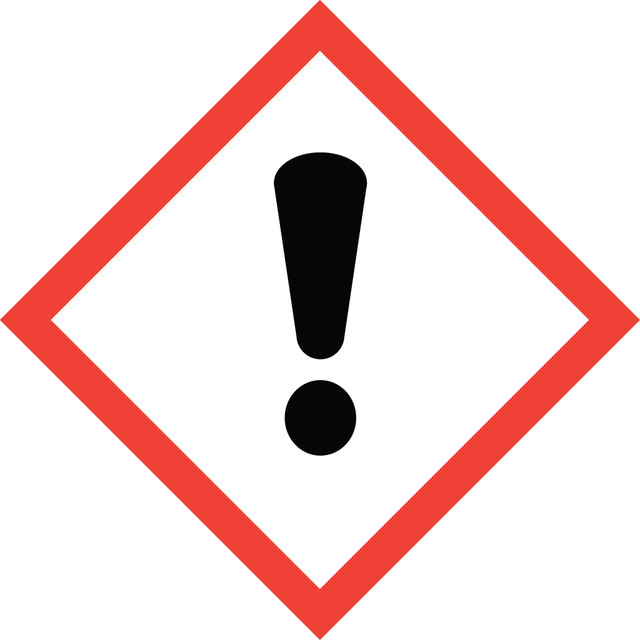
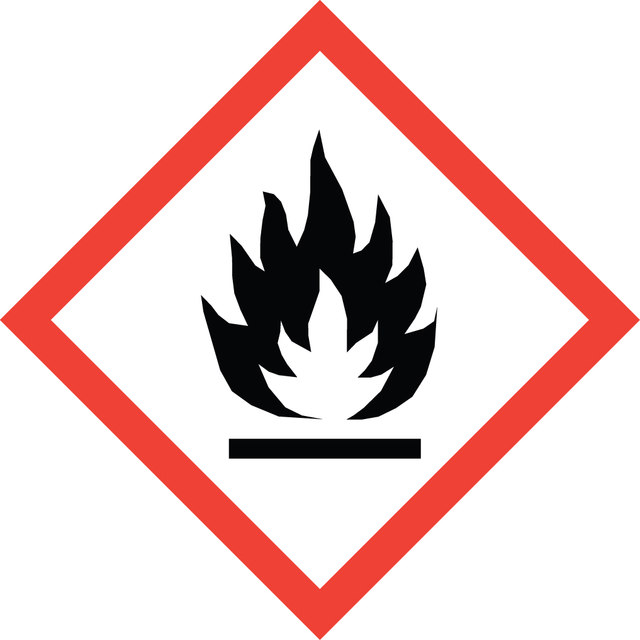
FlameExclamation mark

signalword

Danger

Hazard Classifications

Eye Irrit. 2 - Flam. Liq. 2 - Skin Irrit. 2 - Skin Sens. 1 - STOT SE 3

target_organs

Respiratory system

Storage Class

3 - Flammable liquids

wgk

WGK 1

flash_point_f

66.2 °F - closed cup

flash_point_c

19 °C - closed cup

ppe

Eyeshields, Faceshields, Gloves, type ABEK (EN14387) respirator filter

Regulatory Information

危险化学品
This item has

Choose from one of the most recent versions:

Certificates of Analysis (COA)

Lot/Batch Number

Don't see the Right Version?

If you require a particular version, you can look up a specific certificate by the Lot or Batch number.

Already Own This Product?

Find documentation for the products that you have recently purchased in the Document Library.

Visit the Document Library

Elena Torres et al.
Polymers, 12(8) (2020-08-06)
We aimed to study the distribution of hydroxyapatite (HA) and halloysite nanotubes (HNTs) as fillers and their influence on the hydrophobic character of conventional polymers used in the biomedical field. The hydrophobic polyester poly (ε-caprolactone) (PCL) was blended with its
Reactions of n-butyl acrylate and ethyl methacrylate with ozone in the gas phase, Computational and Theoretical Chemistry
Sun Y, et al.
Computational & Theoretical Chemistry, 1039, 33-39 (2014)
K Dharmalingam et al.
Spectrochimica acta. Part A, Molecular and biomolecular spectroscopy, 69(2), 467-470 (2007-06-02)
Molecular interaction between alcohols (1-propanol, 1-butanol, s-butanol, t-butanol, 1-pentanol, 1-heptanol, 1-octanol and 1-decanol) with ethyl methacrylate has been studied in n-heptane, CCl(4) and benzene at 298K using FTIR spectroscopic and dielectric methods. The result obtained from both the methods indicates
Debra T Auguste et al.
Biomaterials, 27(12), 2599-2608 (2005-12-29)
Triggered release of adsorbed polymers from liposomes enables protection against immune recognition during circulation and subsequent intracellular delivery of DNA. Polycationic blocks, poly[2-(dimethylamino) ethyl methacrylate] (DMAEMA) (0.8, 3.1, 4.9, or 9.8 kg/mol) or polylysine (K) (3 kg/mol), act as anchors
Jacobo Otero-Romaní et al.
Talanta, 79(3), 723-729 (2009-07-07)
The capabilities of a synthesized ionic imprinted polymer (IIP), originally prepared for Ni recognition/pre-concentration from seawater, have been evaluated for other trace elements pre-concentration. The polymer has been synthesized by the precipitation polymerization technique using a ternary pre-polymerization complex formed

Articles

Discover hydrogels, biocompatible materials for drug delivery, tissue engineering, wound care, and 3D bioprinting in innovative biomedical applications

Our team of scientists has experience in all areas of research including Life Science, Material Science, Chemical Synthesis, Chromatography, Analytical and many others.

Contact Technical Service