Skip to Content
Merck
CN

229520

Cadmium nitrate tetrahydrate

99.997% trace metals basis

Synonym(s):

Nitric acid, cadmium salt tetrahydrate

Sign In to View Organizational & Contract Pricing.

Select a Size


About This Item

Linear Formula:
Cd(NO3)2 · 4H2O
CAS Number:
Molecular Weight:
308.48
UNSPSC Code:
12352302
NACRES:
NA.23
PubChem Substance ID:
EC Number:
233-710-6
Beilstein/REAXYS Number:
8156730
MDL number:
Assay:
99.997% trace metals basis
Form:
solid
Technical Service
Need help? Our team of experienced scientists is here for you.
Let Us Assist
Technical Service
Need help? Our team of experienced scientists is here for you.
Let Us Assist

Product Name

Cadmium nitrate tetrahydrate, 99.997% trace metals basis

InChI key

QOYRNHQSZSCVOW-UHFFFAOYSA-N

InChI

1S/Cd.2NO3.4H2O/c;2*2-1(3)4;;;;/h;;;4*1H2/q+2;2*-1;;;;

SMILES string

[H]O[H].[H]O[H].[H]O[H].[H]O[H].[O-][N+](=O)O[Cd]O[N+]([O-])=O

assay

99.997% trace metals basis

form

solid

reaction suitability

core: cadmium
reagent type: catalyst

impurities

≤35.0 ppm Trace Metal Analysis

mp

59.5 °C (lit.)

Quality Level

Looking for similar products? Visit Product Comparison Guide

signalword

Danger

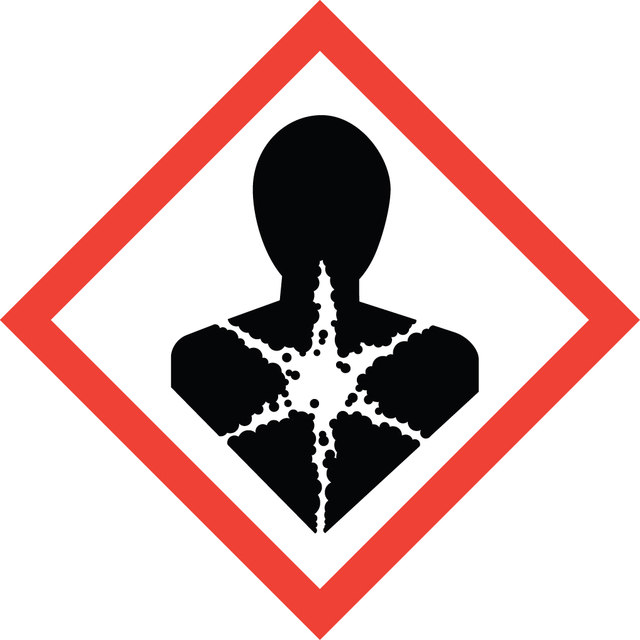
Hazard Classifications

Acute Tox. 2 Inhalation - Acute Tox. 3 Oral - Acute Tox. 4 Dermal - Aquatic Acute 1 - Aquatic Chronic 1 - Carc. 1B - Muta. 1B - Repr. 1B - STOT RE 1

target_organs

Kidney,Bone

Storage Class

6.1A - Combustible acute toxic Cat. 1 and 2 / very toxic hazardous materials

wgk

WGK 3

flash_point_f

Not applicable

flash_point_c

Not applicable

Regulatory Information

危险化学品
This item has

Choose from one of the most recent versions:

Certificates of Analysis (COA)

Lot/Batch Number

Don't see the Right Version?

If you require a particular version, you can look up a specific certificate by the Lot or Batch number.

Already Own This Product?

Find documentation for the products that you have recently purchased in the Document Library.

Visit the Document Library

Ali Hossain Khan et al.
ACS nano, 14(4), 4206-4215 (2020-04-11)
Colloidal two-dimensional (2D) nanoplatelet heterostructures are particularly interesting as they combine strong confinement of excitons in 2D materials with a wide range of possible semiconductor junctions due to a template-free, solution-based growth. Here, we present the synthesis of a ternary
Akmal Muhammad et al.
Chemosphere, 60(4), 508-514 (2005-06-14)
A study was conducted to evaluate the effects of different concentrations of lead (Pb) and cadmium (Cd) applied as their nitrates on soil microbial biomass carbon (C(mic)) and nitrogen (N(mic)), and substrate utilization pattern of soil microbial communities. The C(mic)
M S Monteiro et al.
Ecotoxicology and environmental safety, 72(3), 811-818 (2008-10-28)
Laboratory and field studies have provided encouraging insights into the capacity of plants to act as biomonitors of environmental quality through the use of biomarkers. However, a better understanding of the overall process of Cd-induced senescence, describing the cascade of
G De Boeck et al.
Comparative biochemistry and physiology. Part A, Molecular & integrative physiology, 155(4), 503-508 (2010-01-02)
Recent studies indicate that elasmobranch fish respond differently to metal exposure than marine teleosts. Accumulation rates can be high, which despite the fact that normal background levels for metals in the marine environment are low, is worrying due to the
Jean-Marie Volland et al.
Microscopy research and technique, 75(4), 425-432 (2011-09-16)
Digestive tubules of Strombidae are composed by three cell types: digestive cells, vacuolated cells, and crypt cells. The last one is characterized by the presence of intracellular granules identified as spherocrystals. Such structures are known to occur in basophilic cells

Our team of scientists has experience in all areas of research including Life Science, Material Science, Chemical Synthesis, Chromatography, Analytical and many others.

Contact Technical Service