Skip to Content
Merck
CN

214949

Diisobutylaluminum hydride solution

1.0 M in cyclohexane

Synonym(s):

DIBAL, DIBAL-H

Sign In to View Organizational & Contract Pricing.

Select a Size


About This Item

Linear Formula:
[(CH3)2CHCH2]2AlH
CAS Number:
Molecular Weight:
142.22
NACRES:
NA.22
PubChem Substance ID:
eCl@ss:
38120609
UNSPSC Code:
12352001
MDL number:
Beilstein/REAXYS Number:
4123663
Technical Service
Need help? Our team of experienced scientists is here for you.
Let Us Assist
Technical Service
Need help? Our team of experienced scientists is here for you.
Let Us Assist

Product Name

Diisobutylaluminum hydride solution, 1.0 M in cyclohexane

InChI

1S/2C4H9.Al.H/c2*1-4(2)3;;/h2*4H,1H2,2-3H3;;

SMILES string

CC(C)C[AlH]CC(C)C

InChI key

AZWXAPCAJCYGIA-UHFFFAOYSA-N

form

liquid

reaction suitability

reagent type: reductant

concentration

1.0 M in cyclohexane

density

0.781 g/mL at 25 °C

Quality Level

Looking for similar products? Visit Product Comparison Guide

Application

Diisobutylaluminum hydride solution (DIBAL-H) can be used as a reducing agent in the:
  • Hydrogenation of ester modified hydroxyl-terminated polybutadiene (HTPB) using cobalt catalyst.
  • Synthesis of primary 6-OH alcohols by regioselective ring opening of 4,6-benzylidene acetals of hexopyranosides using triphenylcarbenium tetrafluoroborate as a catalyst.
  • Conversion of an ester to alcohol.

Used in Pd-catalyzed reductive debromination of secondary alkyl bromides. O-Debenzylation and ring opening of perbenzylated furanosides. Convenient in situ generation of HZrCp2Cl from ZrCp2Cl2 and DIBAL-H.

signalword

Danger

Hazard Classifications

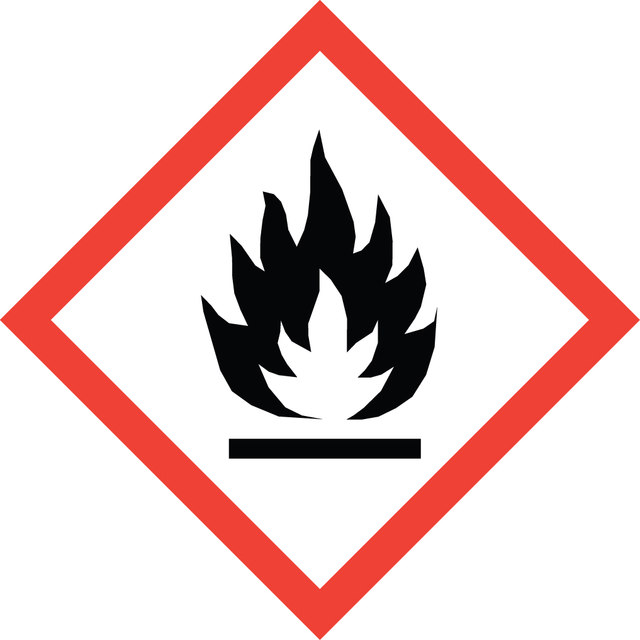
Aquatic Acute 1 - Aquatic Chronic 1 - Asp. Tox. 1 - Eye Dam. 1 - Flam. Liq. 2 - Pyr. Liq. 1 - Skin Corr. 1B - STOT SE 3 - Water-react 1

target_organs

Central nervous system

supp_hazards

Storage Class

4.2 - Pyrophoric and self-heating hazardous materials

wgk

WGK 3

flash_point_f

1.4 °F - closed cup

flash_point_c

-17 °C - closed cup

ppe

Faceshields, Gloves, Goggles, type ABEK (EN14387) respirator filter

Regulatory Information

危险化学品
This item has

Choose from one of the most recent versions:

Certificates of Analysis (COA)

Lot/Batch Number

Don't see the Right Version?

If you require a particular version, you can look up a specific certificate by the Lot or Batch number.

Already Own This Product?

Find documentation for the products that you have recently purchased in the Document Library.

Visit the Document Library

Determination of the hydrogenation degree of telechelic polybutadiene by 1HNMR
Lira CH, et al.
Magnetic Resonance in Chemistry, 5, 22-22 (2006)
Triphenylcarbenium Tetrafluoroborate as an Efficient Catalyst in the Regioselective Reductive Ring Opening of Benzylidene Acetals of Carbohydrates
Thota N, et al.
ChemistrySelect, 4(27), 7976-7980 (2019)
Synthesis and transannular Diels-Alder reaction of a cis-trans-trans and a trans-cis-cis 13-membered macrocyclic trienone
Marinier A, et al.
Canadian Journal of Chemistry, 67(10), 1609-1617 (1989)
Damien Webb et al.
Organic letters, 14(2), 568-571 (2011-12-31)
A continuous flow system for the multiparameter (flow rate, temperature, residence time, stoichiometry) optimization of the DIBALH reduction of esters to aldehydes is described. Incorporating an in-line quench (MeOH), these transformations are generally complete in fewer than 60 s. Mixing
J Marco-Contelles et al.
Carbohydrate research, 335(1), 63-70 (2001-09-13)
The reaction of DIBALH with bis(heteroannulated)-pyranosides containing the perhydrofuro[2,3-b]pyran moiety is described. The hydride attack at the anomeric carbon (C-9a) resulted in the exclusive tetrahydrofuran ring opening. The selectivity of this reaction has been evaluated as other benzylidene acetals built

Our team of scientists has experience in all areas of research including Life Science, Material Science, Chemical Synthesis, Chromatography, Analytical and many others.

Contact Technical Service