Skip to Content
Merck
CN

211222

Boron tribromide solution

1.0 M in methylene chloride

Synonym(s):

Tribromoboron

Sign In to View Organizational & Contract Pricing.

Select a Size


About This Item

Empirical Formula (Hill Notation):
BBr3
CAS Number:
Molecular Weight:
250.52
NACRES:
NA.22
PubChem Substance ID:
UNSPSC Code:
12352101
MDL number:
Technical Service
Need help? Our team of experienced scientists is here for you.
Let Us Assist
Technical Service
Need help? Our team of experienced scientists is here for you.
Let Us Assist

Product Name

Boron tribromide solution, 1.0 M in methylene chloride

InChI

1S/BBr3/c2-1(3)4

SMILES string

BrB(Br)Br

InChI key

ILAHWRKJUDSMFH-UHFFFAOYSA-N

form

liquid

concentration

1.0 M in methylene chloride

density

1.467 g/mL at 25 °C

Quality Level

Looking for similar products? Visit Product Comparison Guide

Application

Reactant for preparation of:
  • Drug intermediate 6-nitro-L-DOPA
  • Luminescent polystyrene derivatives with sterically protected carbazolylborane moieties
  • High-quality boron-doped graphene via Wurtz-type reductive coupling reaction
  • Mercapto-(+)-methamphetamine haptens for synthesis of (+)-methamphetamine conjugate vaccines with improved epitope densities
  • Micrometer-sized organic molecule-DNA hybrid structures
  • Borane complexes via electrophilic aromatic borylation reactions
  • A 5-HT2C receptor agonist
  • Biphenyl-derivatives possessing tertiary amino groups as ß-secretase(BACE1) inhibitors for the treatment of Alzheimer′s disease
  • A highly near-IR region fluorescent p-extended boron aza-dipyrromethene moiety unit
  • Tetrahydroisoquinoline derivatives via intramolecular cyclization of methoxy-substituted N-phenethylimides
Used to cleave aryl methyl ethers in a synthesis of a benzopyranobenzopyran from a coumarin scaffold.

General description

Boron tribromide (BBr3) is a commonly used reagent in organic chemistry for demethylation.

Packaging

The 25 mL Sure/Seal bottle is recommended as a single-use bottle. Repeated punctures will likely result in decreased performance of product.

Legal Information

Sure/Seal is a trademark of Sigma-Aldrich Co. LLC

signalword

Danger

Hazard Classifications

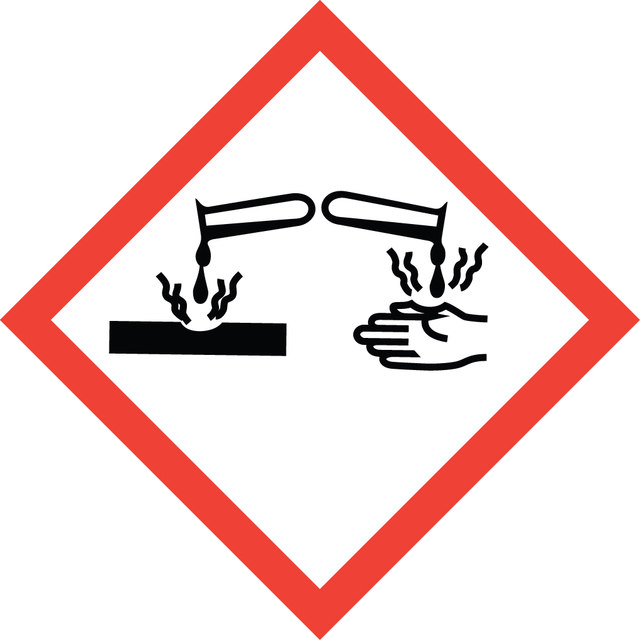
Acute Tox. 2 Inhalation - Acute Tox. 2 Oral - Carc. 2 - Eye Dam. 1 - Skin Corr. 1A - STOT SE 3

target_organs

Central nervous system

Storage Class

6.1A - Combustible acute toxic Cat. 1 and 2 / very toxic hazardous materials

wgk

WGK 3

flash_point_f

Not applicable

flash_point_c

Not applicable

ppe

Faceshields, Gloves, Goggles, type ABEK (EN14387) respirator filter

Regulatory Information

危险化学品
This item has

Choose from one of the most recent versions:

Certificates of Analysis (COA)

Lot/Batch Number

Don't see the Right Version?

If you require a particular version, you can look up a specific certificate by the Lot or Batch number.

Already Own This Product?

Find documentation for the products that you have recently purchased in the Document Library.

Visit the Document Library

Azobenzene derivatives show anti-cancer activity against pancreatic cancer cells only under nutrient starvation conditions via G0/G1 cell cycle arrest
Shinzawa K, et al.
Tetrahedron, 85, 132077-132077 (2021)
Tetrahedron Letters, 47, 5909-5909 (2006)
Hui Wang et al.
European journal of medicinal chemistry, 88, 66-73 (2014-09-14)
The pharmacokinetics (PK) and pharmacodynamics (PD) of PT119, a potent Staphylococcus aureus enoyl-ACP reductase (saFabI) inhibitor with a Ki value of 0.01 nM and a residence time of 750 min on the enzyme target, has been evaluated in mice. PT119
Andrey S Mereshchenko et al.
Nature chemistry, 7(7), 562-568 (2015-06-24)
'Roaming' is a new and unusual class of reaction mechanism that has recently been discovered in unimolecular dissociation reactions of isolated molecules in the gas phase. It is characterized by frustrated bond cleavage, after which the two incipient fragments 'roam'
Doriane Lorendeau et al.
Biochemical pharmacology, 90(3), 235-245 (2014-05-31)
The multidrug resistance protein 1 (MRP1) is involved in multidrug resistance of cancer cells by mediating drug efflux out of cells, often in co-transport with glutathione (GSH). GSH efflux mediated by MRP1 can be stimulated by verapamil. In cells overexpressing

Our team of scientists has experience in all areas of research including Life Science, Material Science, Chemical Synthesis, Chromatography, Analytical and many others.

Contact Technical Service