205184

Hexachlorodisilane
96%
Synonym(s):
1,1,1,2,2,2-Hexachlorodisilane, Disilicon hexachloride, HCDS
Sign In to View Organizational & Contract Pricing.
Select a Size
Change View
About This Item
Linear Formula:
(SiCl3)2
CAS Number:
Molecular Weight:
268.89
NACRES:
NA.23
PubChem Substance ID:
UNSPSC Code:
12352103
EC Number:
236-704-1
MDL number:
assay
96%
form
liquid
refractive index
n
bp
144-145.5 °C (lit.)
density
1.562 g/mL at 25 °C (lit.)
functional group
silyl
SMILES string
Cl[Si](Cl)(Cl)[Si](Cl)(Cl)Cl
InChI
1S/Cl6Si2/c1-7(2,3)8(4,5)6
InChI key
LXEXBJXDGVGRAR-UHFFFAOYSA-N
General description
Hexachlorodisilane (HCDS) is a chlorosilane used as a precursor for producing disilanes. It is a dioxidizer that is used in the production of silicon films and silicon nitride based films.
Application
HCDS can be used in the fabrication of silica aerogels by chemical vapor deposition (CVD), which can be potentially used as encapsulating agents and thermal insulators. It can also be used to synthesize 1,1,1,2,2,2-hexaamino-disilanes using CVD, which forms silicon-based films for microelectronic-based applications.
HCDS may be used as a reducing agent. It may be combined with ammonia to form silicon nitride by chemical vapor deposition(CVD) technique.
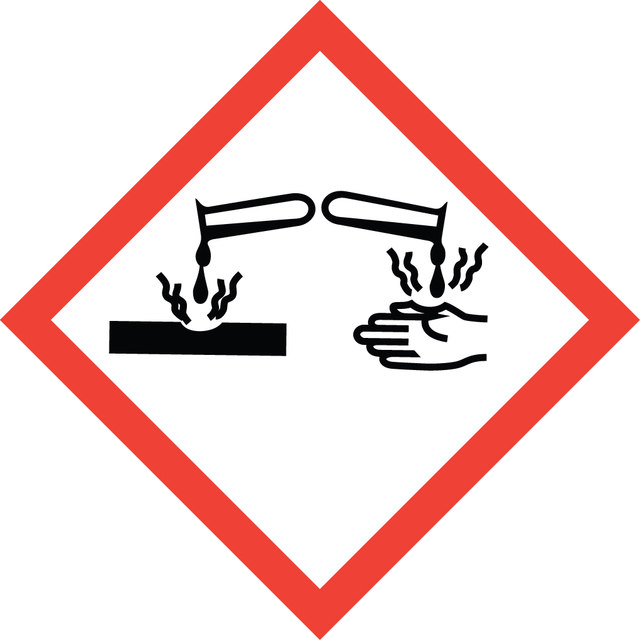
Signal Word
Danger
Hazard Codes
Precautionary Statements
Hazard Classifications
Skin Corr. 1B
supp_hazards
Storage Class
8A - Combustible corrosive hazardous materials
WGK
WGK 3
Flash Point (°F)
Not applicable
Flash Point (°C)
Not applicable
PPE (personal protective equipment)
Faceshields, Gloves, Goggles, type ABEK (EN14387) respirator filter
Choose from one of the most recent versions:
Already Own This Product?
Find documentation for the products that you have recently purchased in the Document Library.