Skip to Content
Merck
CN

195596

sec-Butyllithium solution

1.4 M in cyclohexane

Synonym(s):

Lithium-2-butanide, s-BuLi

Sign In to View Organizational & Contract Pricing.

Select a Size


About This Item

Linear Formula:
CH3CH2CH(CH3)Li
CAS Number:
Molecular Weight:
64.06
UNSPSC Code:
12352103
NACRES:
NA.22
PubChem Substance ID:
MDL number:
Beilstein/REAXYS Number:
3587206
Technical Service
Need help? Our team of experienced scientists is here for you.
Let Us Assist
Technical Service
Need help? Our team of experienced scientists is here for you.
Let Us Assist

Product Name

sec-Butyllithium solution, 1.4 M in cyclohexane

InChI

1S/C4H9.Li/c1-3-4-2;/h3H,4H2,1-2H3;

SMILES string

[Li]C(C)CC

InChI key

VATDYQWILMGLEW-UHFFFAOYSA-N

form

liquid

concentration

1.4 M in cyclohexane

density

0.769 g/mL at 25 °C

storage temp.

2-8°C

Quality Level

Looking for similar products? Visit Product Comparison Guide

Application

sec-Butyllithium solution (1.4M in cyclohexane) has been used in the multi-step synthesis of 5-methyl-5,6-dihydrothymidine (5-MDHT) from thymidine. It has also been used in the copper-catalyzed asymmetric allylic alkylation (AAA) of allyl bromides, chlorides, and ethers in the presence of a chiral ligand.

Packaging

The 25 mL Sure/Seal bottle is recommended as a single-use bottle. Repeated punctures will likely result in decreased performance of product.

Legal Information

Sure/Seal is a trademark of Sigma-Aldrich Co. LLC
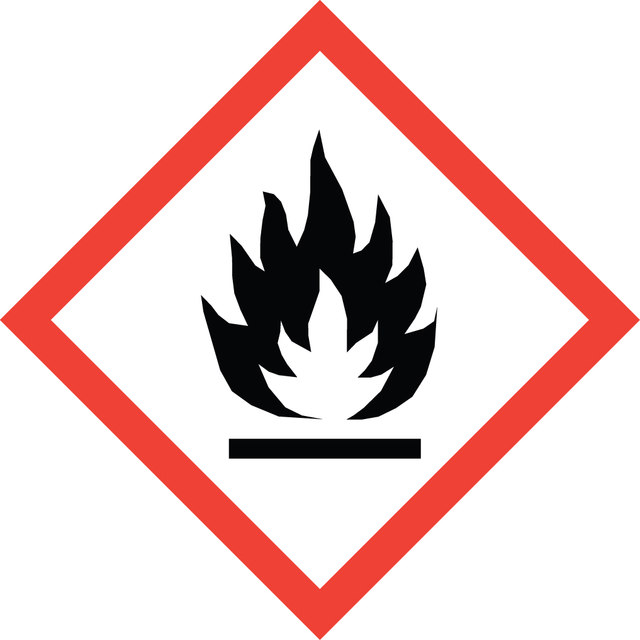
signalword

Danger

Hazard Classifications

Aquatic Acute 1 - Aquatic Chronic 1 - Asp. Tox. 1 - Eye Dam. 1 - Flam. Liq. 2 - Pyr. Liq. 1 - Skin Corr. 1B - STOT SE 3 - Water-react 1

target_organs

Central nervous system

Storage Class

4.2 - Pyrophoric and self-heating hazardous materials

wgk

WGK 2

flash_point_f

1.4 °F - closed cup

flash_point_c

-17 °C - closed cup

ppe

Faceshields, Gloves, Goggles, type ABEK (EN14387) respirator filter

Regulatory Information

新产品
This item has

Choose from one of the most recent versions:

Certificates of Analysis (COA)

Lot/Batch Number

Don't see the Right Version?

If you require a particular version, you can look up a specific certificate by the Lot or Batch number.

Already Own This Product?

Find documentation for the products that you have recently purchased in the Document Library.

Visit the Document Library

Cheng Chen et al.
Organic & biomolecular chemistry, 15(25), 5364-5372 (2017-06-16)
A series of 6,6-dihalo-2-azabicyclo[3.1.0]hexane and 7,7-dihalo-2-azabicyclo[4.1.0]heptane compounds were prepared by the reaction of dihalocarbene species with N-Boc-2,3-dihydro-1H-pyrroles or -1,2,3,4-tetrahydropyridines. Monochloro substrates were synthesised as well, using a chlorine-to-lithium exchange reaction. The behaviour of several aldehydes and ketones under reductive amination
Leixing Chen et al.
Chemistry (Weinheim an der Bergstrasse, Germany), 24(68), 18012-18019 (2018-11-15)
Although living polymerization methods are widely applicable to organic monomers, their application to inorganic monomers is rare. For the first time, we show that the living poly(methylenephosphine) (PMPn- ) anion can function as a macroinitiator for olefins. Specifically, the phosphaalkene
Qinghui Wang et al.
European journal of pharmaceutical sciences : official journal of the European Federation for Pharmaceutical Sciences, 118, 32-39 (2018-03-20)
Tumor pH detection and pH value change monitoring have been of great interest in the field of nanomedicine. In this study, a pH-sensitive near-infrared fluorescence probe SiRB (Si-rhodamine and Boronic acid group) was synthesized by introducing a boronic acid group
Lukasz Otulakowski et al.
Polymers, 12(1) (2020-01-17)
In this work, the self-assembly of a series of amphiphilic polystyrene-b-polyglycidol (PS-b-PGL) diblock copolymers in dioxane and dioxane/water mixtures is presented. The PS-b-PGL have an average degree of polymerization (DP) of PS block equal to 29 units and varied degrees
Dimitrios Moschovas et al.
Nanomaterials (Basel, Switzerland), 10(8) (2020-08-06)
The synthesis, molecular and morphological characterization of a 3-miktoarm star terpolymer of polystyrene (PS, M¯n = 61.0 kg/mol), polybutadiene (PB, M¯n = 38.2 kg/mol) and polyisoprene (PI, M¯n = 29.2 kg/mol), corresponding to volume fractions (φ) of 0.46, 0.31 and

Our team of scientists has experience in all areas of research including Life Science, Material Science, Chemical Synthesis, Chromatography, Analytical and many others.

Contact Technical Service