
167169

3-Bromo-1-propanol
97%
Synonym(s):
Trimethylene bromohydrin
Sign In to View Organizational & Contract Pricing.
Select a Size
About This Item
Linear Formula:
Br(CH2)3OH
CAS Number:
Molecular Weight:
138.99
UNSPSC Code:
12352100
NACRES:
NA.22
PubChem Substance ID:
EC Number:
210-986-6
Beilstein/REAXYS Number:
969160
MDL number:
Assay:
97%
Form:
liquid
refractive index
n20/D 1.488 (lit.)
bp
62 °C/5 mmHg (lit.)
density
1.537 g/mL at 25 °C (lit.)
functional group
bromo, hydroxyl
storage temp.
2-8°C
InChI key
RQFUZUMFPRMVDX-UHFFFAOYSA-N
InChI
1S/C3H7BrO/c4-2-1-3-5/h5H,1-3H2
SMILES string
OCCCBr
assay
97%
form
liquid
Quality Level
Related Categories
General description
Reaction between 3-bromo-1-propanol, phenol and a series of phenols having substituents in 4-position has been studied in micellar media and in microemulsions based on cationic or a nonionic surfactant.
3-Bromo-1-propanol is an electrophile used as a substrate in nucleophilic substitution reactions and in the redox polymerization.
3-Bromo-1-propanol is an electrophile used as a substrate in nucleophilic substitution reactions and in the redox polymerization.
Application
3-Bromo-1-propanol was used in the synthesis of fluorescent halide-sensitive quinolinium dyes and molten salt-polymers. It was used in the synthesis of chiral, quaternary prolines via cyclization of quaternary amino acids.
Recently used as a grafting agent in the synthesis of recyclable reagents for Swern oxidation
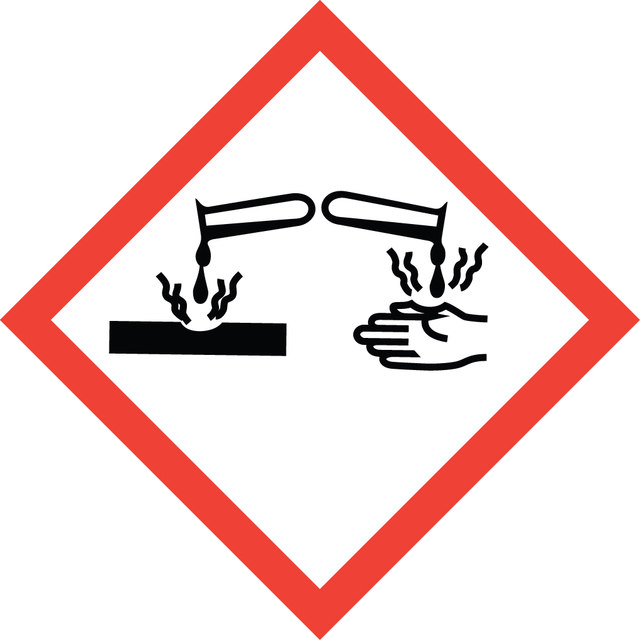

signalword
Danger
hcodes
Hazard Classifications
Acute Tox. 4 Oral - Eye Dam. 1
Storage Class
10 - Combustible liquids
wgk
WGK 3
flash_point_f
149.0 °F - closed cup
flash_point_c
65 °C - closed cup
ppe
Eyeshields, Faceshields, Gloves, type ABEK (EN14387) respirator filter
Choose from one of the most recent versions:
Already Own This Product?
Find documentation for the products that you have recently purchased in the Document Library.
Synthesis and characterization of various block copolymers using PMMA-Br macroinitiator
Melahat and Goktacs et al.
Chemical Papers, 73, 2329-2339 (2019)
Synthesis of molten salt-type polymer brush and effect of brush structure on the ionic conductivity.
Yoshizawa M and Ohno H.
Electrochimica Acta, 46(10), 1723-1728 (2001)
C D Geddes et al.
Analytical biochemistry, 293(1), 60-66 (2001-05-25)
Three fluorescent halide-sensitive quinolinium dyes have been produced by the reaction of the 6-methylquinoline heterocyclic nitrogen base with methyl bromide, methyl iodide, and 3-bromo-1-propanol. The quaternary salts, unlike the precursor molecule, are readily water soluble and the fluorescence intensity of
Fredrik Currie
Journal of colloid and interface science, 277(1), 230-234 (2004-07-28)
The reaction between 3-bromo-1-propanol and phenol and a series of phenols carrying substituents in 4-position was studied in micellar media and in microemulsions based on either a cationic or a nonionic surfactant. The reactivity and the yield were evaluated and
Takeo Kawabata et al.
Journal of the American Chemical Society, 128(48), 15394-15395 (2006-11-30)
An enantiodivergent asymmetric cyclization of N-Boc-N-omega-bromoalkyl-alpha-amino acid derivatives has been developed. With potassium amide bases in DMF, cyclization proceeds with retention of configuration, while inversion of configuration was observed with lithium amide bases in THF. Chirality of the parent amino
Our team of scientists has experience in all areas of research including Life Science, Material Science, Chemical Synthesis, Chromatography, Analytical and many others.
Contact Technical Service