
156507

9,10-Phenanthrenequinone
≥99%
Synonym(s):
9,10-Phenanthrenedione
Sign In to View Organizational & Contract Pricing.
Select a Size
About This Item
Empirical Formula (Hill Notation):
C14H8O2
CAS Number:
Molecular Weight:
208.21
UNSPSC Code:
12352103
NACRES:
NA.23
PubChem Substance ID:
EC Number:
201-515-5
Beilstein/REAXYS Number:
608838
MDL number:
mp
209-212 °C (lit.)
λmax
420 nm
InChI key
YYVYAPXYZVYDHN-UHFFFAOYSA-N
InChI
1S/C14H8O2/c15-13-11-7-3-1-5-9(11)10-6-2-4-8-12(10)14(13)16/h1-8H
SMILES string
O=C1C(=O)c2ccccc2-c3ccccc13
assay
≥99%
impurities
<0.1% anthraquinone
Quality Level
Gene Information
human ... PTPN1(5770), PTPRC(5788)
Looking for similar products? Visit Product Comparison Guide
Related Categories

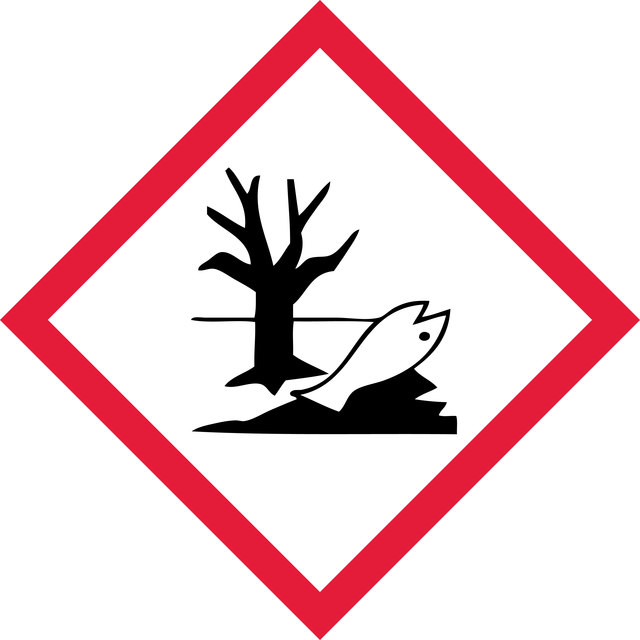
signalword
Warning
hcodes
Hazard Classifications
Aquatic Acute 1 - Eye Irrit. 2
Storage Class
11 - Combustible Solids
wgk
WGK 3
flash_point_f
473.0 °F
flash_point_c
245 °C
ppe
dust mask type N95 (US), Eyeshields, Gloves
Choose from one of the most recent versions:
Already Own This Product?
Find documentation for the products that you have recently purchased in the Document Library.
Molecular Properties of 9, 10-Phenanthrenequinone and Benzil
Muddasir, H., Lu, P., Gu, C., Wang, Z. M., Yang, S. M., Yang, B., & Ma, Y. G.
Chemical Research in Chinese Universities, 25(6), 950-956 (2009)
9, 10-Phenanthrenequinone binary complexes of iron, cobalt, and nickel
Floriani, C., R. Henzi, and F. Calderazzo
J. Chem. Soc., Dalton Trans., 23, 2640-2642 (1972)
Electronic structure and band alignment of 9, 10-phenanthrenequinone passivated silicon surfaces
Avasthi, Sushobhan, et al.
Surface Science, 605(13), 1308-1312 (2011)
Michael C Byrns et al.
Biochemical pharmacology, 75(2), 484-493 (2007-10-24)
Aldo-keto reductase (AKR) 1C3 (type 2 3alpha-HSD, type 5 17beta-HSD, and prostaglandin F synthase) regulates ligand access to steroid hormone and prostaglandin receptors and may stimulate proliferation of prostate and breast cancer cells. NSAIDs are known inhibitors of AKR1C enzymes.
Petr Milko et al.
Inorganic chemistry, 48(24), 11734-11742 (2009-11-26)
With the use of the model complexes [(PQ)FeCl(CH(3)O)](+), [(phen)FeCl(CH(3)O)](+), and [(PQ)(phen)FeCl(CH(3)O)](+), where PQ is 9,10-phenanthraquinone and phen is 1,10-phenanthroline, the reactivity of phenanthraquinone in complexes with iron(III) is investigated. It is shown that 9,10-phenanthraquinone takes part in redox processes occurring
Our team of scientists has experience in all areas of research including Life Science, Material Science, Chemical Synthesis, Chromatography, Analytical and many others.
Contact Technical Service