Skip to Content
Merck
CN

152757

1,4-Naphthoquinone

97%

Synonym(s):

α-Naphthoquinone

Sign In to View Organizational & Contract Pricing.

Select a Size


About This Item

Empirical Formula (Hill Notation):
C10H6O2
CAS Number:
Molecular Weight:
158.15
UNSPSC Code:
12352100
NACRES:
NA.22
PubChem Substance ID:
EC Number:
204-977-6
Beilstein/REAXYS Number:
878524
MDL number:
Technical Service
Need help? Our team of experienced scientists is here for you.
Let Us Assist
Technical Service
Need help? Our team of experienced scientists is here for you.
Let Us Assist

Product Name

1,4-Naphthoquinone, 97%

InChI key

FRASJONUBLZVQX-UHFFFAOYSA-N

InChI

1S/C10H6O2/c11-9-5-6-10(12)8-4-2-1-3-7(8)9/h1-6H

SMILES string

O=C1C=CC(=O)c2ccccc12

assay

97%

form

powder

mp

119-122 °C (lit.)

functional group

ketone

Quality Level

Looking for similar products? Visit Product Comparison Guide

Application

1,4-Naphthoquinone was used as a potential inhibitor of monoamine oxidase and DNA topoisomerase activities. It was also used to inhibit the acetyltransferase activity.

signalword

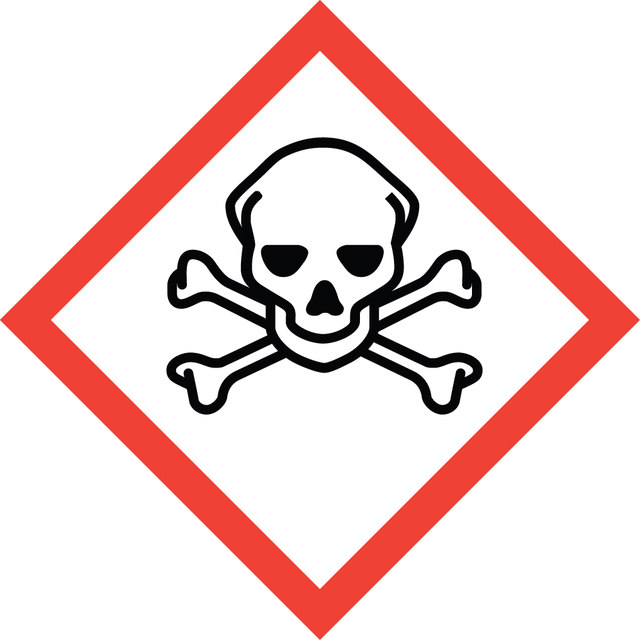
Danger

Hazard Classifications

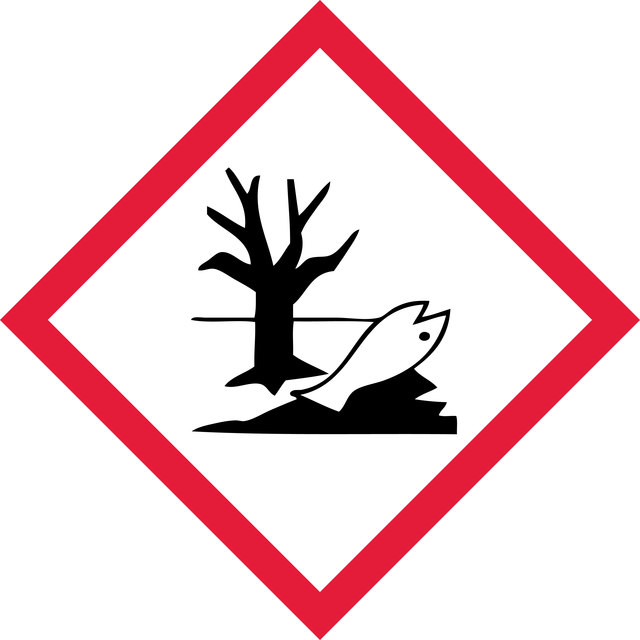
Acute Tox. 1 Inhalation - Acute Tox. 3 Oral - Aquatic Acute 1 - Aquatic Chronic 1 - Eye Dam. 1 - Skin Corr. 1C - Skin Sens. 1 - STOT SE 3

target_organs

Respiratory system

Storage Class

6.1A - Combustible acute toxic Cat. 1 and 2 / very toxic hazardous materials

wgk

WGK 3

flash_point_f

285.8 °F

flash_point_c

141 °C

ppe

Eyeshields, Faceshields, Gloves, type P3 (EN 143) respirator cartridges


Choose from one of the most recent versions:

Certificates of Analysis (COA)

Lot/Batch Number

Don't see the Right Version?

If you require a particular version, you can look up a specific certificate by the Lot or Batch number.

Already Own This Product?

Find documentation for the products that you have recently purchased in the Document Library.

Visit the Document Library

Eduardo Coelho-Cerqueira et al.
Chemical biology & drug design, 83(4), 401-410 (2013-10-30)
Monoamine oxidase (MAO) action has been involved in the regulation of neurotransmitters levels, cell signaling, cellular growth, and differentiation as well as in the balance of the intracellular polyamine levels. Although so far obscure, MAO inhibitors are believed to have
Barbara Krajewska et al.
Bioorganic & medicinal chemistry, 15(12), 4144-4151 (2007-04-10)
In their inhibition-inducing interactions with enzymes, quinones primarily utilize two mechanisms, arylation and oxidation of enzyme thiol groups. In this work, we investigated the interactions of 1,4-naphthoquinone with urease in an effort to estimate the contribution of the two mechanisms
Paula F Carneiro et al.
Bioorganic & medicinal chemistry, 20(16), 4995-5000 (2012-07-17)
New oxirane derivatives were synthesized using six naphthoquinones as the starting materials. Our biological results showed that these oxiranes acted as trypanocidal agents against Trypanosoma cruzi with minimal cytotoxicity in the VERO cell line compared to naphthoquinones. In particular, oxirane
Daniela M Santos et al.
Molecular neurobiology, 47(1), 313-324 (2012-10-12)
Naphthoquinones are bioactive compounds widespread in nature that impact on several cellular pathways, including cell proliferation and survival, by acting as prooxidants and electrophiles. We have previously described the role of the synthetic isoxazole condensed 1,4-naphthoquinone derivative 1a in preventing
Yu Shang et al.
Environmental science & technology, 46(5), 2935-2942 (2012-02-01)
Airborne quinones contribute to adverse health effects of ambient particles probably because of their ability to generate hydroxyl radicals (·OH) via redox cycling, but the mechanisms remain unclear. We examined the chemical mechanisms through which 1,4-naphthoquinone (1,4-NQ) induced ·OH, and

Our team of scientists has experience in all areas of research including Life Science, Material Science, Chemical Synthesis, Chromatography, Analytical and many others.

Contact Technical Service