Skip to Content
Merck
CN

151378

Bis(4-chlorophenyl) sulfone

98%

Synonym(s):

4,4′-Dichlorodiphenyl sulfone, 4-Chlorophenyl sulfone

Sign In to View Organizational & Contract Pricing.

Select a Size


About This Item

Linear Formula:
(ClC6H4)2SO2
CAS Number:
Molecular Weight:
287.16
UNSPSC Code:
12352100
NACRES:
NA.22
PubChem Substance ID:
EC Number:
201-247-9
Beilstein/REAXYS Number:
2052955
MDL number:
Technical Service
Need help? Our team of experienced scientists is here for you.
Let Us Assist
Technical Service
Need help? Our team of experienced scientists is here for you.
Let Us Assist

Product Name

Bis(4-chlorophenyl) sulfone, 98%

InChI key

GPAPPPVRLPGFEQ-UHFFFAOYSA-N

InChI

1S/C12H8Cl2O2S/c13-9-1-5-11(6-2-9)17(15,16)12-7-3-10(14)4-8-12/h1-8H

SMILES string

Clc1ccc(cc1)S(=O)(=O)c2ccc(Cl)cc2

assay

98%

bp

250 °C/10 mmHg (lit.)

mp

143-146 °C (lit.)

functional group

chloro
sulfone

Quality Level

Looking for similar products? Visit Product Comparison Guide

Related Categories

Application

Bis(4-chlorophenyl) sulfone was used to study the time trends of bis(4-chlorophenyl) sulfone (BCPS). It was also used in thermoplastic production.

pictograms

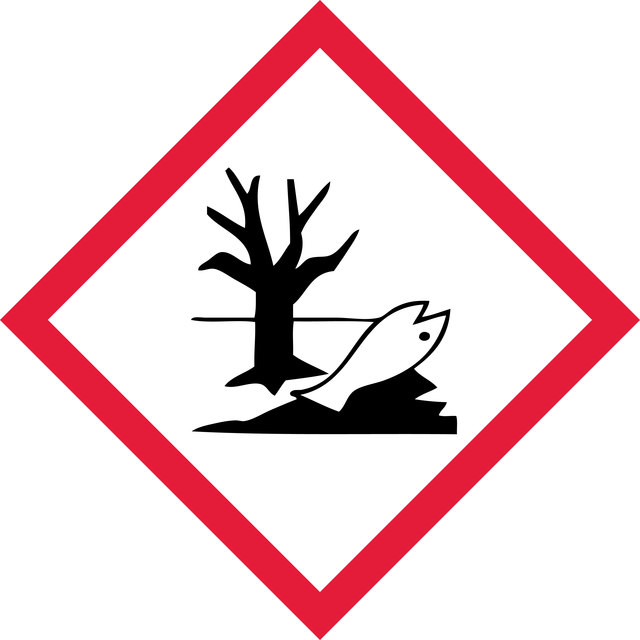
Exclamation markEnvironment

signalword

Warning

hcodes

Hazard Classifications

Aquatic Chronic 2 - Eye Irrit. 2

Storage Class

11 - Combustible Solids

wgk

WGK 2

flash_point_f

Not applicable

flash_point_c

Not applicable

ppe

Eyeshields, Gloves, type N95 (US)


Choose from one of the most recent versions:

Certificates of Analysis (COA)

Lot/Batch Number

Don't see the Right Version?

If you require a particular version, you can look up a specific certificate by the Lot or Batch number.

Already Own This Product?

Find documentation for the products that you have recently purchased in the Document Library.

Visit the Document Library

R Poon et al.
Journal of toxicology and environmental health. Part A, 57(3), 185-198 (1999-06-22)
The short-term oral toxicity of a recently identified environmental pollutant, bis(4-chlorophenyl) sulfone (BCPS), was studied. Groups of male Sprague-Dawley rats (n = 6) were administered BCPS via the diet at 0 (control), 10, 100, or 1000 ppm for 4 wk.
A Olsson et al.
The Science of the total environment, 239(1-3), 19-30 (1999-11-26)
The environmental contamination situation in coastal areas of the former Soviet Union has up to now been more or less unknown. This study on perch (Perca fluviatilis), collected at three locations along the coast of Latvia during 1994 and 1995
R S Chhabra et al.
Toxicological sciences : an official journal of the Society of Toxicology, 60(1), 28-37 (2001-02-27)
p,p'-Dichlorodiphenyl sulfone (DDS) is used as a starting material in the production of polysulfones and polyethersufones, a family of thermoplastics. DDS was studied because of its high production volume and use. In toxicology studies, 10 Fischer 344 rats and 10
Hrönn Jörundsdóttir et al.
Environmental pollution (Barking, Essex : 1987), 141(2), 226-237 (2005-10-18)
The dynamics of organohalogen contaminants and their metabolites are best studied over time by analysis of biota at high trophic levels. In this study, time trends, 1971-2001, of bis(4-chlorophenyl) sulfone (BCPS) and of methylsulfonyl-substituted metabolites of PCBs and 4,4'-DDE, were
J M Mathews et al.
Drug metabolism and disposition: the biological fate of chemicals, 24(5), 579-587 (1996-05-01)
p, p'-Dichlorodiphenyl sulfone (DDS) is a lipophilic monomer used extensively in the synthesis of high temperature plastics. Studies of the fate of uniformly labeled [14C]DDS in the rat have established that it is readily absorbed from the gastrointestinal tract, distributed

Our team of scientists has experience in all areas of research including Life Science, Material Science, Chemical Synthesis, Chromatography, Analytical and many others.

Contact Technical Service