Skip to Content
Merck
CN

151238

Glycidyl methacrylate

97%, contains 100 ppm monomethyl ether hydroquinone as inhibitor

Synonym(s):

2,3-Epoxypropyl methacrylate, Methacrylic acid 2,3-epoxypropyl ester

Sign In to View Organizational & Contract Pricing.

Select a Size


About This Item

Empirical Formula (Hill Notation):
C7H10O3
CAS Number:
Molecular Weight:
142.15
UNSPSC Code:
12162002
NACRES:
NA.23
PubChem Substance ID:
EC Number:
203-441-9
Beilstein/REAXYS Number:
2506
MDL number:
Technical Service
Need help? Our team of experienced scientists is here for you.
Let Us Assist
Technical Service
Need help? Our team of experienced scientists is here for you.
Let Us Assist

Product Name

Glycidyl methacrylate, 97%, contains 100 ppm monomethyl ether hydroquinone as inhibitor

InChI key

VOZRXNHHFUQHIL-UHFFFAOYSA-N

InChI

1S/C7H10O3/c1-5(2)7(8)10-4-6-3-9-6/h6H,1,3-4H2,2H3

SMILES string

CC(=C)C(=O)OCC1CO1

assay

97%

form

liquid

contains

100 ppm monomethyl ether hydroquinone as inhibitor

impurities

0.02% epichlorohydrin

refractive index

n20/D 1.449 (lit.)

bp

189 °C (lit.)

density

1.042 g/mL at 25 °C (lit.)

storage temp.

2-8°C

Quality Level

Looking for similar products? Visit Product Comparison Guide

Application

Glycidyl methacrylate dextran (GMA) has been reported to be used as a biocompatible hydrogel. In situ polymerization of GMA with trimethylolpropane trimethacrylate to form macroporous sorbents has also been reported. GMA may also be grafted onto polypropylene.

General description

Glycidyl methacrylate (GMA) is a polyfunctional monomer. It acts as an adhesion promoting crosslinking co-monomer for acrylic and vinyl resins. It is also a reactive colorless diluent. GMA is soluble in ethanol, acetone, diethyl ether, benzene.

signalword

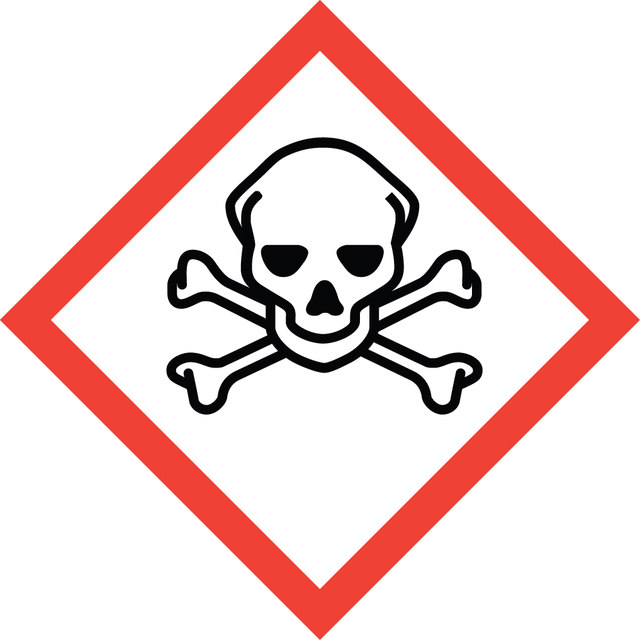
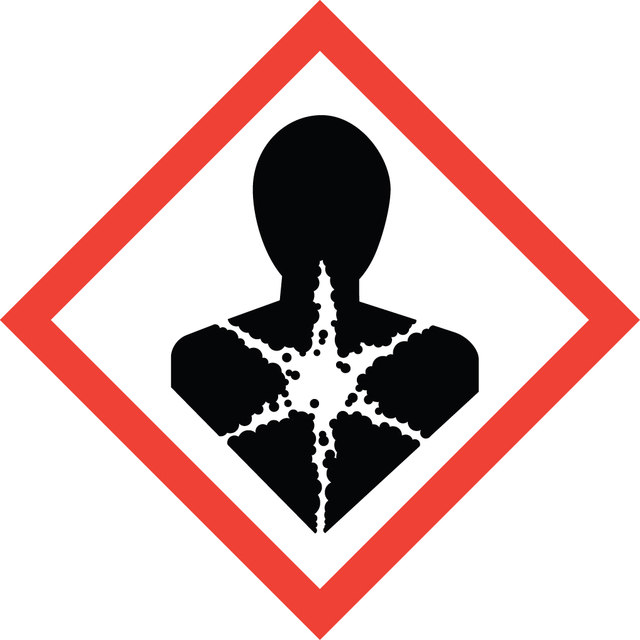
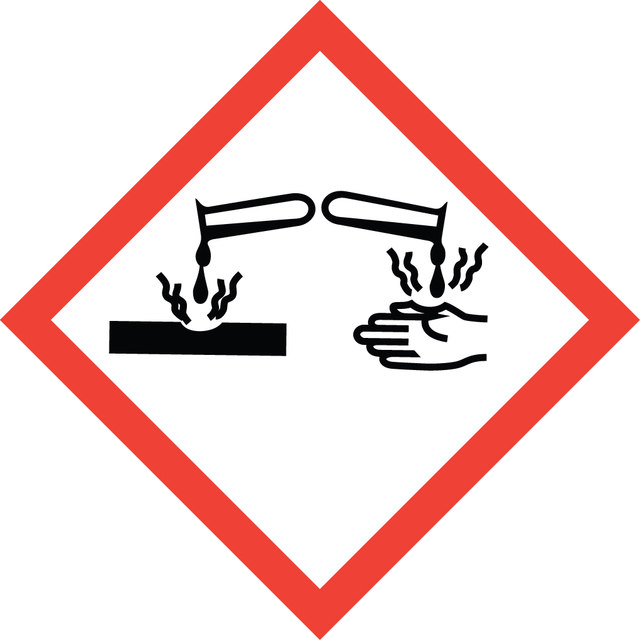
Danger

Hazard Classifications

Acute Tox. 3 Dermal - Acute Tox. 4 Oral - Carc. 1B - Eye Dam. 1 - Muta. 2 - Repr. 1B - Skin Corr. 1C - Skin Sens. 1 - STOT RE 1 - STOT SE 3

target_organs

Respiratory system

Storage Class

6.1C - Combustible acute toxic Cat.3 / toxic compounds or compounds which causing chronic effects

wgk

WGK 3

flash_point_f

168.8 °F - closed cup

flash_point_c

76 °C - closed cup


Choose from one of the most recent versions:

Certificates of Analysis (COA)

Lot/Batch Number

Don't see the Right Version?

If you require a particular version, you can look up a specific certificate by the Lot or Batch number.

Already Own This Product?

Find documentation for the products that you have recently purchased in the Document Library.

Visit the Document Library

Styrene-assisted melt free radical grafting of glycidyl methacrylate onto polypropylene
Cartier H and Hu GH
Journal of Polymer Science Part A: Polymer Chemistry, 36(7), 1053-1063 (1998)
Molded? macroporous poly (glycidyl methacrylate-co-trimethylolpropane trimethacrylate) materials with fine controlled porous properties: preparation of monoliths using photoinitiated polymerization
Viklund C, et al
Chemistry of Materials, 9(2), 463-471 (1997)
Adam Blanazs et al.
Journal of the American Chemical Society, 133(41), 16581-16587 (2011-08-19)
Amphiphilic diblock copolymers composed of two covalently linked, chemically distinct chains can be considered to be biological mimics of cell membrane-forming lipid molecules, but with typically more than an order of magnitude increase in molecular weight. These macromolecular amphiphiles are
Amir H Milani et al.
Biomacromolecules, 13(9), 2793-2801 (2012-08-11)
The use of injectable pH-responsive doubly cross-linked microgels (DX microgels) to improve the mechanical properties of degenerated intervertebral discs is demonstrated for the first time. The microgel comprised methyl methacrylate (MMA), methacrylic acid (MAA), ethyleneglycol dimethacrylate (EGD) and glycidyl methacrylate
Laura Sola et al.
Journal of chromatography. A, 1270, 324-329 (2012-12-04)
Capillary electrophoresis (CE) is one of the most powerful techniques for the separation of biomolecules. However, the separation efficiency of proteins in CE is often compromised by their tendency to interact with the silanol groups on the surface of the

Articles

Discover hydrogels, biocompatible materials for drug delivery, tissue engineering, wound care, and 3D bioprinting in innovative biomedical applications

Our team of scientists has experience in all areas of research including Life Science, Material Science, Chemical Synthesis, Chromatography, Analytical and many others.

Contact Technical Service