
148938

2-Iodopropane
contains copper as stabilizer, 99%
Synonym(s):
Isopropyl iodide
Sign In to View Organizational & Contract Pricing.
Select a Size
Change View
About This Item
Linear Formula:
(CH3)2CHI
CAS Number:
Molecular Weight:
169.99
UNSPSC Code:
12352100
NACRES:
NA.22
PubChem Substance ID:
EC Number:
200-859-3
Beilstein/REAXYS Number:
1098244
MDL number:
Assay:
99%
Form:
liquid
Quality Level
assay
99%
form
liquid
contains
copper as stabilizer
refractive index
n20/D 1.498 (lit.)
bp
88-90 °C (lit.)
mp
−90 °C (lit.)
density
1.703 g/mL at 25 °C (lit.)
functional group
alkyl halide, iodo
SMILES string
CC(C)I
InChI
1S/C3H7I/c1-3(2)4/h3H,1-2H3
InChI key
FMKOJHQHASLBPH-UHFFFAOYSA-N
General description
2-Iodopropane is an organ iodine compound. It is commonly used as a homolytic and heterolytic alkylating agent and in the preparation of the α-isopropoxymethylene blocking group. Additionally, it acts as an intermediator in the conversion of thiocarbonate to alkene.
Application
2-Iodopropane (Isopropyl iodide) was used to prepare butyric and isobutyric acid.
2-Iodopropane is used as an alkylating agent in the conversion of phenols, alcohols, oximes, carboxylic acids, and heteroatomic compounds (indoles, pyridines, purines, tetrazoles, pyrazoles, and amines) to give corresponding products.
2-Iodopropane is used as an alkylating agent in the conversion of phenols, alcohols, oximes, carboxylic acids, and heteroatomic compounds (indoles, pyridines, purines, tetrazoles, pyrazoles, and amines) to give corresponding products.
Still not finding the right product?
Explore all of our products under 2-Iodopropane
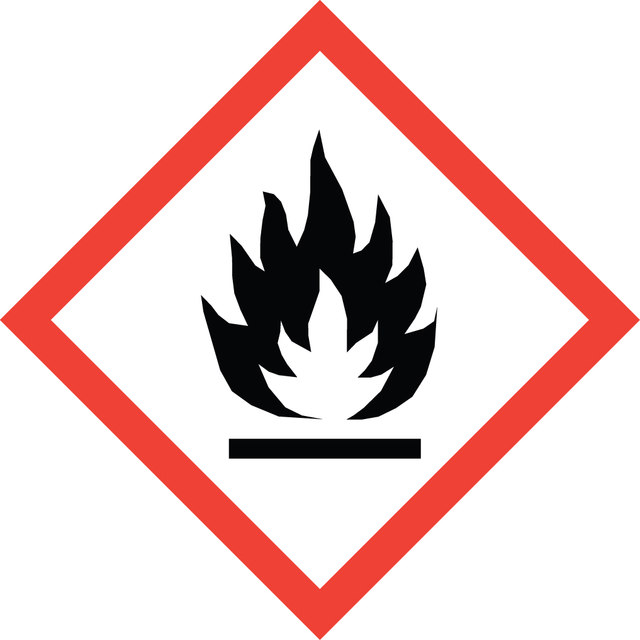

signalword
Warning
hcodes
Hazard Classifications
Acute Tox. 4 Oral - Eye Irrit. 2 - Flam. Liq. 3 - Skin Irrit. 2
Storage Class
3 - Flammable liquids
wgk
WGK 3
flash_point_f
107.6 °F - closed cup
flash_point_c
42 °C - closed cup
ppe
Eyeshields, Faceshields, Gloves, type ABEK (EN14387) respirator filter
Regulatory Information
危险化学品
This item has
Choose from one of the most recent versions:
Already Own This Product?
Find documentation for the products that you have recently purchased in the Document Library.
2-Iodopropane
Wilson PD and Hilmey DG
Encyclopedia of Reagents for Organic Synthesis, Second Edition (2001)
Timur Coskun et al.
Chemistry (Weinheim an der Bergstrasse, Germany), 19(21), 6840-6844 (2013-03-29)
Glycerol is converted to a mixture of butyric and isobutyric acid by rhodium- or iridium-catalysed carbonylation using HI as the co-catalyst. The initial reaction of glycerol with HI results in several intermediates that lead to isopropyl iodide, which upon carbonylation
Joe Rashan et al.
Journal of AOAC International, 86(4), 694-702 (2003-09-26)
An alternative liquid chromatographic (LC) method was developed and validated for the simultaneous determination of methoxyl and 2-hydroxypropoxyl substituents in hypromellose and hypromellose acetate succinate. The method uses the hydriodic acid cleavage reaction, catalyzed by adipic acid, of the substituted
Global Trade Item Number
| SKU | GTIN |
|---|---|
| 148938-500G | 04061838738103 |
| 148938-100G | 04061838738097 |
| 148938-5G | 04061838738110 |