Skip to Content
Merck
CN

135267

Bromochloromethane

contains 100 ppm BHT as inhibitor, ≥99.5%

Synonym(s):

Chlorobromomethane

Sign In to View Organizational & Contract Pricing.

Select a Size


About This Item

Linear Formula:
BrCH2Cl
CAS Number:
Molecular Weight:
129.38
UNSPSC Code:
12352100
NACRES:
NA.22
PubChem Substance ID:
EC Number:
200-826-3
Beilstein/REAXYS Number:
1730801
MDL number:
Assay:
≥99.5%
Form:
liquid
Technical Service
Need help? Our team of experienced scientists is here for you.
Let Us Assist
Technical Service
Need help? Our team of experienced scientists is here for you.
Let Us Assist

refractive index

n20/D 1.482 (lit.)

bp

68 °C (lit.)

mp

−88 °C (lit.)

density

1.991 g/mL at 25 °C (lit.)

functional group

bromo, chloro

InChI key

JPOXNPPZZKNXOV-UHFFFAOYSA-N

InChI

1S/CH2BrCl/c2-1-3/h1H2

SMILES string

ClCBr

vapor density

4.5 (vs air)

vapor pressure

117 mmHg ( 20 °C)

assay

≥99.5%

form

liquid

may contain

100 ppm BHT as inhibitor

Quality Level

Looking for similar products? Visit Product Comparison Guide

General description

Bromochloromethane is a by-product of disinfection of water by chlorination. It has potential antimethanogenic activity and reduces rumen methane production in dairy goats.

Application

Bromochloromethane was used in the synthesis and characterization of poly(methylene dicarboxylates).

pictograms

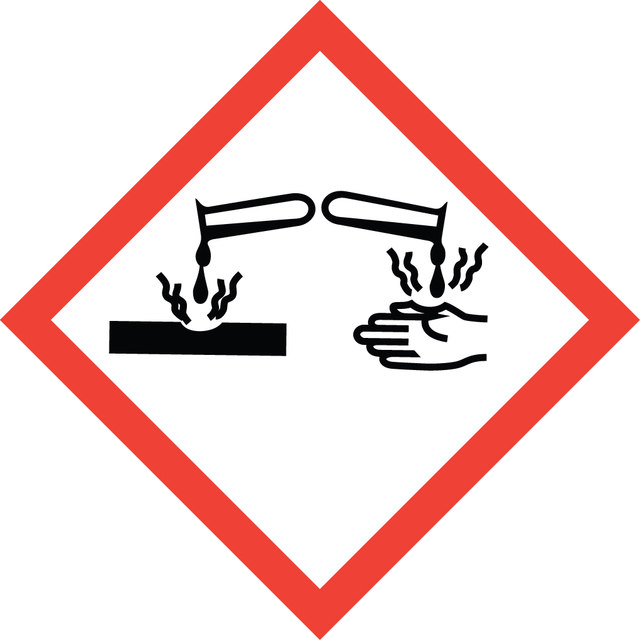
CorrosionExclamation mark

signalword

Danger

Hazard Classifications

Acute Tox. 4 Inhalation - Eye Dam. 1 - Ozone 1 - Skin Irrit. 2 - STOT SE 3

target_organs

Respiratory system

Storage Class

6.1C - Combustible acute toxic Cat.3 / toxic compounds or compounds which causing chronic effects

ppe

Eyeshields, Gloves, type ABEK (EN14387) respirator filter

Regulatory Information

新产品
This item has

Choose from one of the most recent versions:

Certificates of Analysis (COA)

Lot/Batch Number

Don't see the Right Version?

If you require a particular version, you can look up a specific certificate by the Lot or Batch number.

Already Own This Product?

Find documentation for the products that you have recently purchased in the Document Library.

Visit the Document Library

Synthesis and characterization of linear aliphatic poly (methylene dicarboxylate) s from caesium dicarboxylates and bromochloromethane.
Cimecioglu AL and East GC.
Makromol. Chem., 10(7), 319-324 (1989)
W S Cuello et al.
Journal of toxicology, 2012, 629781-629781 (2012-06-22)
Bromochloromethane (BCM) is a volatile compound and a by-product of disinfection of water by chlorination. Physiologically based pharmacokinetic (PBPK) models are used in risk assessment applications. An updated PBPK model for BCM is generated and applied to hypotheses testing calibrated
Leticia Abecia et al.
Frontiers in microbiology, 9, 2227-2227 (2018-10-26)
This work aimed to gain insight into the transition from milk to solid feeding at weaning combining genomics and metabolomics on rumen contents from goat kids treated with a methanogenic inhibitor (bromochloromethane, BCM). Sixteen goats giving birth to two kids
J N McDougal et al.
Toxicology and applied pharmacology, 79(1), 150-158 (1985-06-15)
The dermal absorption of dibromomethane (DBM) and bromochloromethane (BCM) vapors was studied in rats placed in a specially designed chamber incorporating individual respiratory protection to avoid pulmonary uptake. Exposures (DBM: 500 to 10,000 ppm; BCM: 2500 to 40,000 ppm) lasted
J N McDougal et al.
Toxicology and applied pharmacology, 85(2), 286-294 (1986-09-15)
Absorption of chemical vapors through the skin is a passive process that is not easily quantitated, but may be important in the assessment of health hazards in some occupational circumstances. Physiological modeling is a quantitative technique which may provide insight

Our team of scientists has experience in all areas of research including Life Science, Material Science, Chemical Synthesis, Chromatography, Analytical and many others.

Contact Technical Service