Skip to Content
Merck
CN

130265

2-Nitropropane

≥96%

Synonym(s):

Isonitropropane, Nitro propane

Sign In to View Organizational & Contract Pricing.

Select a Size


About This Item

Linear Formula:
CH3CH(NO2)CH3
CAS Number:
Molecular Weight:
89.09
UNSPSC Code:
12352100
NACRES:
NA.22
PubChem Substance ID:
EC Number:
201-209-1
Beilstein/REAXYS Number:
1740684
MDL number:
Assay:
≥96%
Technical Service
Need help? Our team of experienced scientists is here for you.
Let Us Assist
Technical Service
Need help? Our team of experienced scientists is here for you.
Let Us Assist

refractive index

n20/D 1.394 (lit.)

bp

120 °C (lit.)

mp

−93 °C (lit.)

solubility

H2O: slightly soluble, organic solvents: miscible

density

0.992 g/mL at 25 °C (lit.)

functional group

amine, nitro

InChI key

FGLBSLMDCBOPQK-UHFFFAOYSA-N

InChI

1S/C3H7NO2/c1-3(2)4(5)6/h3H,1-2H3

SMILES string

CC(C)[N+]([O-])=O

vapor density

~3 (vs air)

vapor pressure

~13 mmHg ( 20 °C)

assay

≥96%

autoignition temp.

802 °F

Quality Level

General description

2-Nitropropane can be converted to mutagenic metabolites by human SULT1A1.

Application

2-Nitropropane was used to prepare 5,5-Dimethylpyrroline N-oxide and 5,5-di(trideuteromethyl)pyrroline N-oxide. It was also used to determine the concordance of results for a pair of structural isomers, 2-nitropropane (2-NP) and 1-nitropropane (1-NP).

signalword

Danger

Hazard Classifications

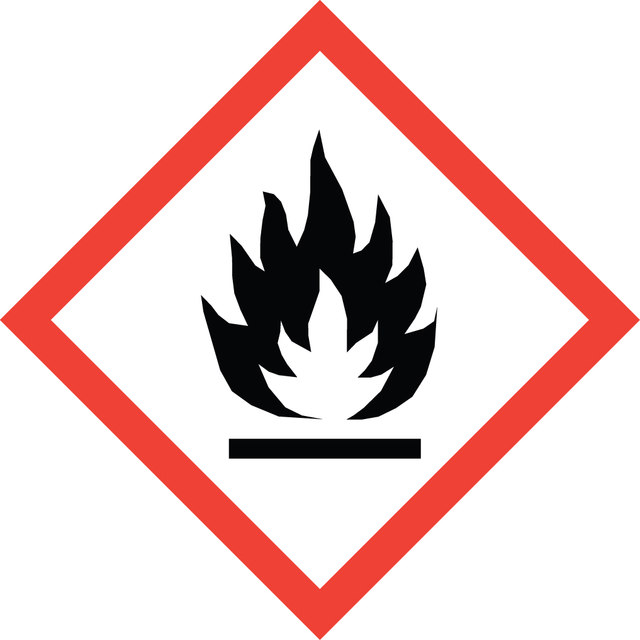
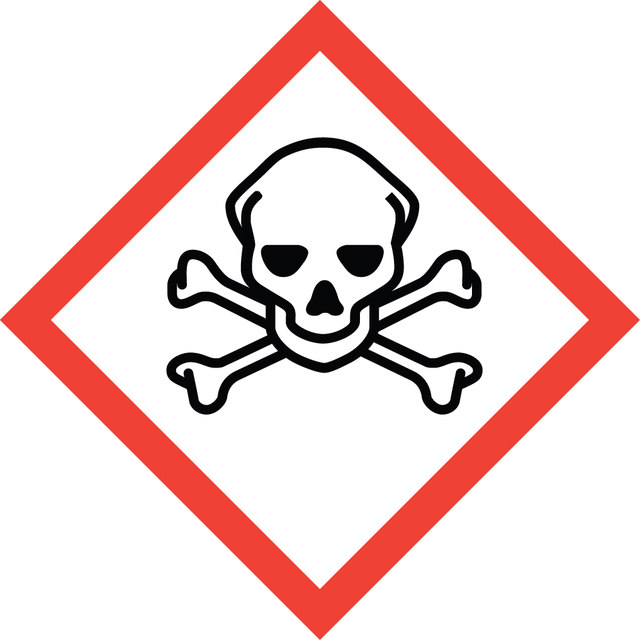
Acute Tox. 3 Inhalation - Acute Tox. 4 Oral - Aquatic Chronic 3 - Carc. 1B - Flam. Liq. 3 - Muta. 2

Storage Class

3 - Flammable liquids

wgk

WGK 3

flash_point_f

78.8 °F - closed cup

flash_point_c

26 °C - closed cup

ppe

Eyeshields, Faceshields, Gloves, type ABEK (EN14387) respirator filter

Regulatory Information

危险化学品
This item has

Choose from one of the most recent versions:

Certificates of Analysis (COA)

Lot/Batch Number

Don't see the Right Version?

If you require a particular version, you can look up a specific certificate by the Lot or Batch number.

Already Own This Product?

Find documentation for the products that you have recently purchased in the Document Library.

Visit the Document Library

Ethel A Wilhelm et al.
Experimental and toxicologic pathology : official journal of the Gesellschaft fur Toxikologische Pathologie, 61(3), 197-203 (2008-09-27)
This study was undertaken to investigate if the introduction of trifluoromethyl (F(3)C) group into diphenyl diselenide (PhSe)(2) molecule causes acute toxicity in rats. It was further examined if the presence of F(3)C group in (PhSe)(2) molecule alters the protective effect
Ethel A Wilhelm et al.
Fundamental & clinical pharmacology, 25(1), 80-90 (2010-02-10)
The in vitro effect of (E)-2-benzylidene-4-phenyl-1,3-diselenole (BPD) was evaluated through iron/EDTA-induced thiobarbituric acid reactive species (TBARS) and reactive species (RS) determinations as well as of the scavenging 2,2'-diphenyl-1-picrylhydrazyl (DPPH) radical quantification. BPD at the concentrations of 10 and 50 μΜ
Cédric Gobin et al.
Spectrochimica acta. Part A, Molecular and biomolecular spectroscopy, 60(1-2), 329-336 (2003-12-13)
New experimental results are reported on molecular interactions in the n-ethylamines and 2-nitropropane (2-NP)/n-ethylamine mixtures studied by Raman spectroscopy under pressure in a diamond anvil cell (0-50 GPa) and, at ambient pressure, by infrared spectroscopy. Modifications of the infrared spectra
Diane C Cabelof et al.
DNA repair, 2(3), 295-307 (2003-01-28)
Caloric restriction is a potent experimental manipulation that extends mean and maximum life span and delays the onset and progression of tumors in laboratory rodents. While caloric restriction (CR) clearly protects the genome from deleterious damage, the mechanism by which
Lysandro P Borges et al.
Toxicology, 210(1), 1-8 (2005-04-05)
The effect of diphenyl diselenide, (PhSe)2, administration on 2-nitropropane (2-NP)-induced hepatic damage was examined in male rats. Rats were pre-treated with a single dose of diphenyl diselenide (10, 50 or 100 micromol/kg). Afterward, they received only one dose of 2-NP

Our team of scientists has experience in all areas of research including Life Science, Material Science, Chemical Synthesis, Chromatography, Analytical and many others.

Contact Technical Service