
128511

2,2,4,4,6,8,8-Heptamethylnonane
98%
Synonym(s):
HMN
Sign In to View Organizational & Contract Pricing.
Select a Size
About This Item
Linear Formula:
(CH3)3CCH2CH(CH3)CH2C(CH3)2CH2C(CH3)3
CAS Number:
Molecular Weight:
226.44
NACRES:
NA.22
PubChem Substance ID:
UNSPSC Code:
12352100
EC Number:
224-506-8
MDL number:
Assay:
98%
Form:
liquid
InChI key
VCLJODPNBNEBKW-UHFFFAOYSA-N
InChI
1S/C16H34/c1-13(10-14(2,3)4)11-16(8,9)12-15(5,6)7/h13H,10-12H2,1-9H3
SMILES string
CC(CC(C)(C)C)CC(C)(C)CC(C)(C)C
vapor density
7.9 (vs air)
vapor pressure
<1 mmHg ( 20 °C)
assay
98%
form
liquid
refractive index
n20/D 1.439 (lit.)
bp
240 °C (lit.)
density
0.793 g/mL at 25 °C (lit.)
Quality Level
Related Categories
Application
2,2,4,4,6,8,8-Heptamethylnonane was used to study the effects of loading and aging pyrene in soils. It was also used to study its long term effect on the cell surface hydrophobicity (CSH) of a hexane-degrading Pseudomonas aeruginosa strain and a toluene-degrading Pseudomonas putida strain.
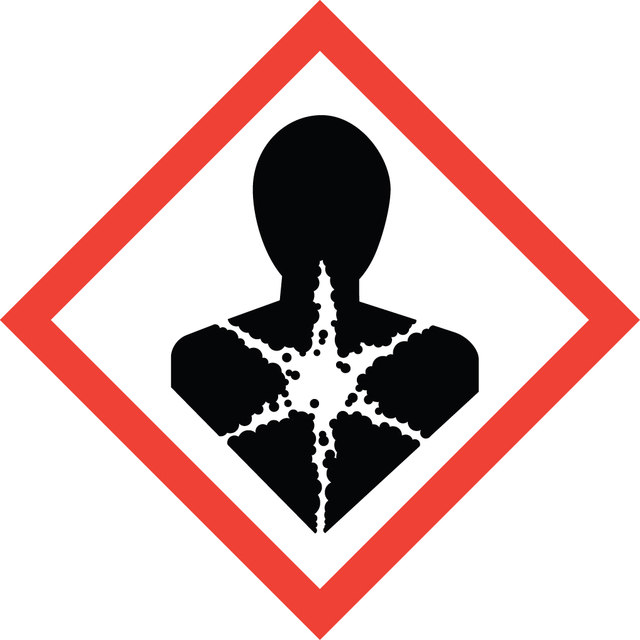
signalword
Danger
hcodes
Hazard Classifications
Asp. Tox. 1
supp_hazards
Storage Class
10 - Combustible liquids
wgk
WGK 3
flash_point_f
215.6 °F - closed cup
flash_point_c
102 °C - closed cup
ppe
Eyeshields, Gloves
Choose from one of the most recent versions:
Already Own This Product?
Find documentation for the products that you have recently purchased in the Document Library.
Srikanth Mutnuri et al.
Applied microbiology and biotechnology, 67(4), 569-576 (2005-02-25)
Polycyclic aromatic hydrocarbons (PAHs) are worldwide environmental pollutants. Their bioavailability is limited by a low aqueous solubility, which causes specific adaptations in degrading bacteria. To compare bacterial degrading behavior, a study was conducted on the mineralization, metabolization and formation of
María Hernández et al.
Applied microbiology and biotechnology, 89(5), 1573-1581 (2010-11-09)
The long-term influence of silicone oil 200 cSt (SO200) and 2, 2, 4, 4, 6, 8, 8-heptamethylnonane (HMN) on the cell surface hydrophobicity (CSH) of a hexane-degrading Pseudomonas aeruginosa strain and a toluene-degrading Pseudomonas putida strain was assessed in two-phase
Somayeh Kazemzadeh et al.
Water science and technology : a journal of the International Association on Water Pollution Research, 82(10), 2134-2147 (2020-12-03)
This study aimed to find biosurfactant producing and crude oil-degrading bacteria able to decontaminate crude oil from wastewater. The bacteria that were isolated from contaminated sites in an oil refinery plant in Isfahan, Iran, were identified by 16S rDNA sequencing
Robert Marmulla et al.
BMC biochemistry, 17, 6-6 (2016-03-17)
Thauera linaloolentis 47Lol uses the tertiary monoterpene alcohol (R,S)-linalool as sole carbon and energy source under denitrifying conditions. The conversion of linalool to geraniol had been observed in carbon-excess cultures, suggesting the presence of a 3,1-hydroxyl-Δ(1)-Δ(2)-mutase (linalool isomerase) as responsible
Giulia Bonacucina et al.
AAPS PharmSciTech, 10(2), 368-375 (2009-04-03)
Sepineo P 600, a concentrated dispersion of acrylamide/sodium acryloyldimethyl taurate copolymer in isohexadecane, has self-gelling and thickening properties and the ability to emulsify oily phases, which make it easy to use in the formulation of gels and o/w emulsion gels.
Our team of scientists has experience in all areas of research including Life Science, Material Science, Chemical Synthesis, Chromatography, Analytical and many others.
Contact Technical Service